In loving memory
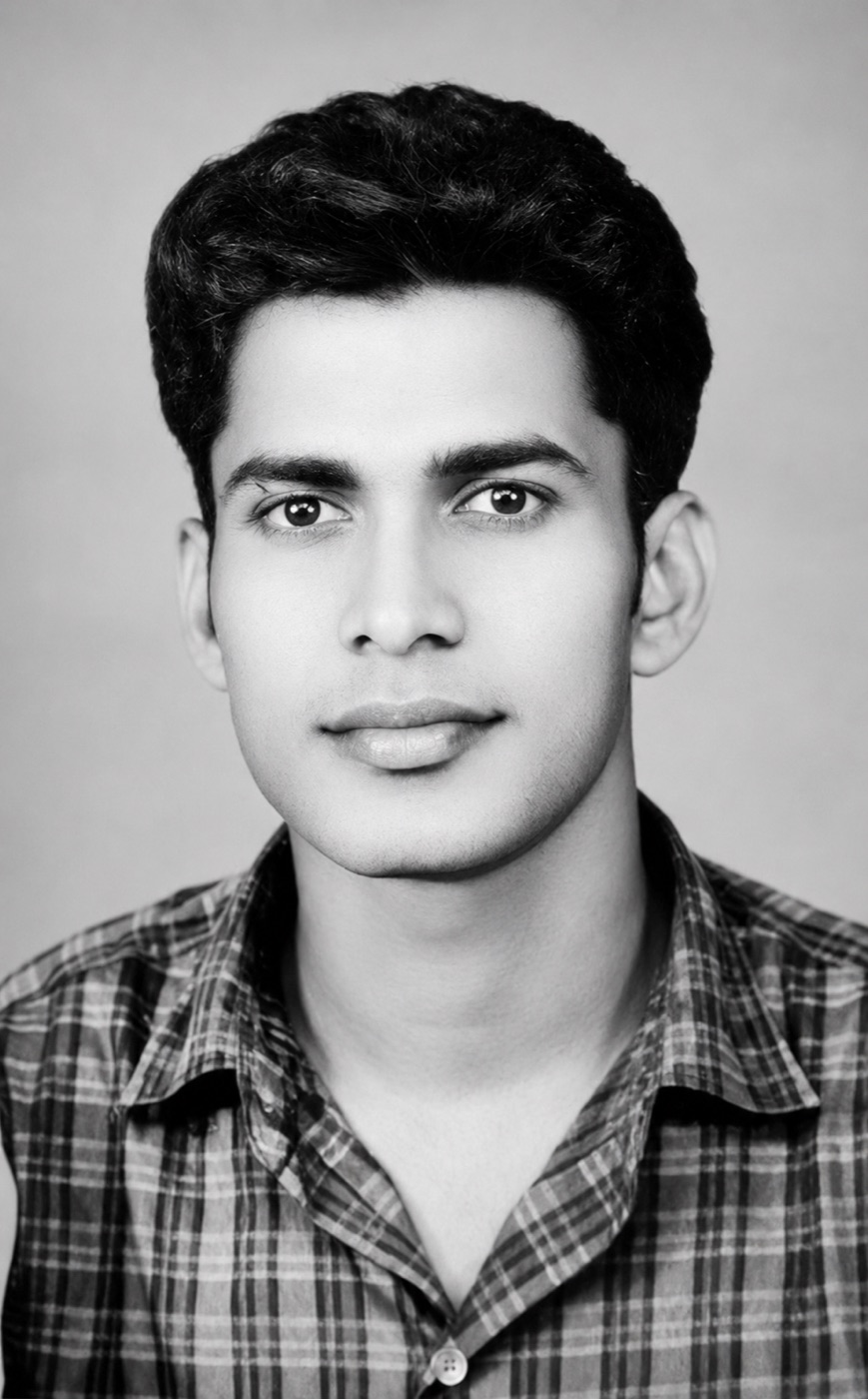
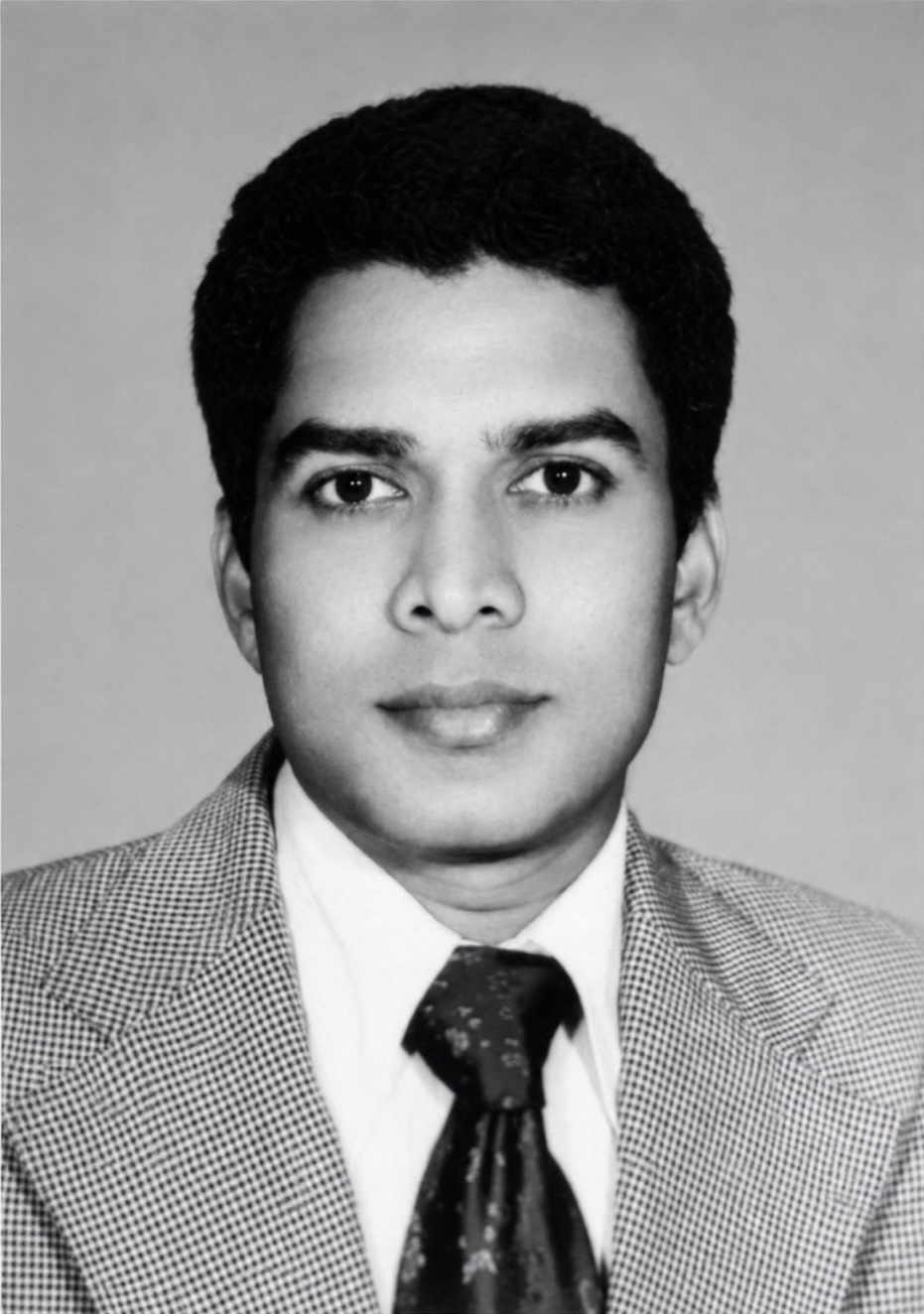
Josfi (Rafi Jose)
Jose Francis Mangalapilly (1945–2010) — singer and composer, known in Kerala as Rafi Jose and on record as Josfi. A biographical record compiled by his son, Yesudeep Mangalapilly.
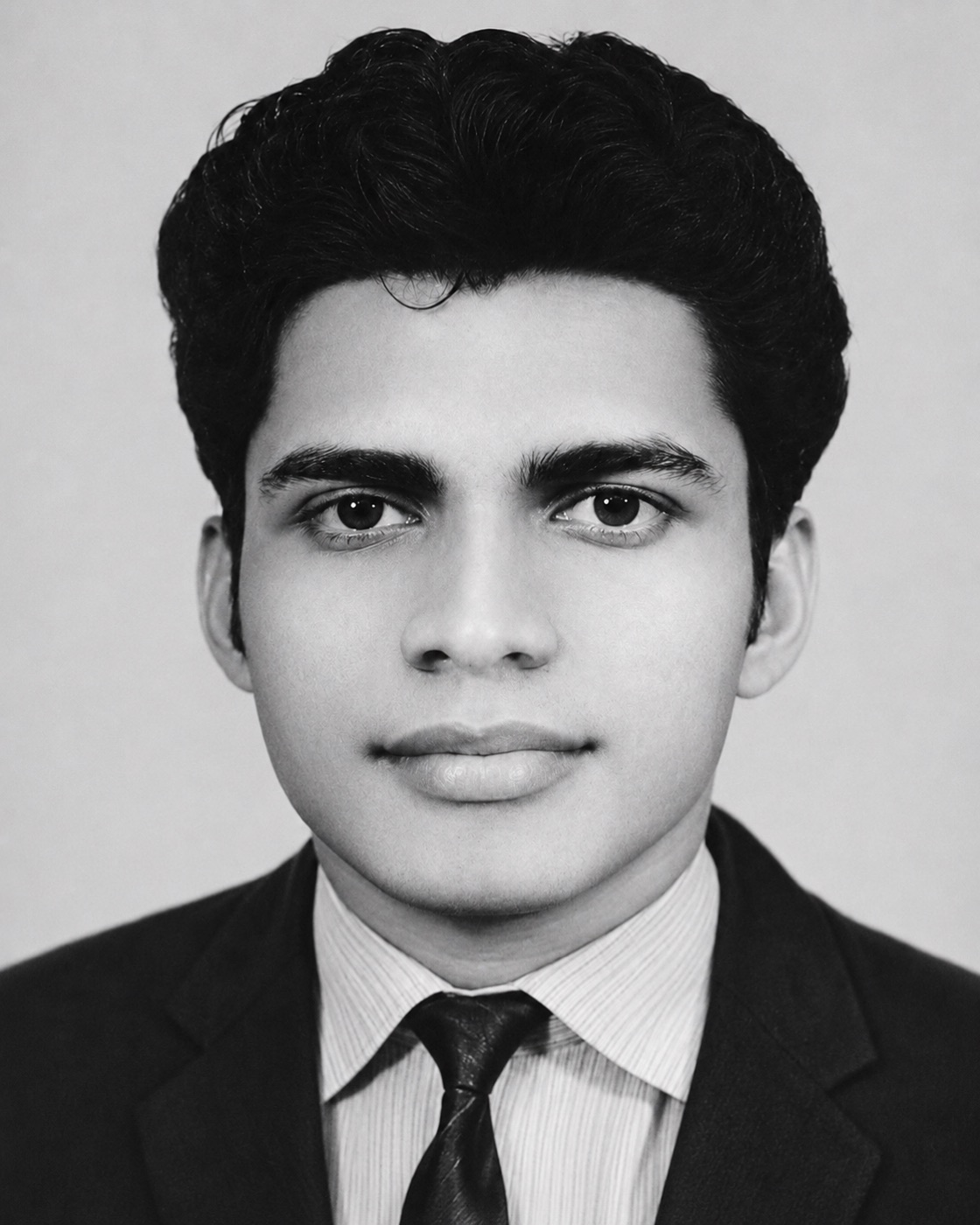
Jose Francis Mangalapilly was a singer and composer who performed and recorded under two stage names at different points in his life. In Kerala, where he grew up, audiences knew him as Rafi Jose — in Malayalam, മംഗലപ്പിള്ളി റാഫി ജോസ് — a name a Cochin music club gave the young man for the uncanny way he could sing the Hindi film songs of Mohammed Rafi. On the records he later made in Bombay, he took the name Josfi. Both names refer to the same person: Rafi Jose and Josfi are two stage names of Jose Francis Mangalapilly, used in different periods of his career — there was never a separate person behind either. He was born on 11 August 1945 and died on 26 February 2010.
This page is an attempt by his son, Yesudeep Mangalapilly, to gather what survives of Josfi's music in one place — drawing from a memoir written by a musician who knew him, the cassette and ghazal records that have quietly made their way onto streaming services, and family memory. Much of his life's work was never cataloged. What follows is what can be sourced, said plainly.
Kerala: how a footballer became Rafi Jose
The fullest account of his early life comes from a memoir, The Rafi Jose I Knew (archived), written by the violinist and arranger Rex Isaacs for the Christian Musicological Society of India. Much of this section is drawn from it.
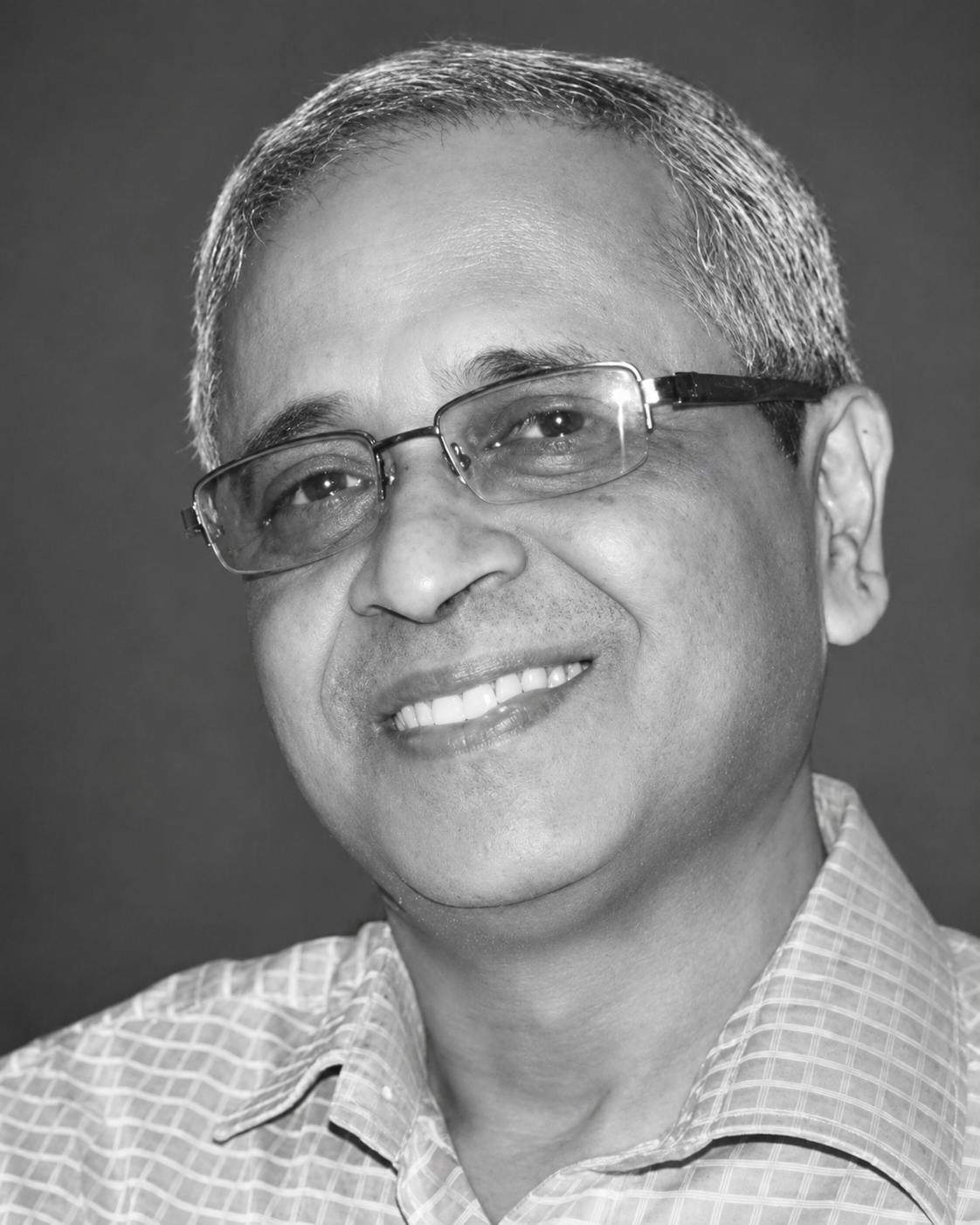
Jose Francis Mangalapilly was the eldest son of Mangalapilly Francis and Rosa. His ancestral family house, Mangalapilly, stood near the Water Authority office in Kaloor, Ernakulam, where his brother M. F. Baby's family still resides.
At St. Albert's High School in Ernakulam (1961–1964), he was known not for music but as a skilled player on the senior soccer team — his musical gift, in Rex's words, "was hidden from himself and the public." A classmate, Raju Michael, heard it first, and coaxed it out of him until he could render the Mohammed Rafi songbook well enough to perform. The established Ernakulam clubs were slow to recognize him; it was the Oriental Music Club in Cochin that, as the memoir puts it, gave him "a red carpet treatment and christened him as Rafi Jose, based on his special vocal capacity to emulate the tone of the famous singer, Mohammad Rafi."
The same Cochin club, the memoir notes, had earlier declined to promote a young singer named K. J. Yesudas over his Hindi diction. Yesudas went on to become one of India's most celebrated voices — and, years later, would record one of Josfi's own compositions.
"Even when the leading clubs in Ernakulam refused to give due recognition to M. F. Jose, it was Oriental Music Club that … christened him as Rafi Jose."
Composing for Fr. Abel, the harmonium, and a Holy Week melody
In the mid-1960s, Fr. Abel Periyappuram, C.M.I. (1920–2001) — later a towering figure in Malayalam devotional music — founded the Christian Arts Club in Ernakulam to render the ancient Syriac liturgy of the Syro-Malabar Church into Malayalam. He went looking for a young composer from his own community, and found Jose, whom the memoir describes as having "a hybrid heritage of Latin and Syrian." He proved himself quickly as a composer, and — being the one with the contacts Fr. Abel lacked — brought in the musicians, playing the harmonium himself at the early recording sessions.
He was, by Rex's account, "practically a self-taught musician," who "went through books on Hindustani music and Western music, and tried to assimilate as much as possible." In 1969, Fr. Abel and Josfi embarked on an unusual project, publishing the book Gānādhyāpakan (printed at Mar Louis Memorial Press, Ernakulam) with the Malayalam lyrics of Fr. Abel written for the Holy Week services, the Benediction of the Blessed Sacrament, the Christmas midnight service, and the calendar year prayer services, all set to Josfi's original melodies in Western staff notation. The book aimed to enhance Western musical literacy among local musicians. Although the transcriptionist is not named, Rex Isaacs believes Mr. Patrick David prepared the printed score, while Rex himself assisted the composer in arranging the scores and background music. In any case, the score helps researchers understand the melodies as Josfi envisaged them, and how K. J. Yesudas emoted with and interpreted "Gāgulthā malayil ninnum", giving it a different life.
Note
The definitive proof of authorship: Following a dispute over the authorship of the melody of "Gāgulthā malayil ninnum" (sparked by Shajan C. Mathew's March 2016 article in Malayala Manorama), the discovery of a surviving copy of Gānādhyāpakan in the library of Nadopasana, Thodupuzha (preserved by Fr. Kurian Puthenpurackal CMI after receiving it from Fr. John Kachiramattom CMI) offered the final, definitive proof of Josfi's authorship. The Christian Musicological Society of India published the scanned PDF of the book (archived) to settle the matter.
That evidence can be read directly below. The book is opened to the page that settled the dispute — the melody of "Gāgulthā malayil ninnum" in Western staff notation — and every page of the surviving copy can be browsed in place. The title page states it plainly: രചന: ഫാ. ആബേൽ സി.എം.ഐ.; സംഗീതം: റാഫി ജോസ് — lyrics by Fr. Abel, music by Rafi Jose — printed in Ernakulam and dated 15 August 1969.
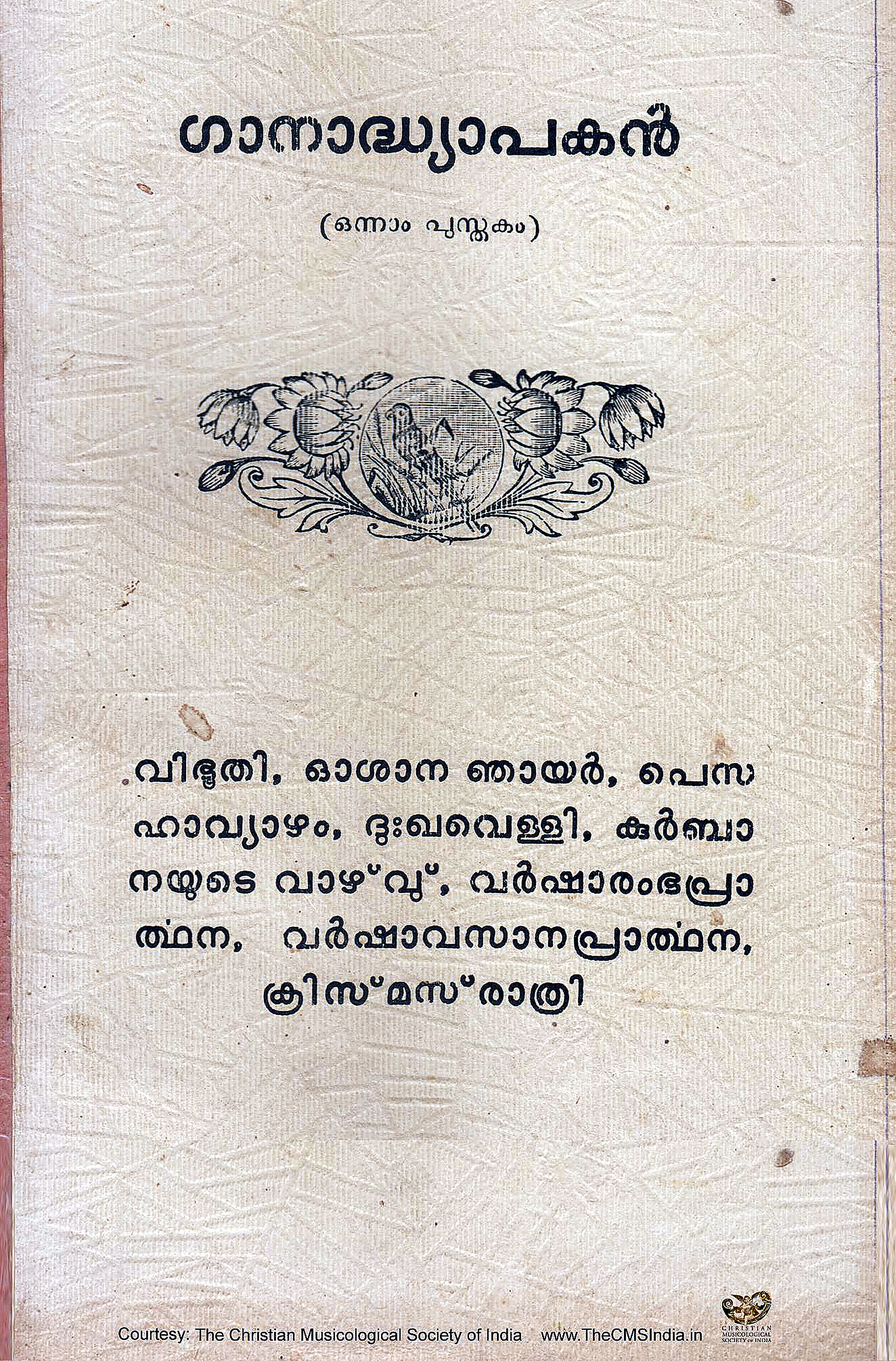
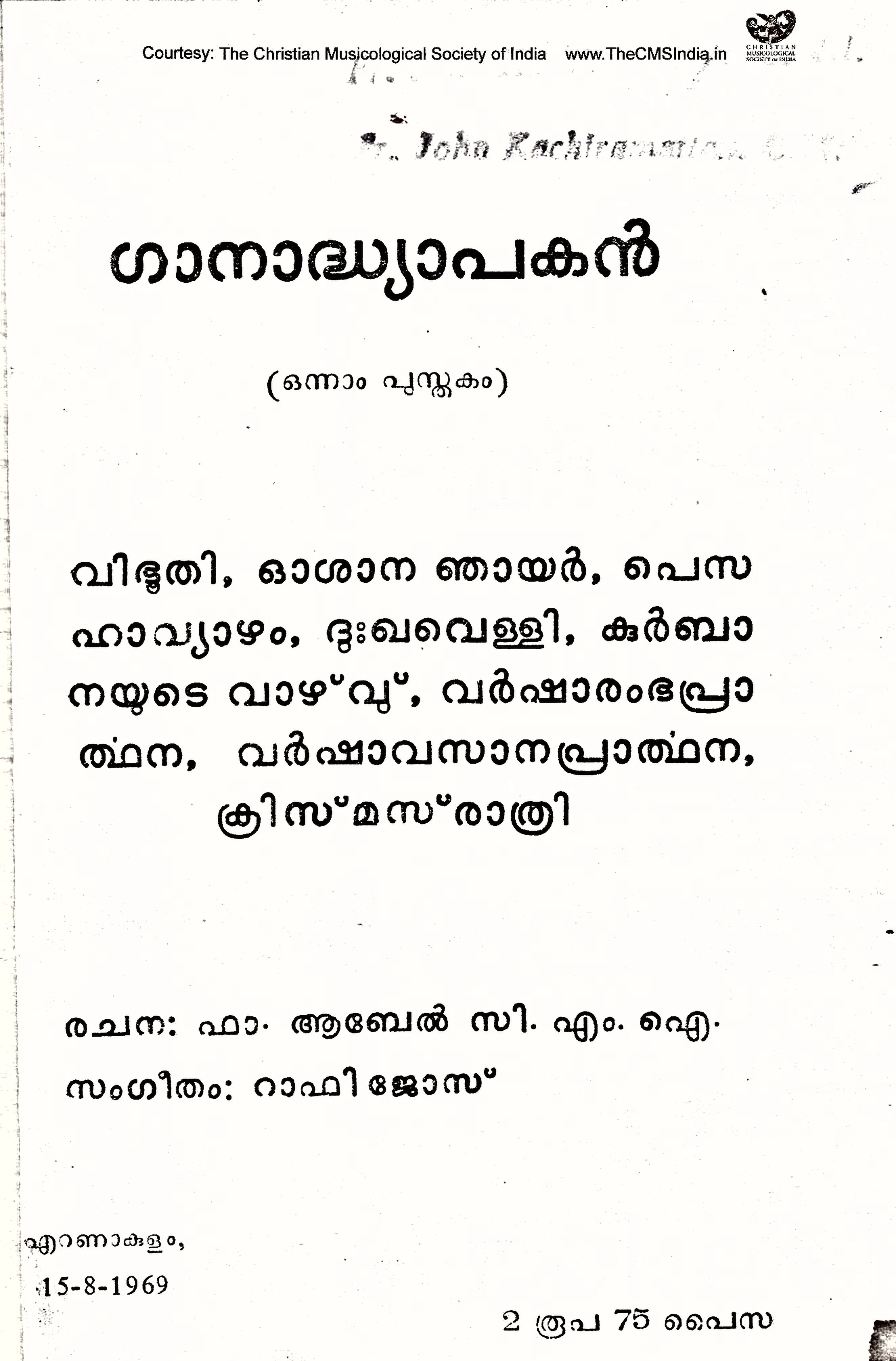
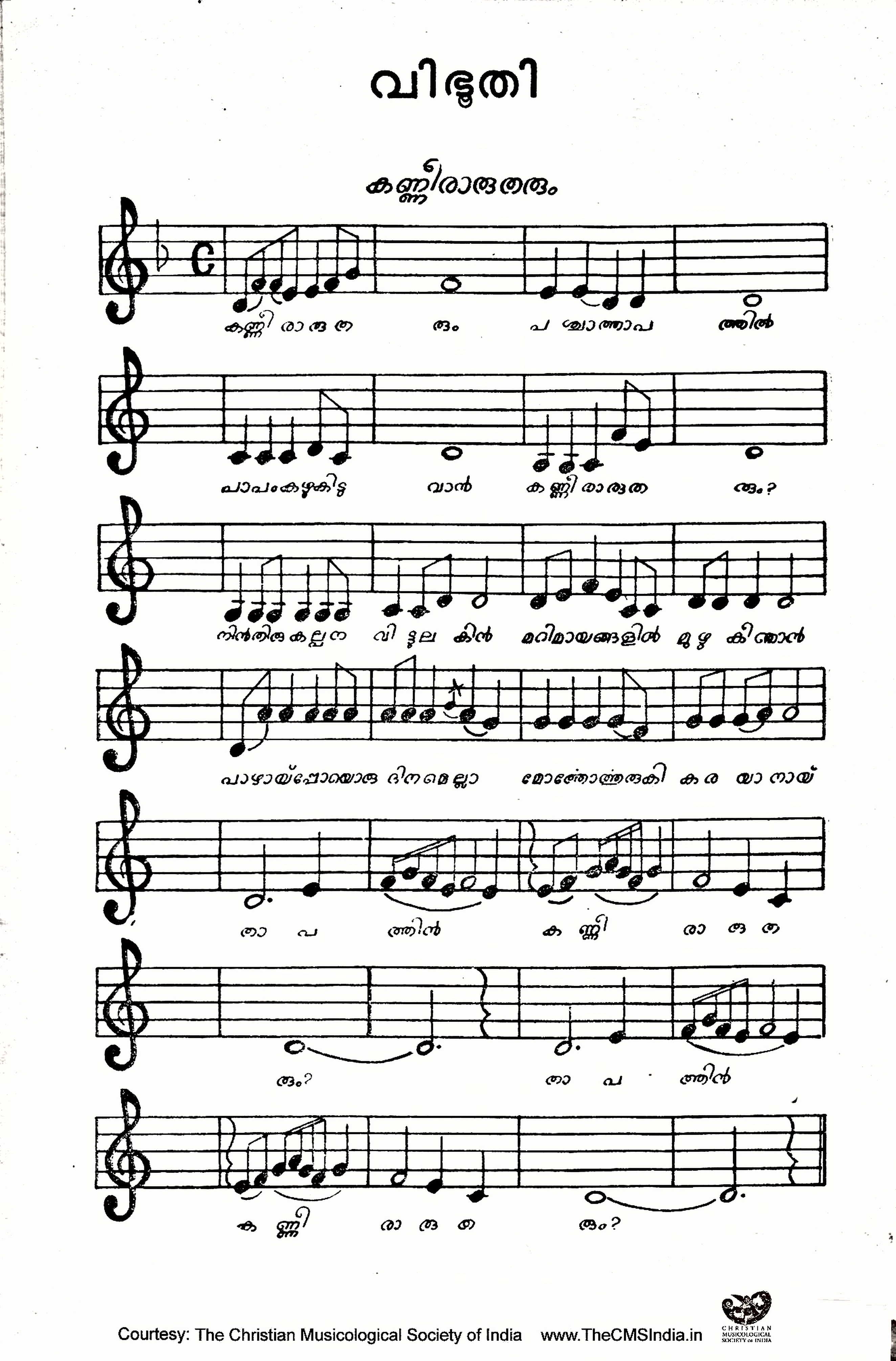
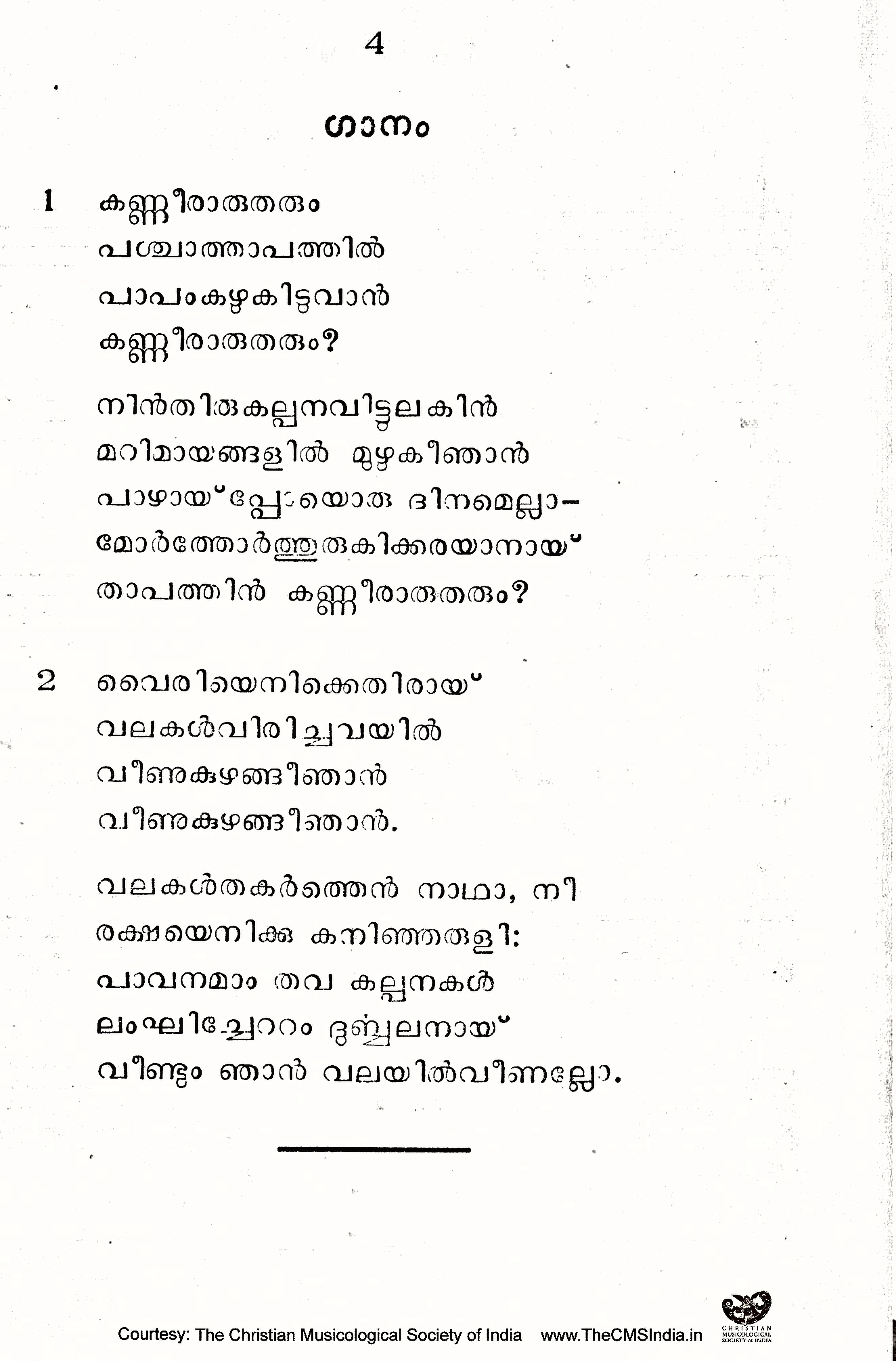
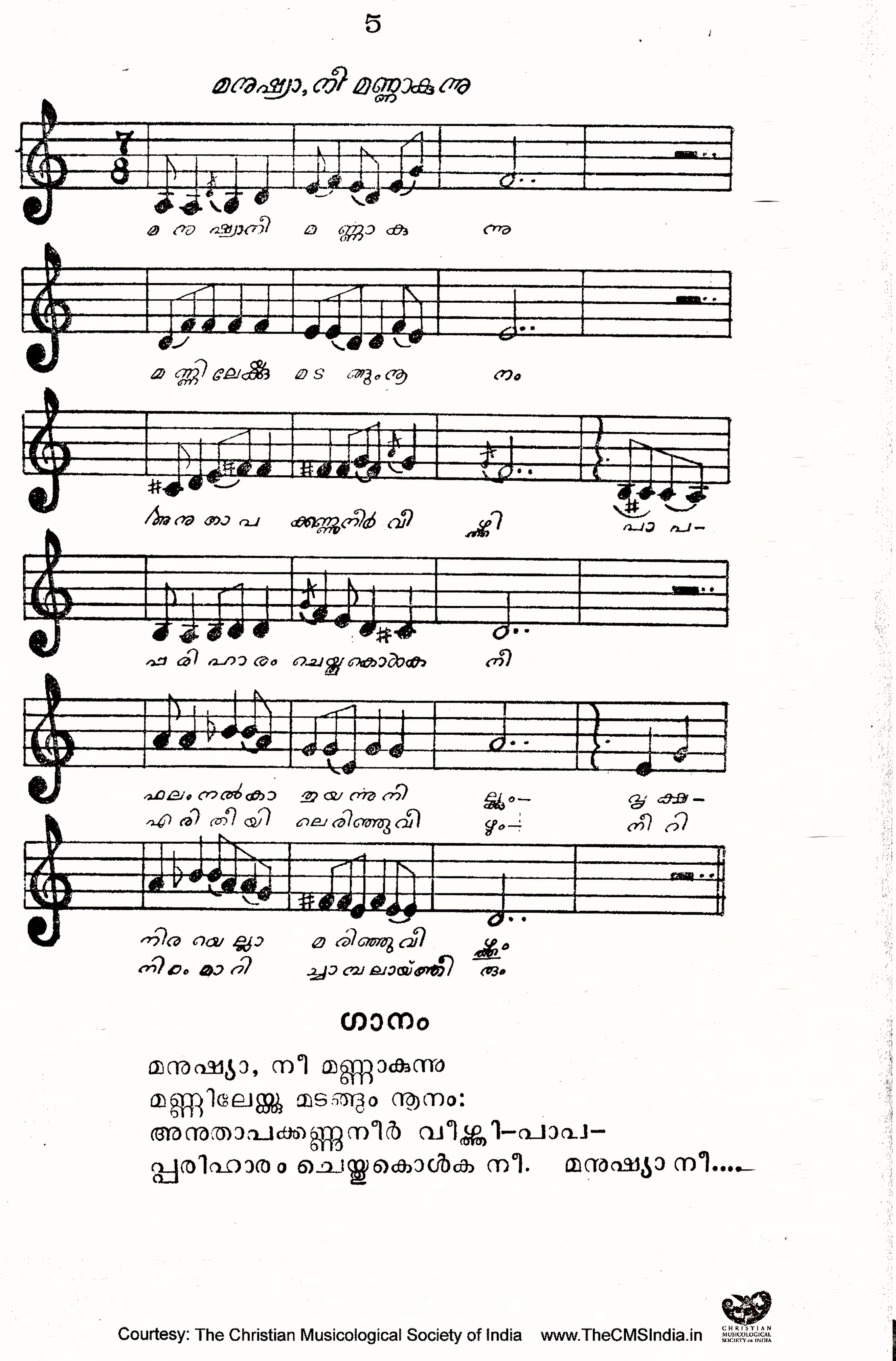
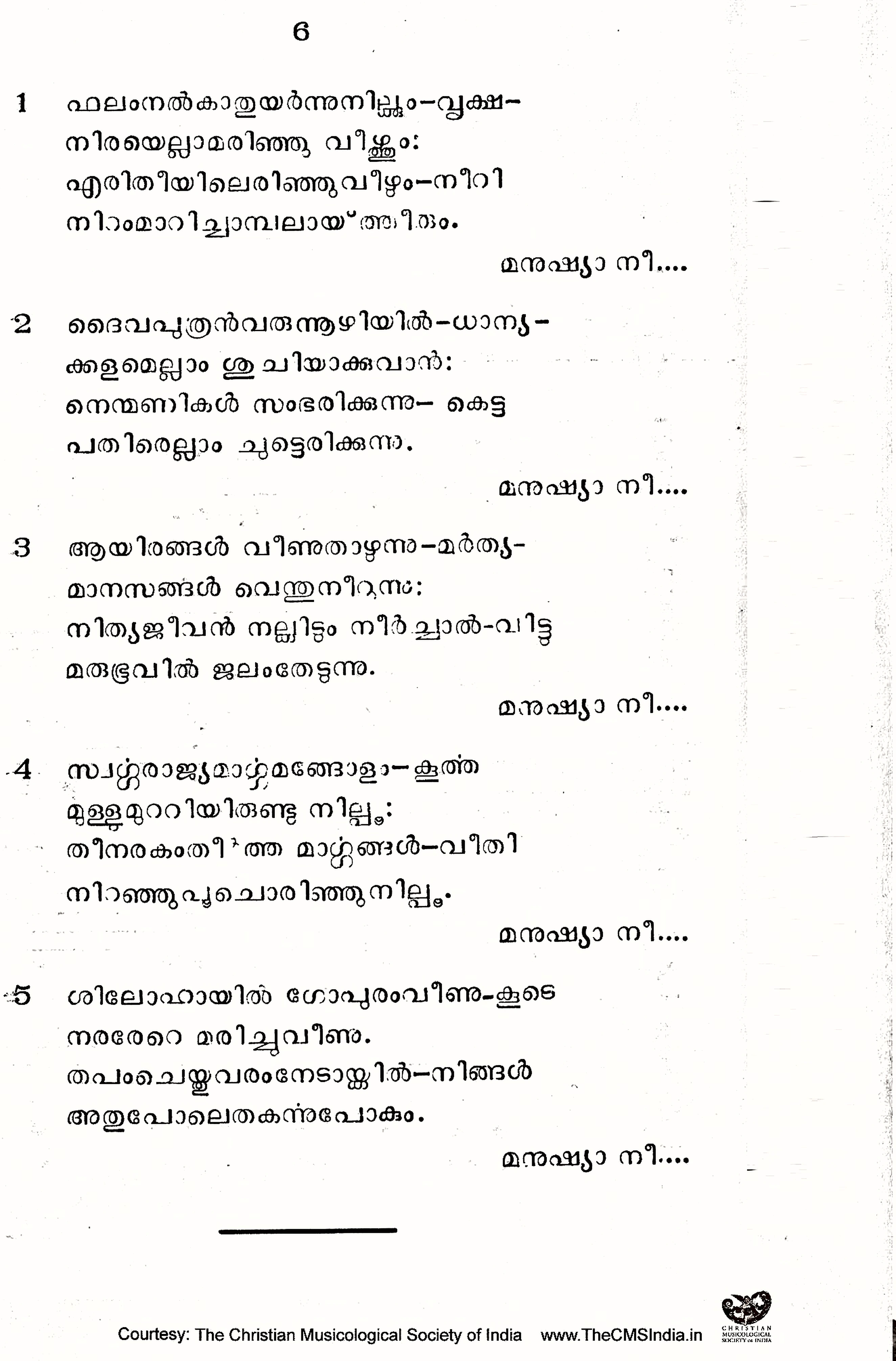
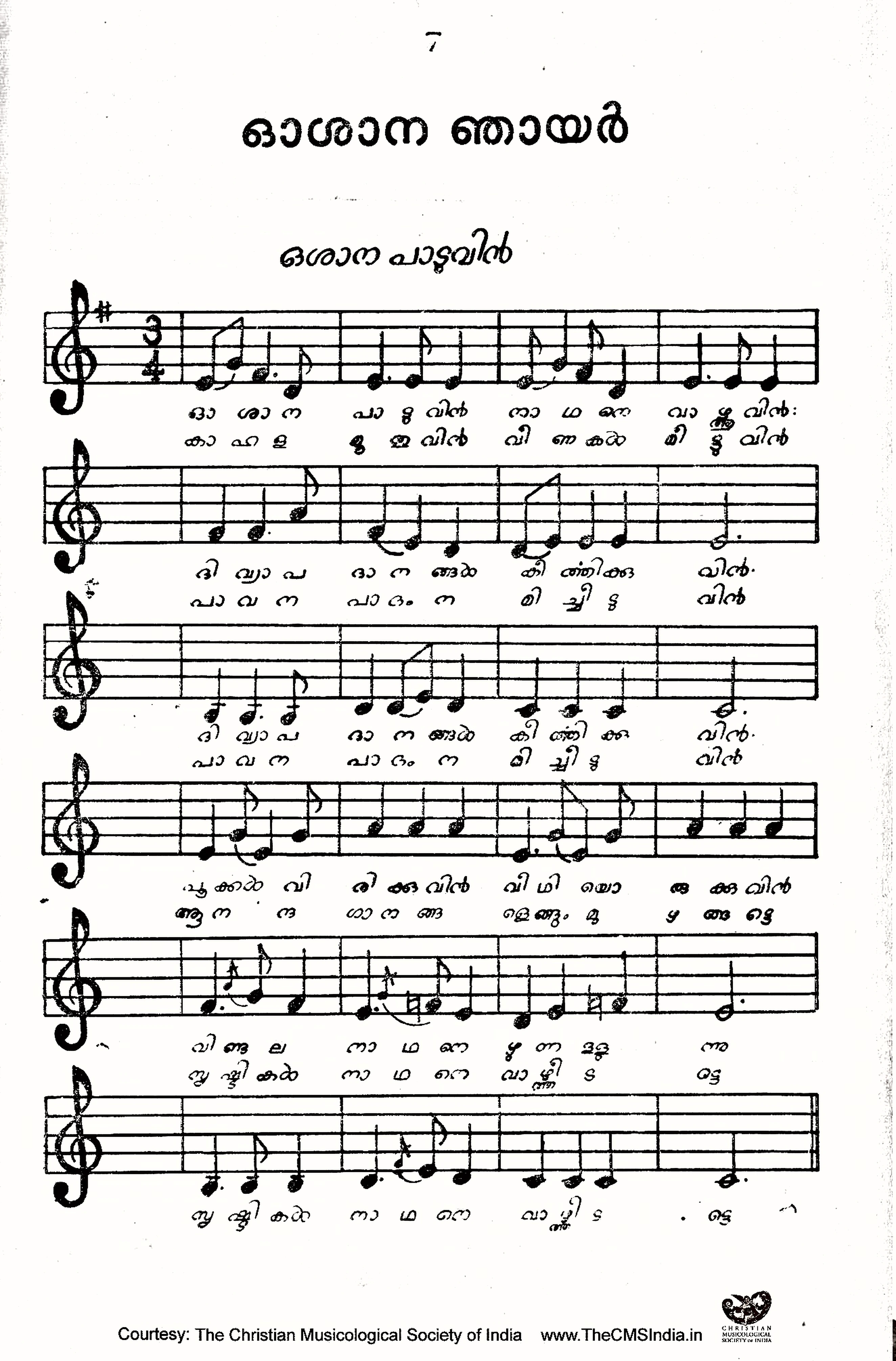
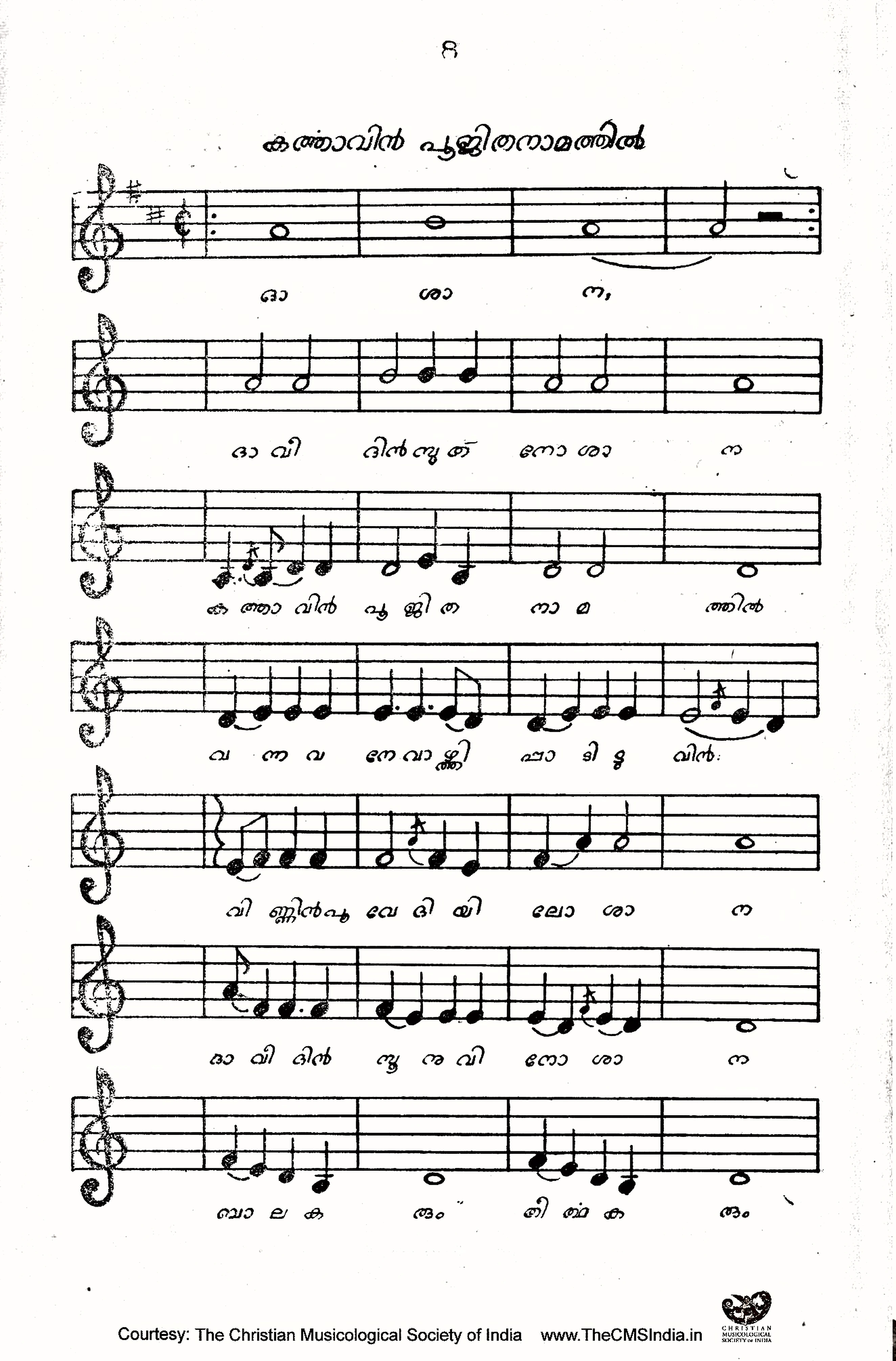
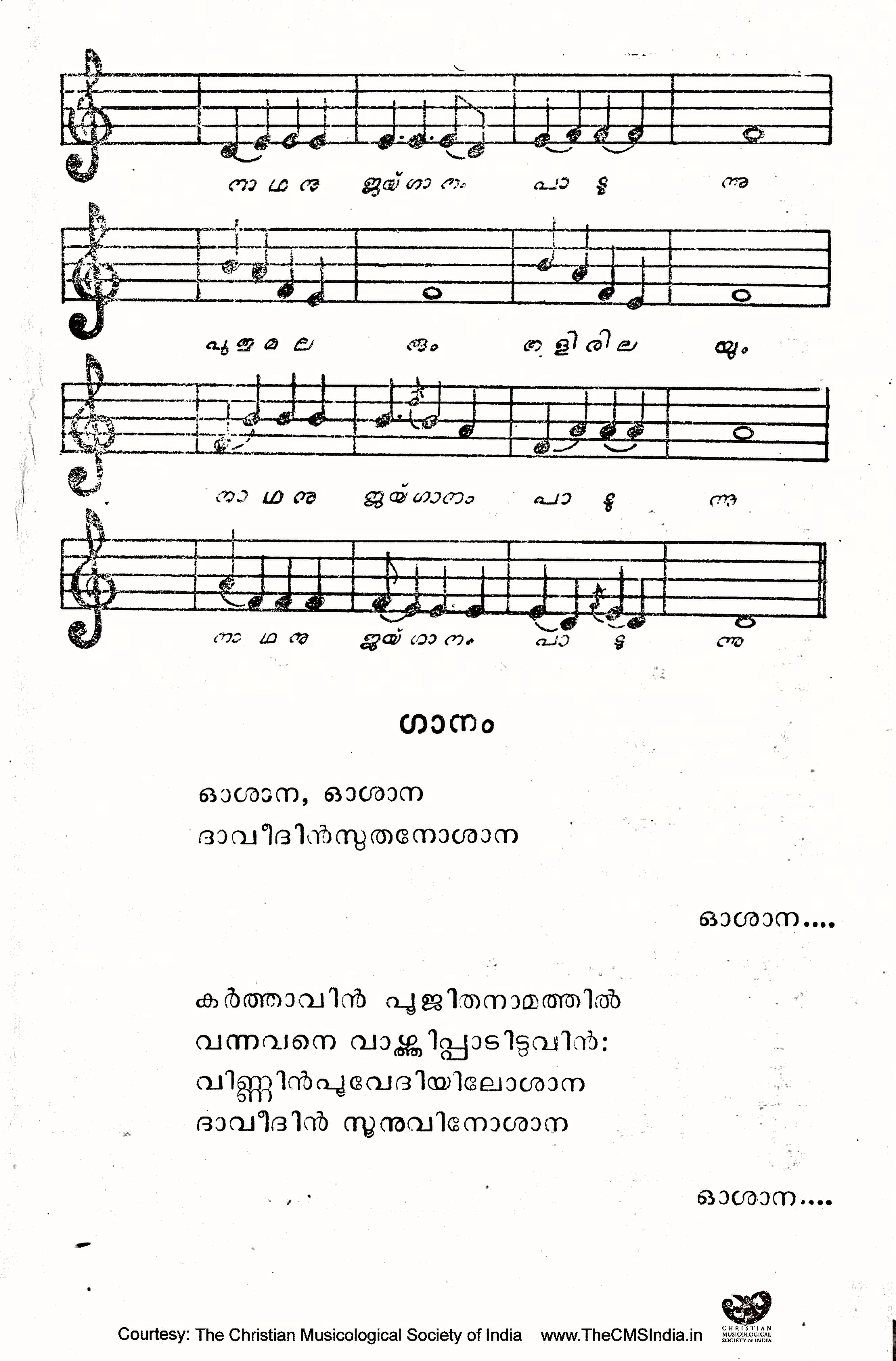
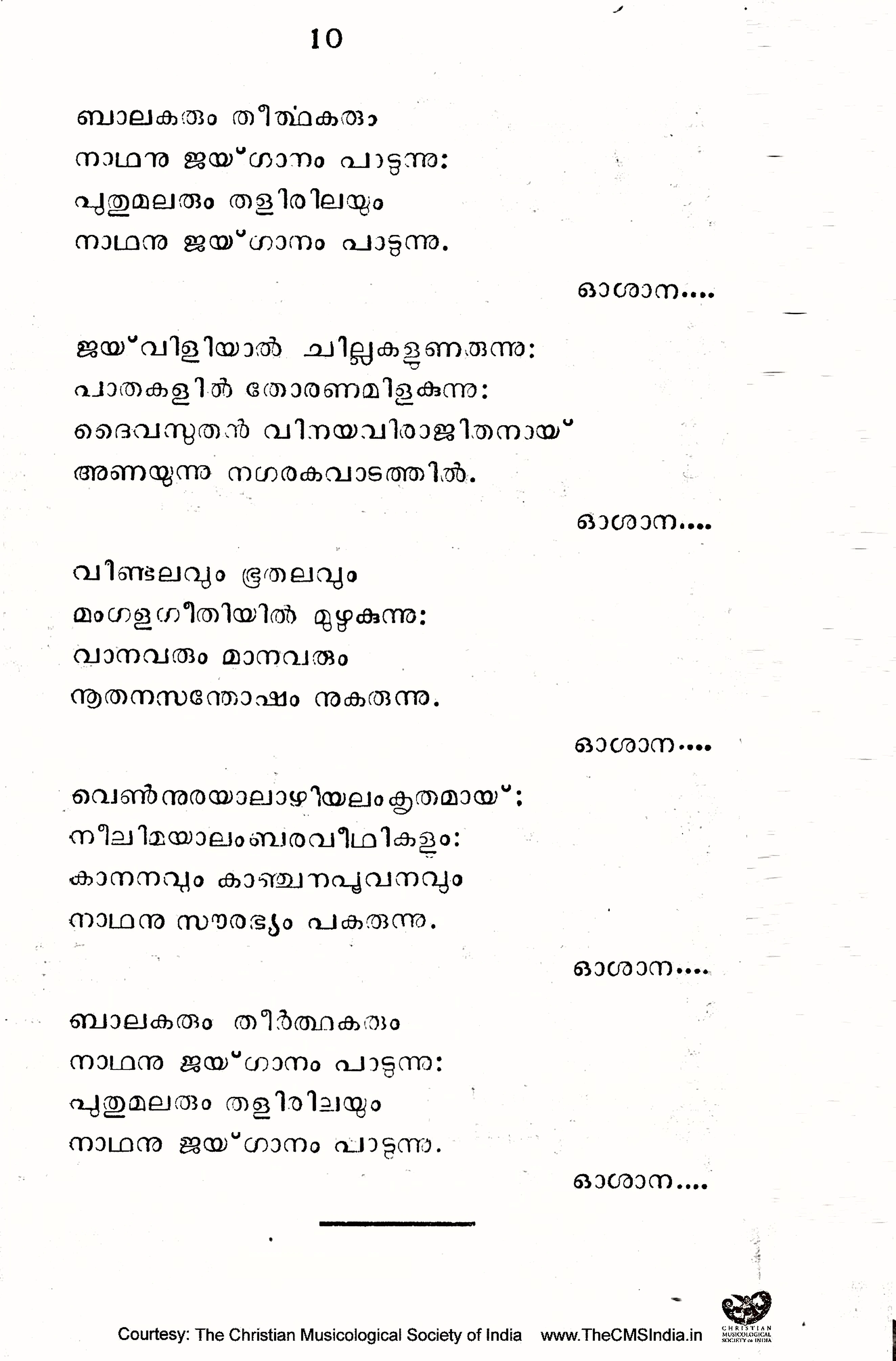
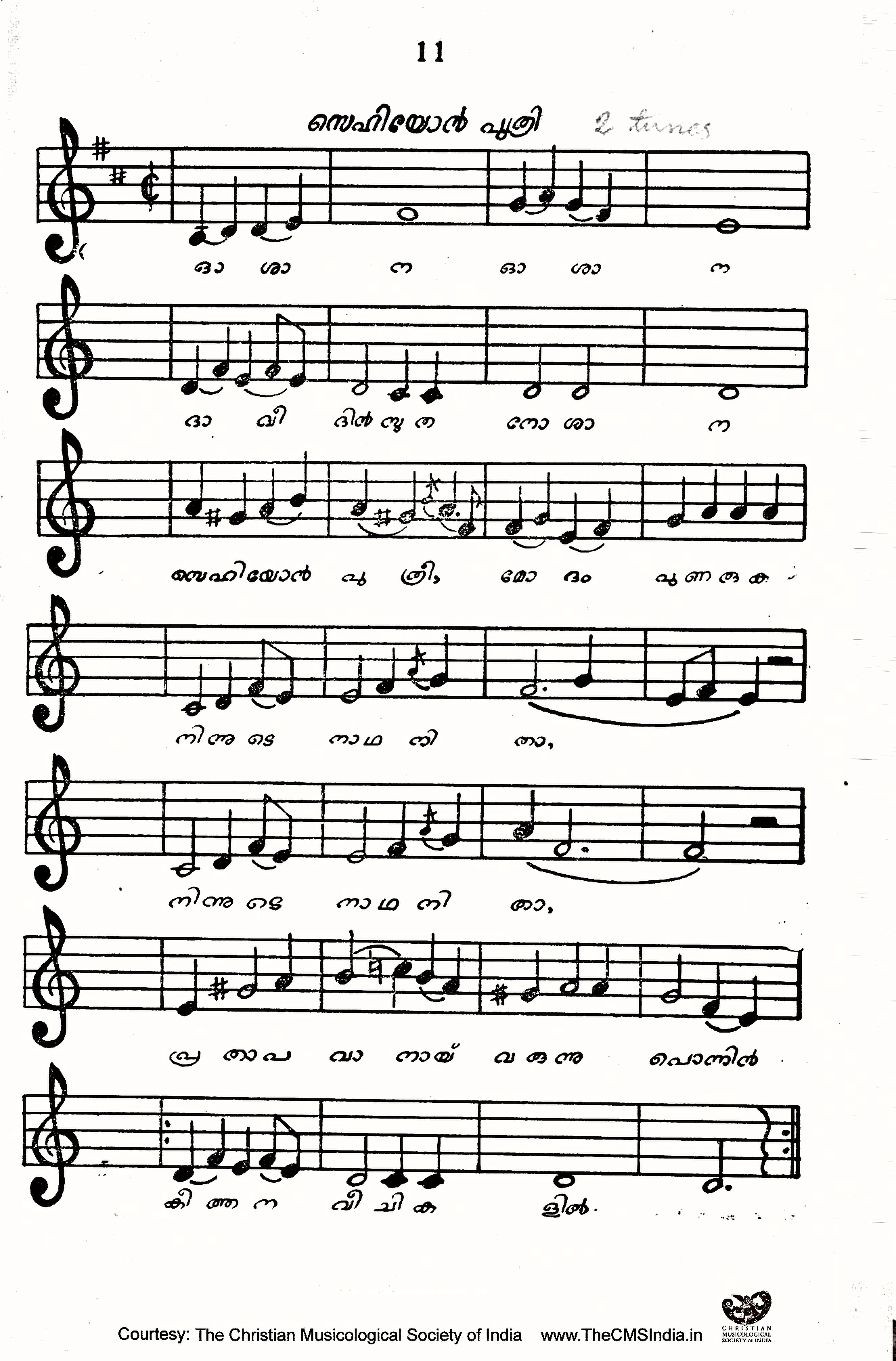
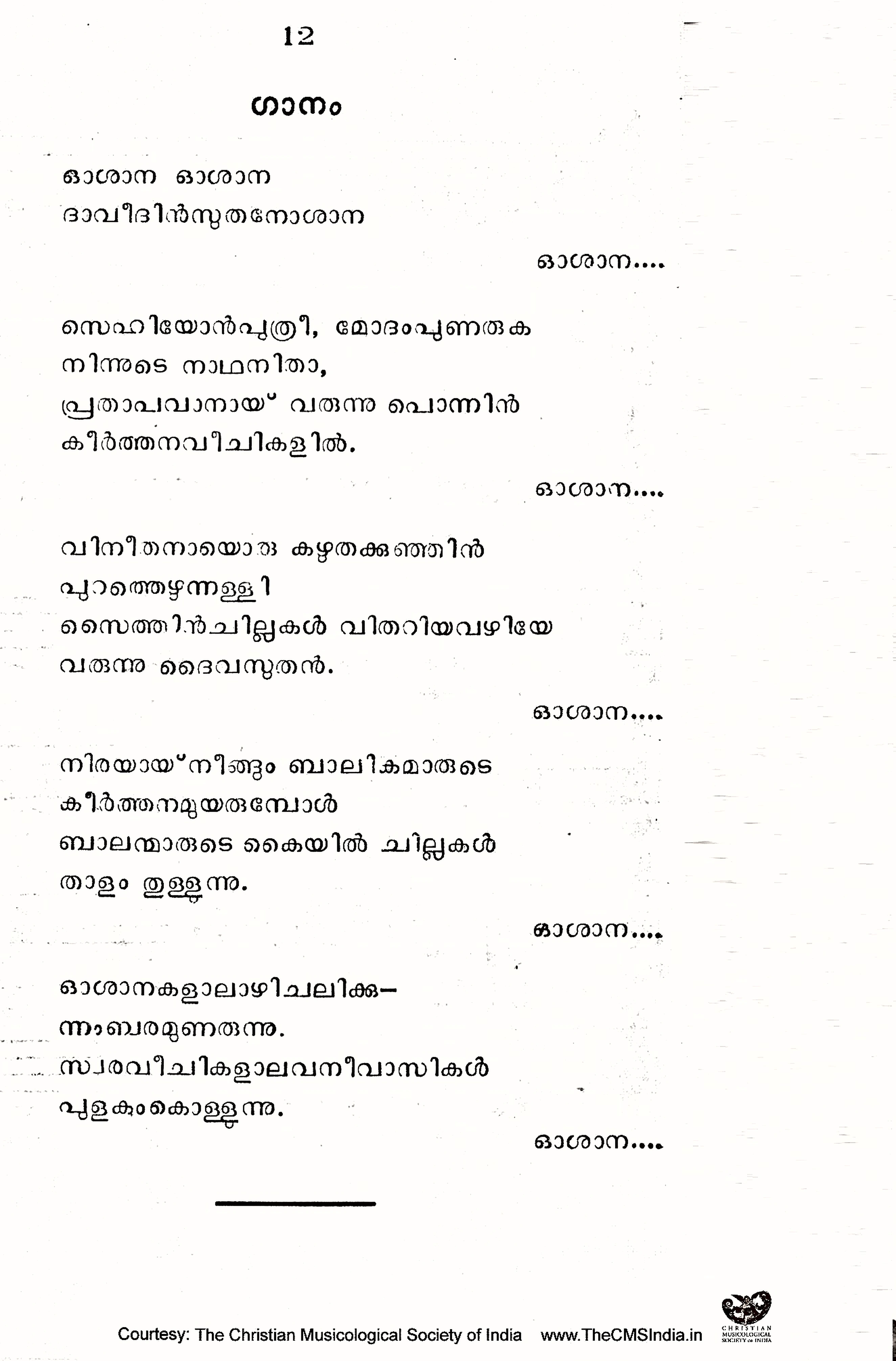
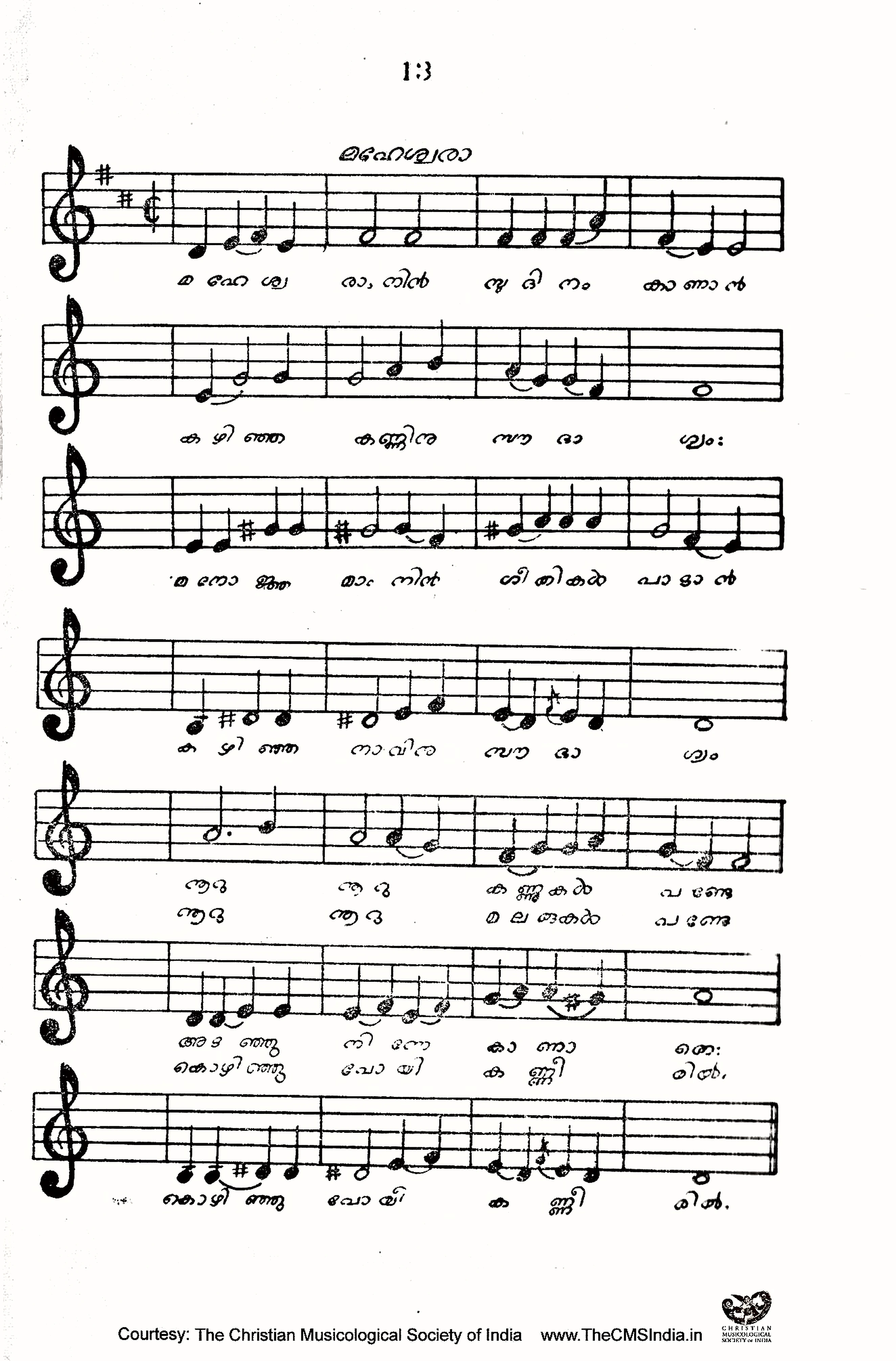
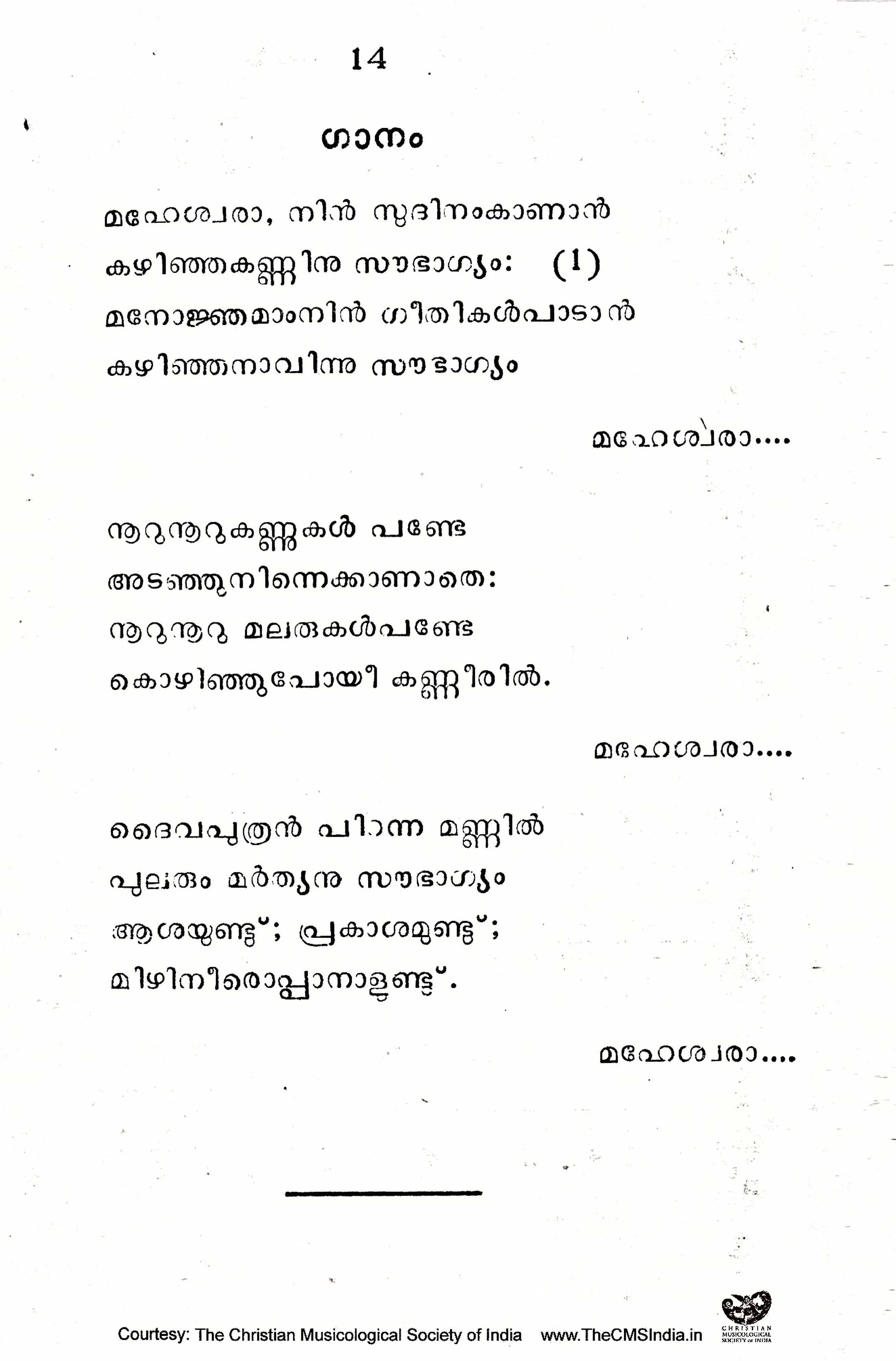
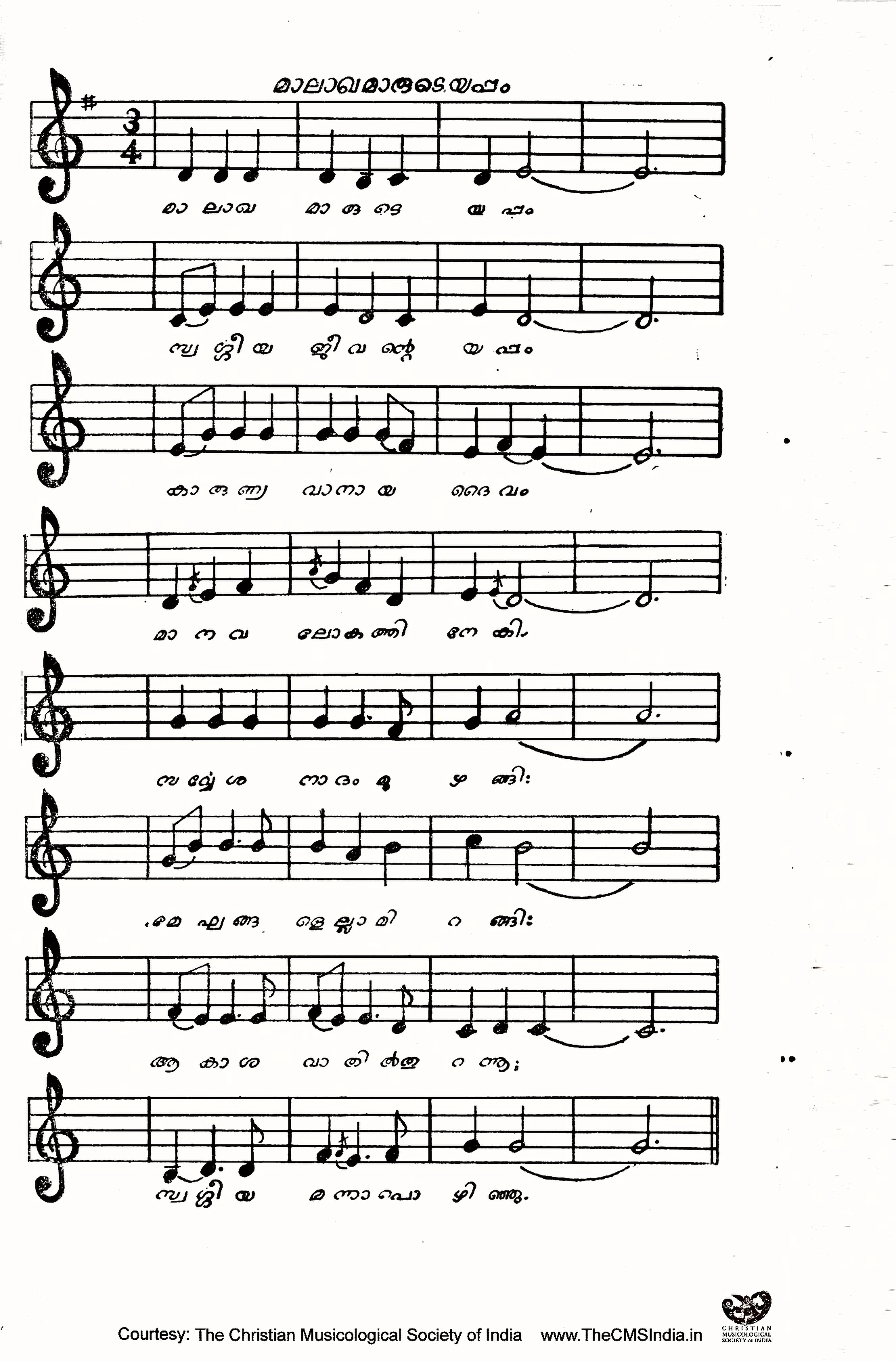
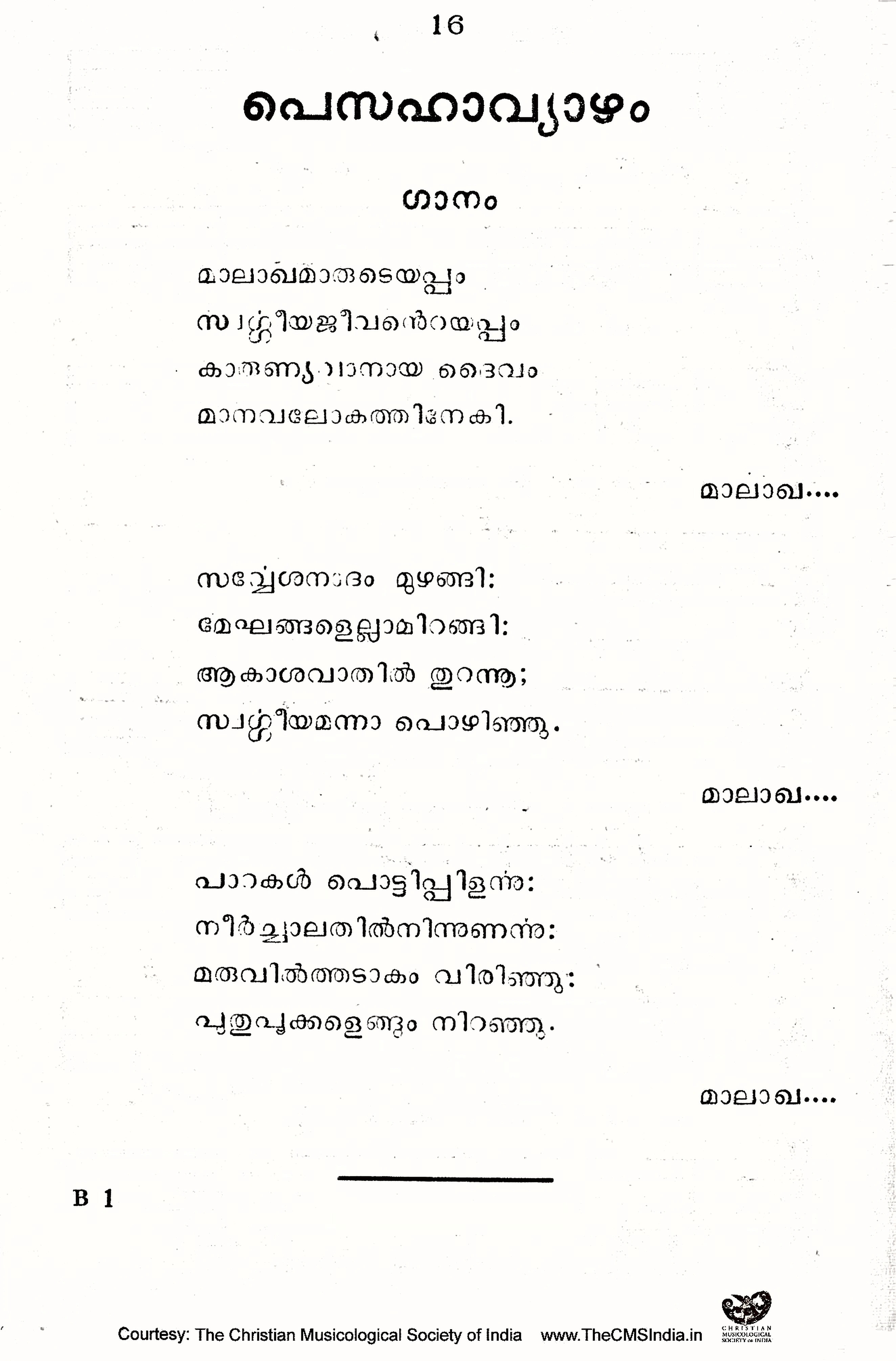
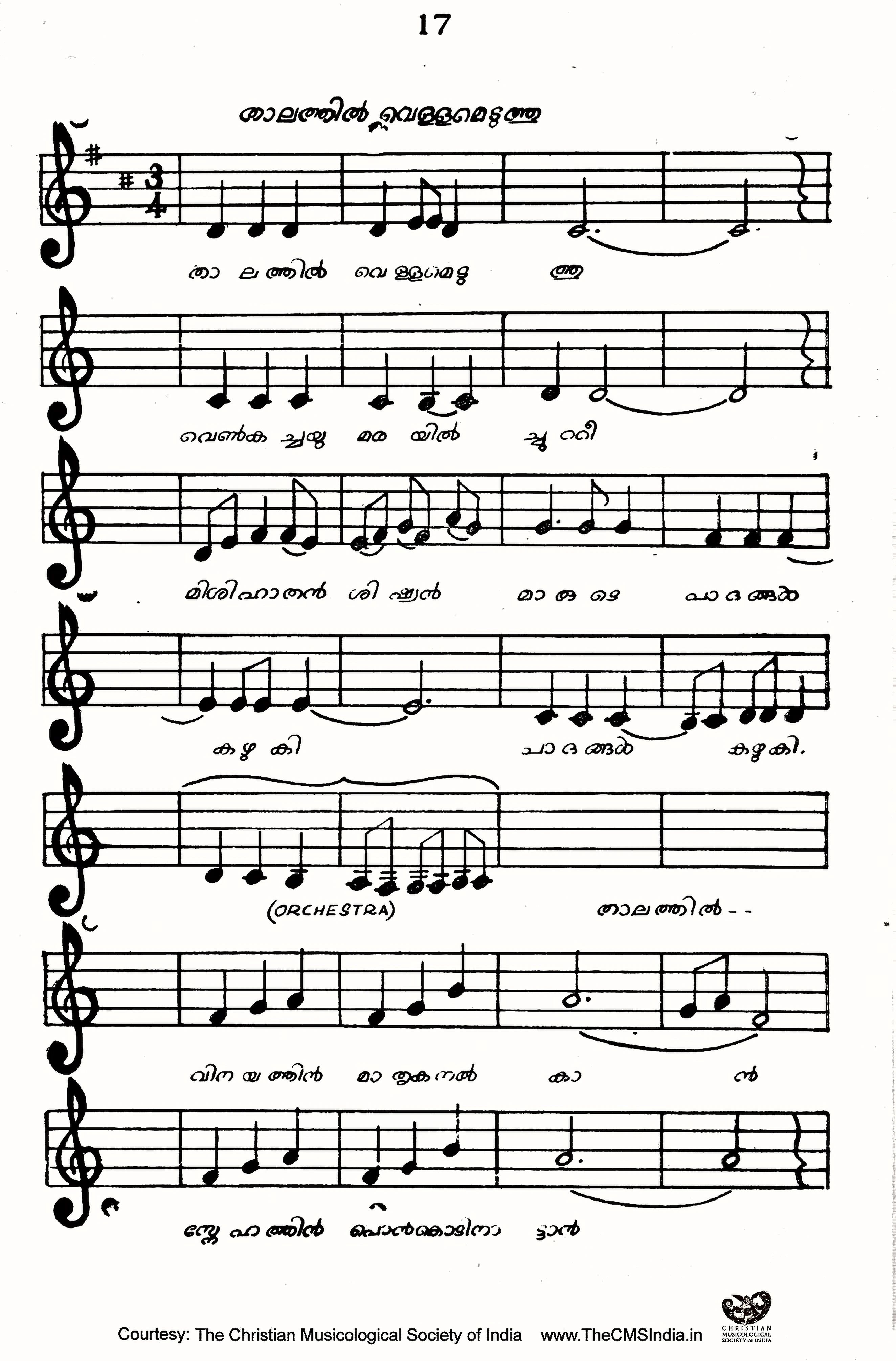
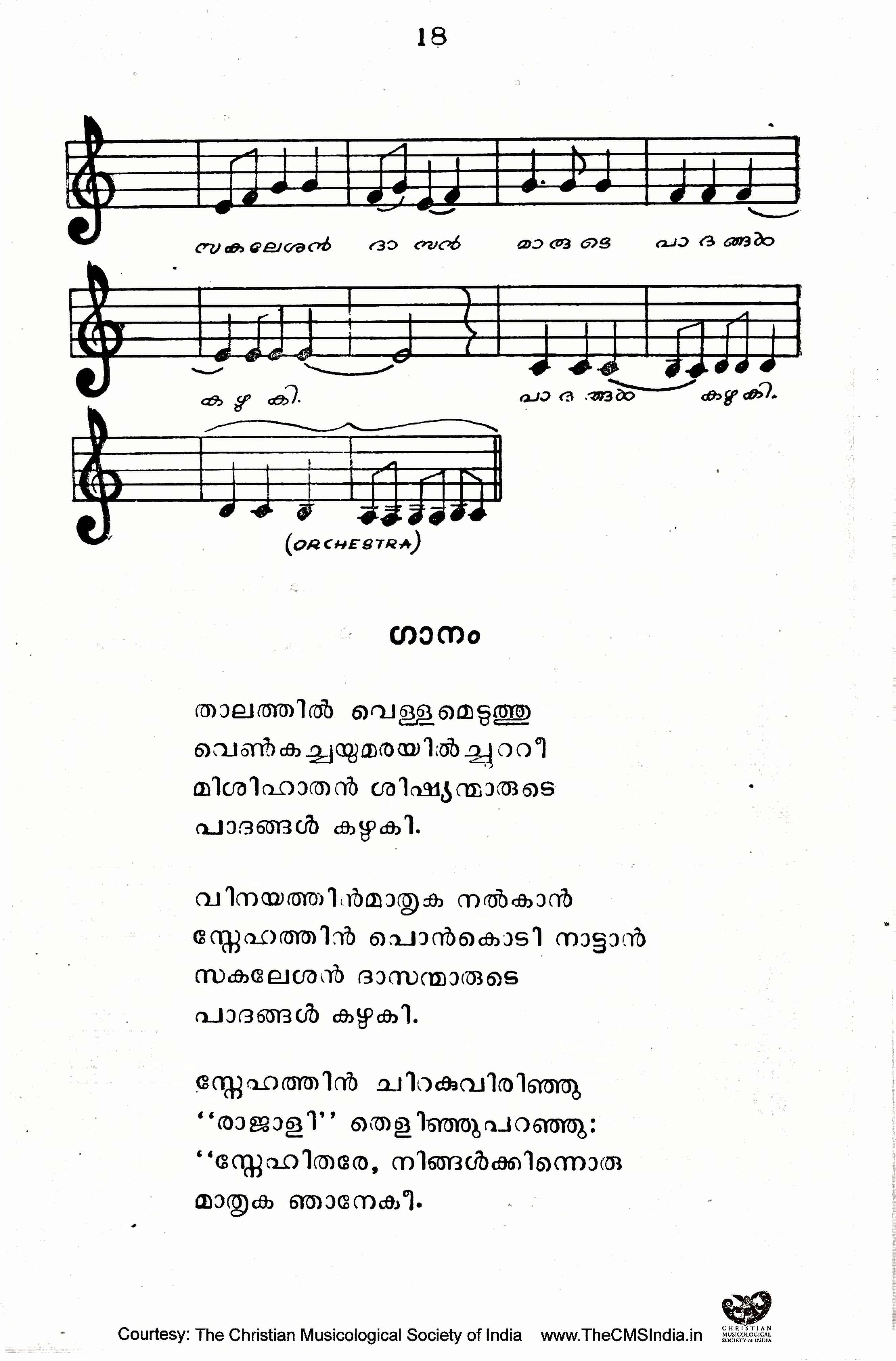
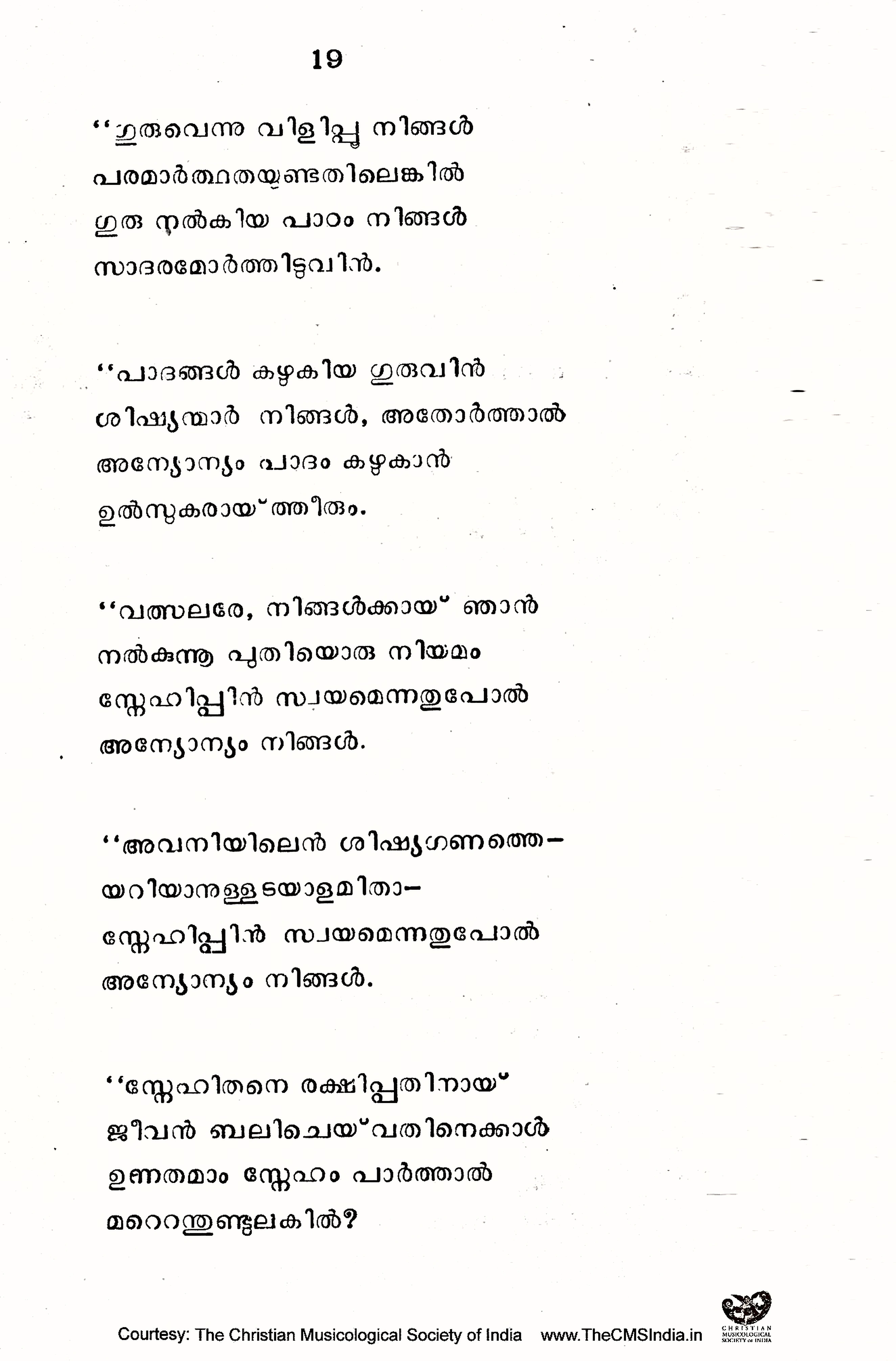
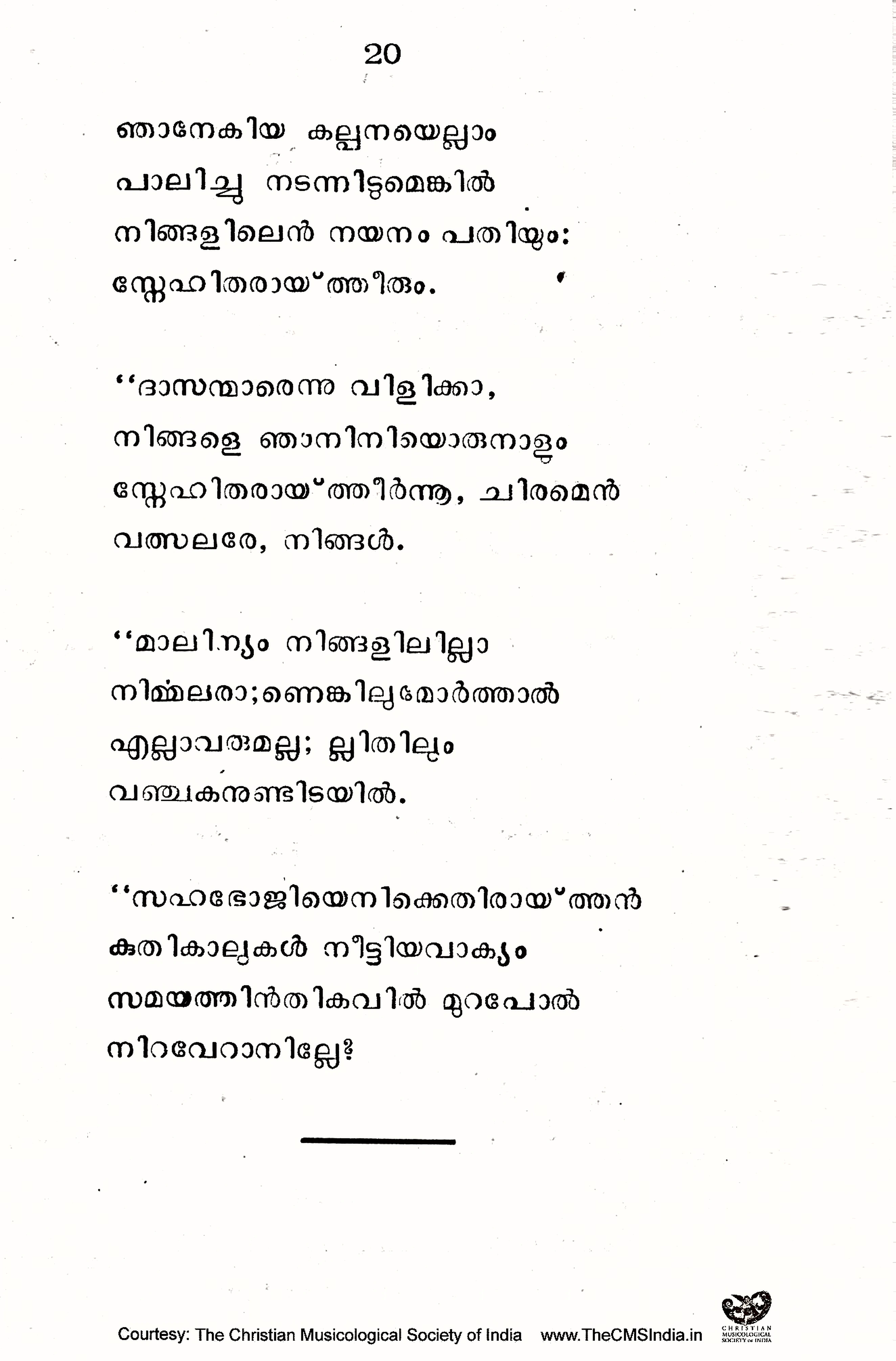
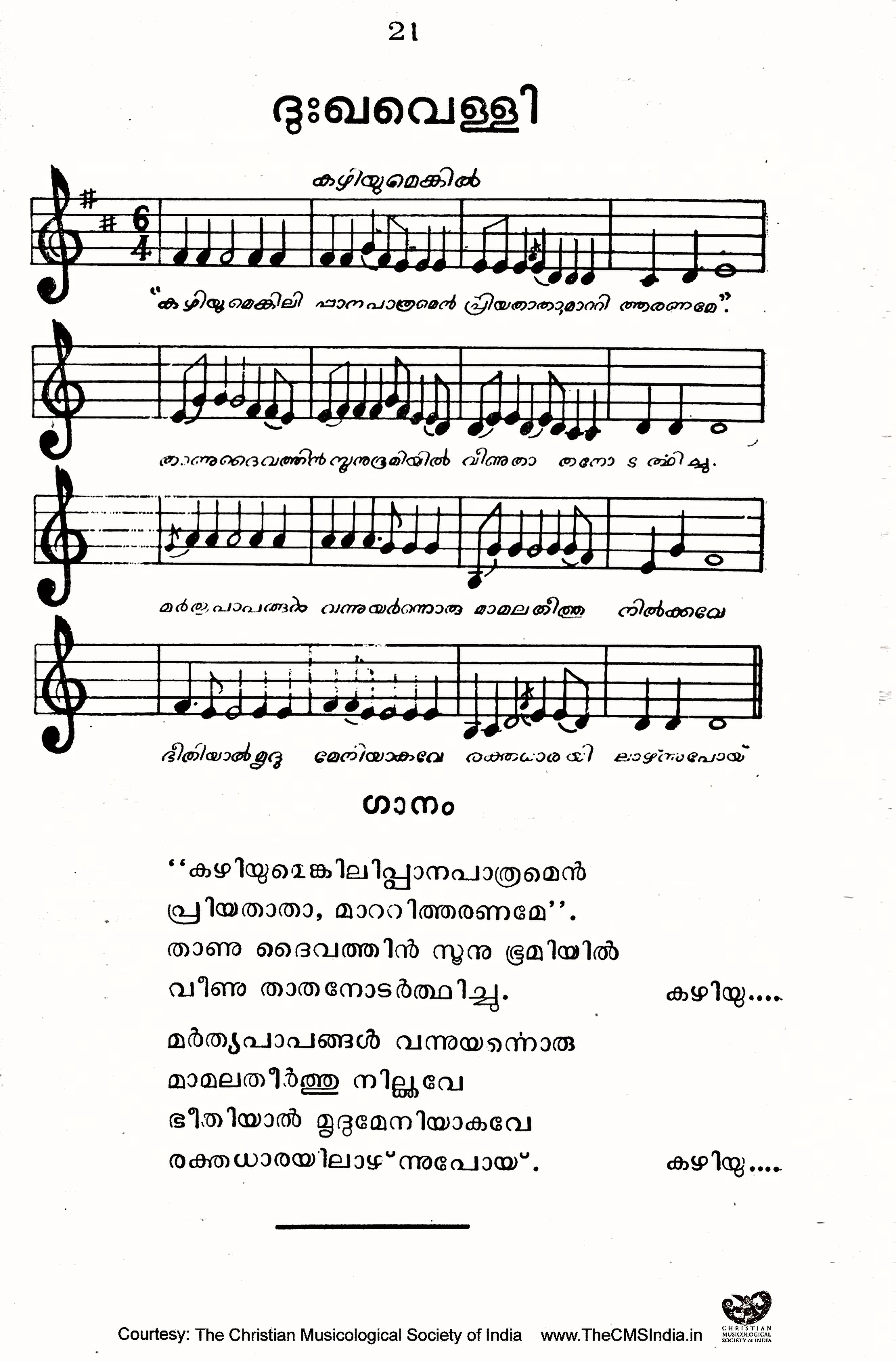
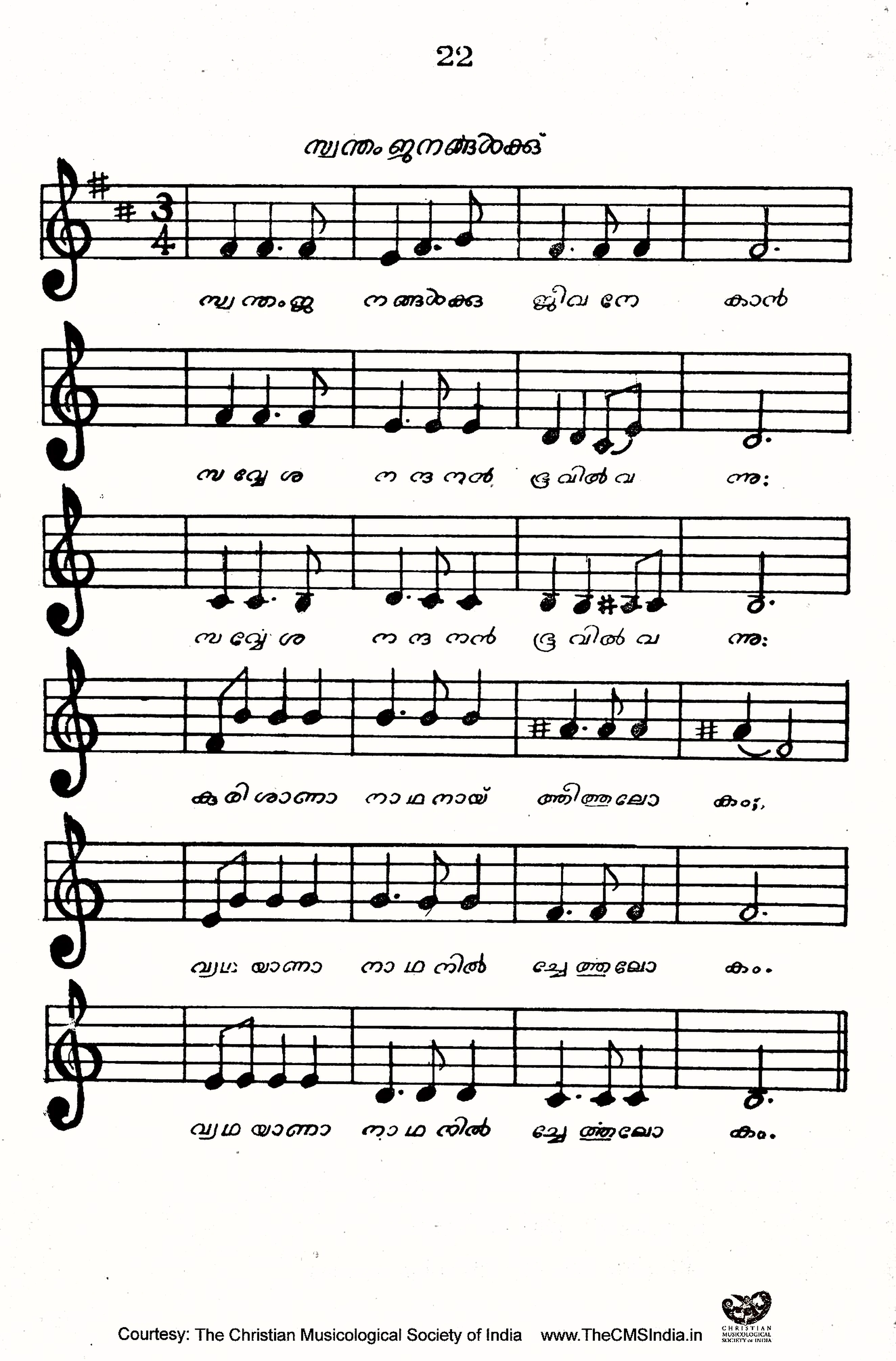
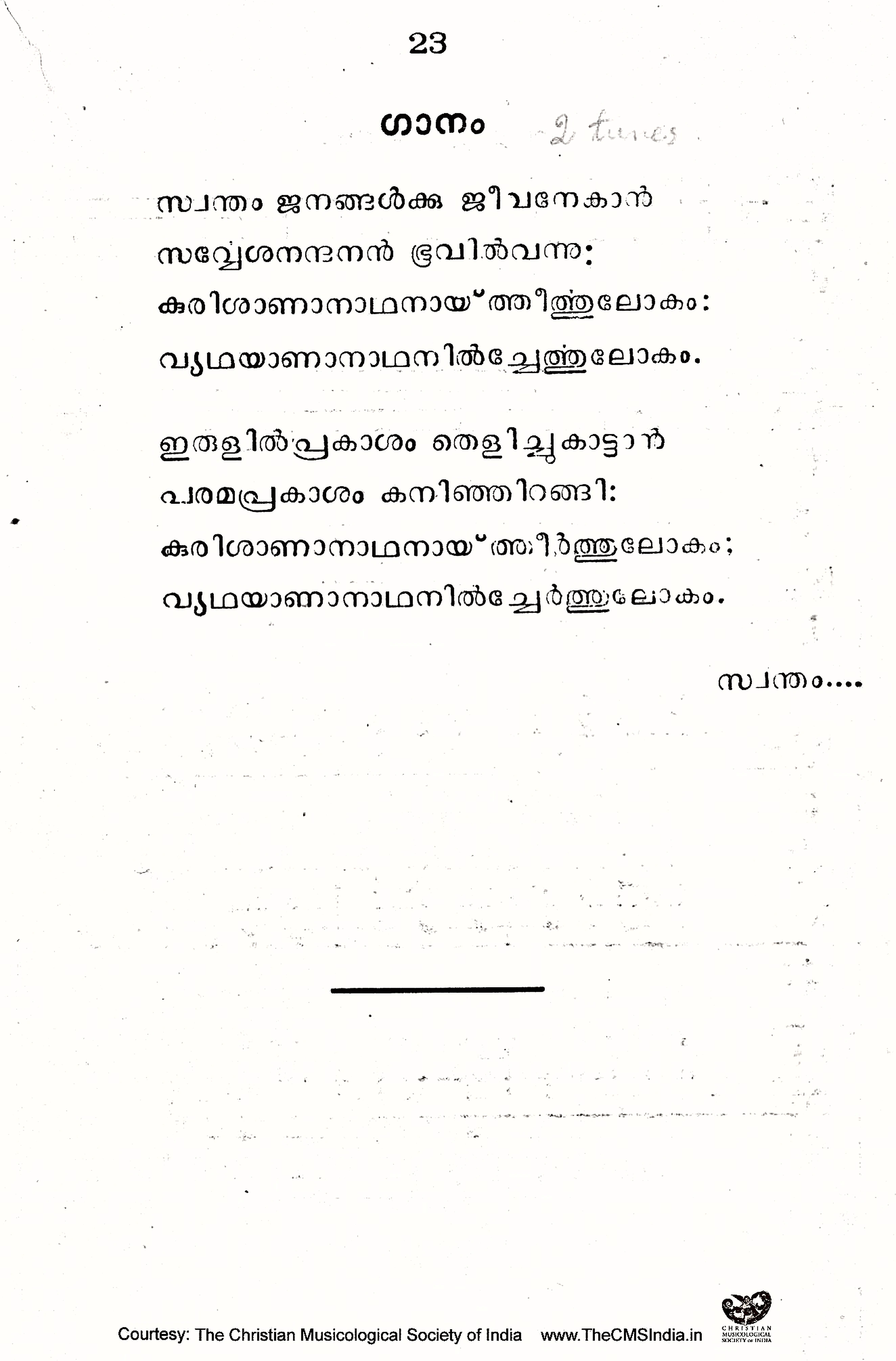
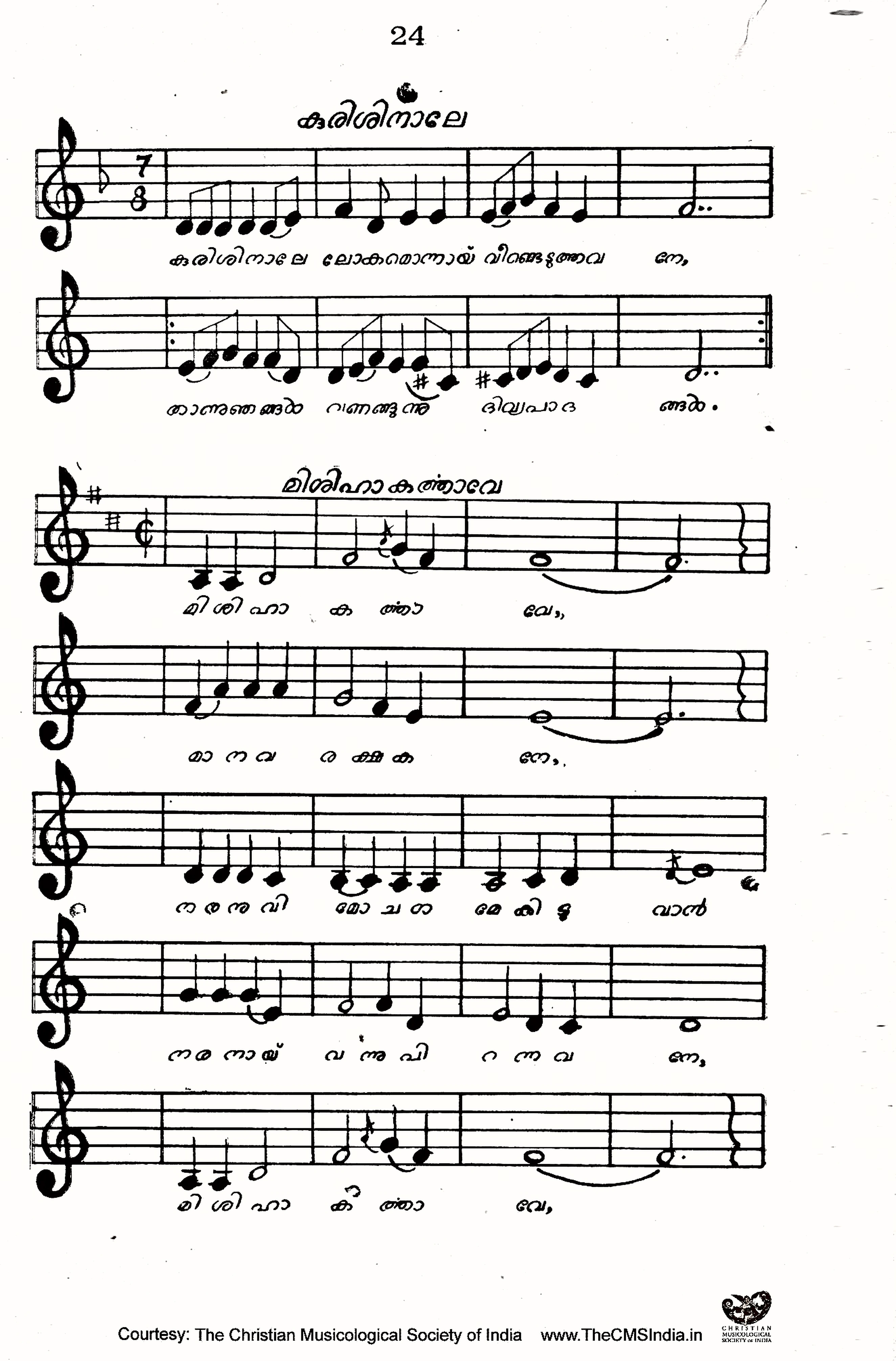
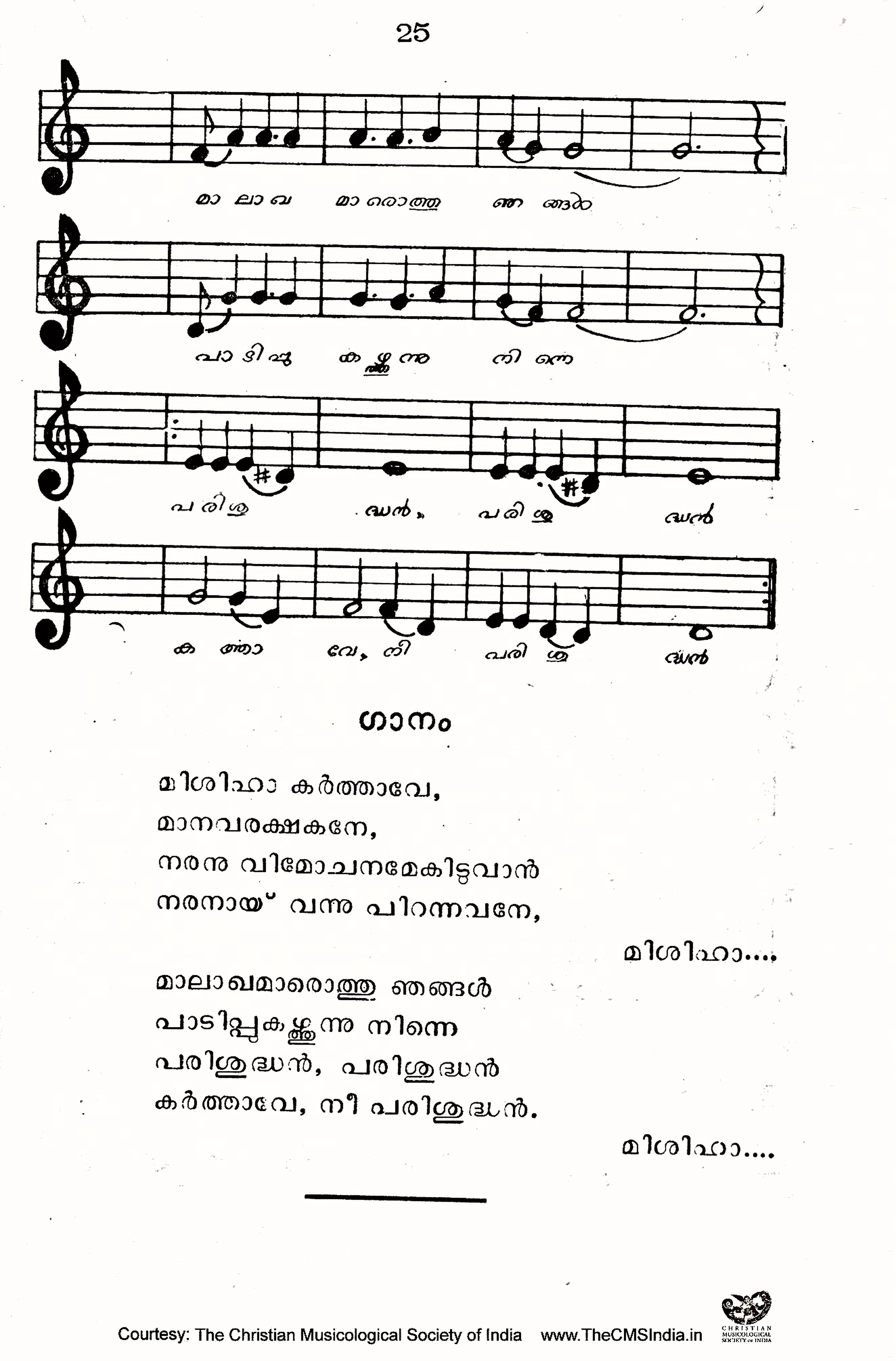
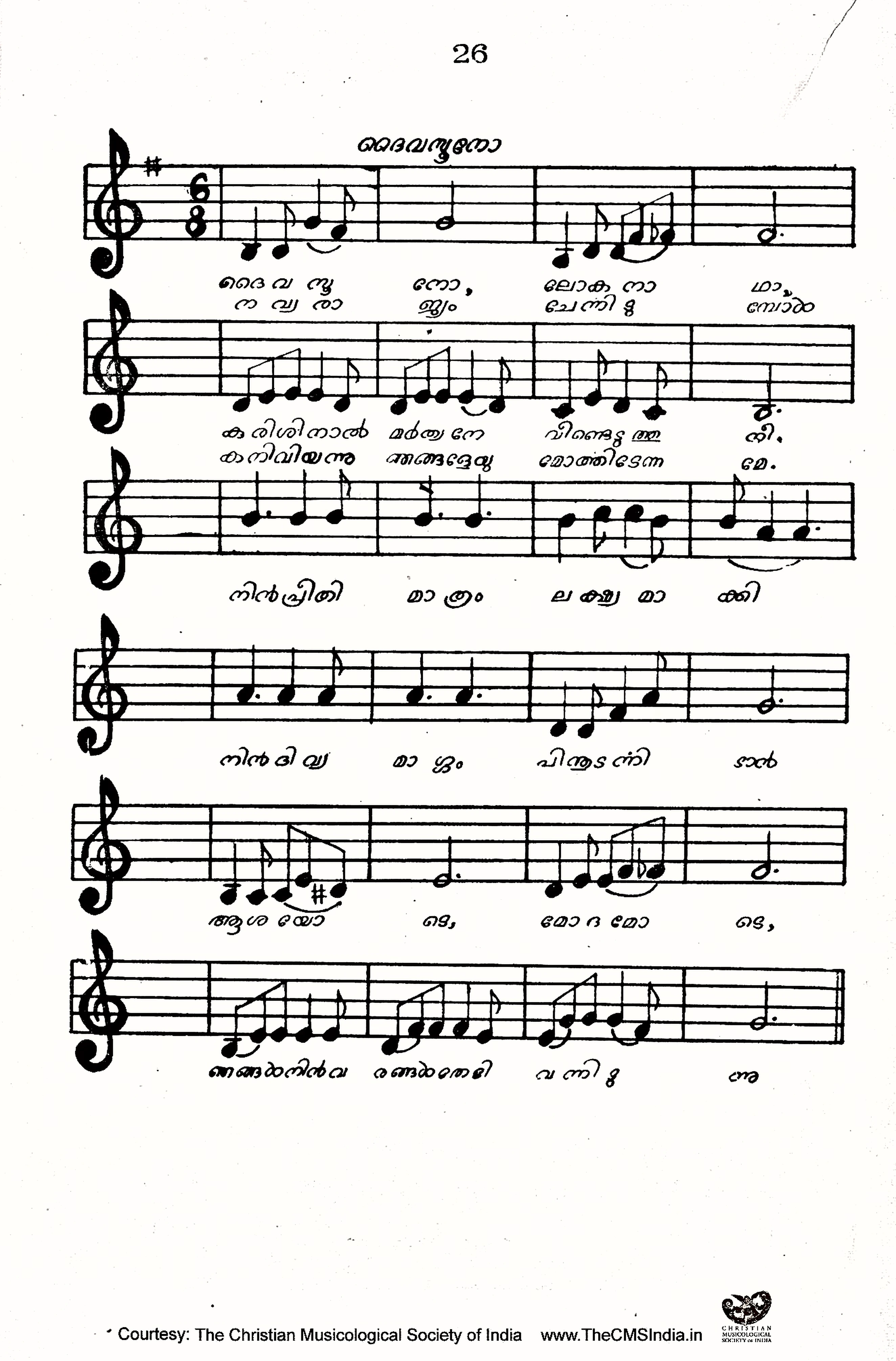
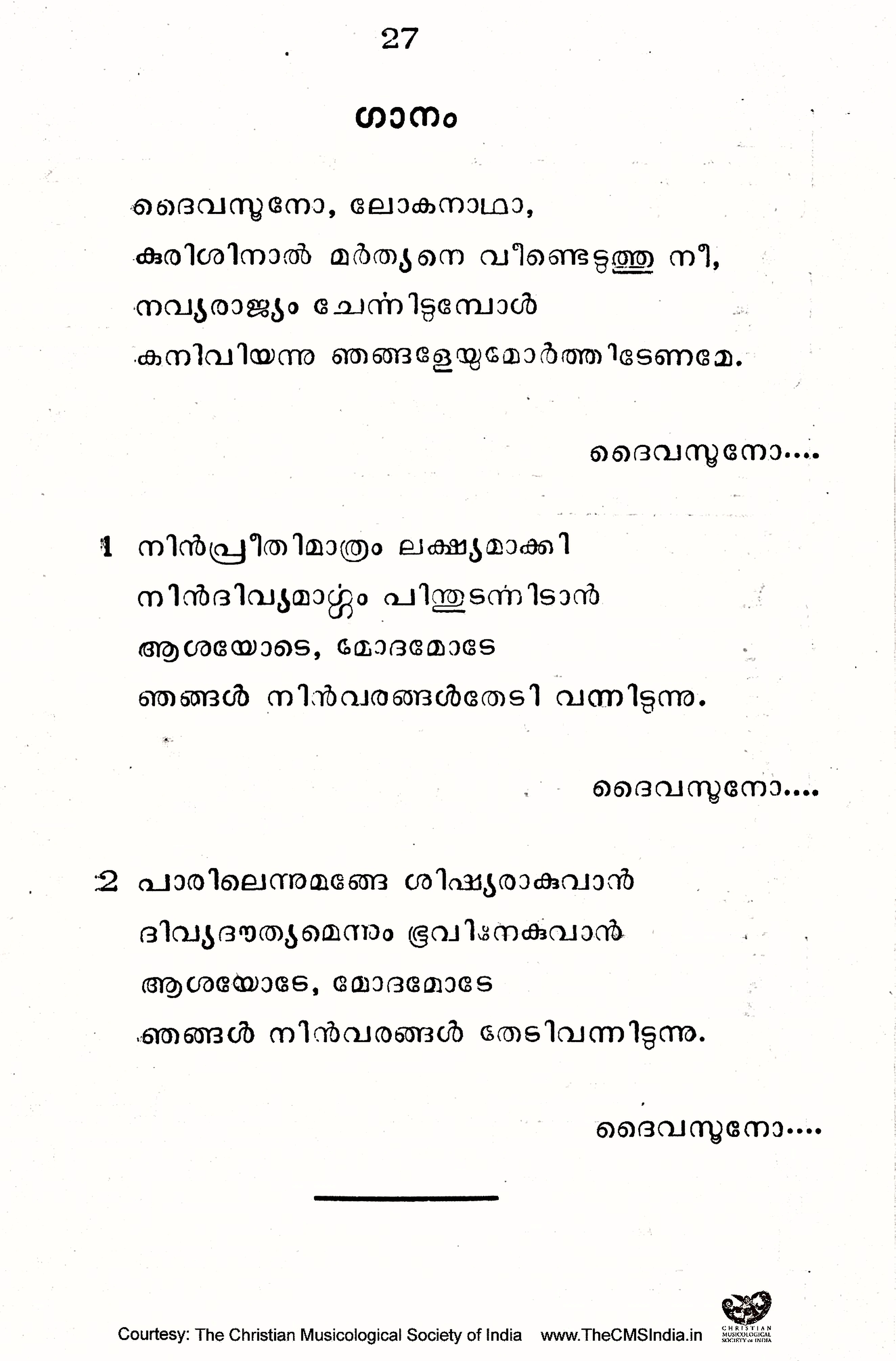
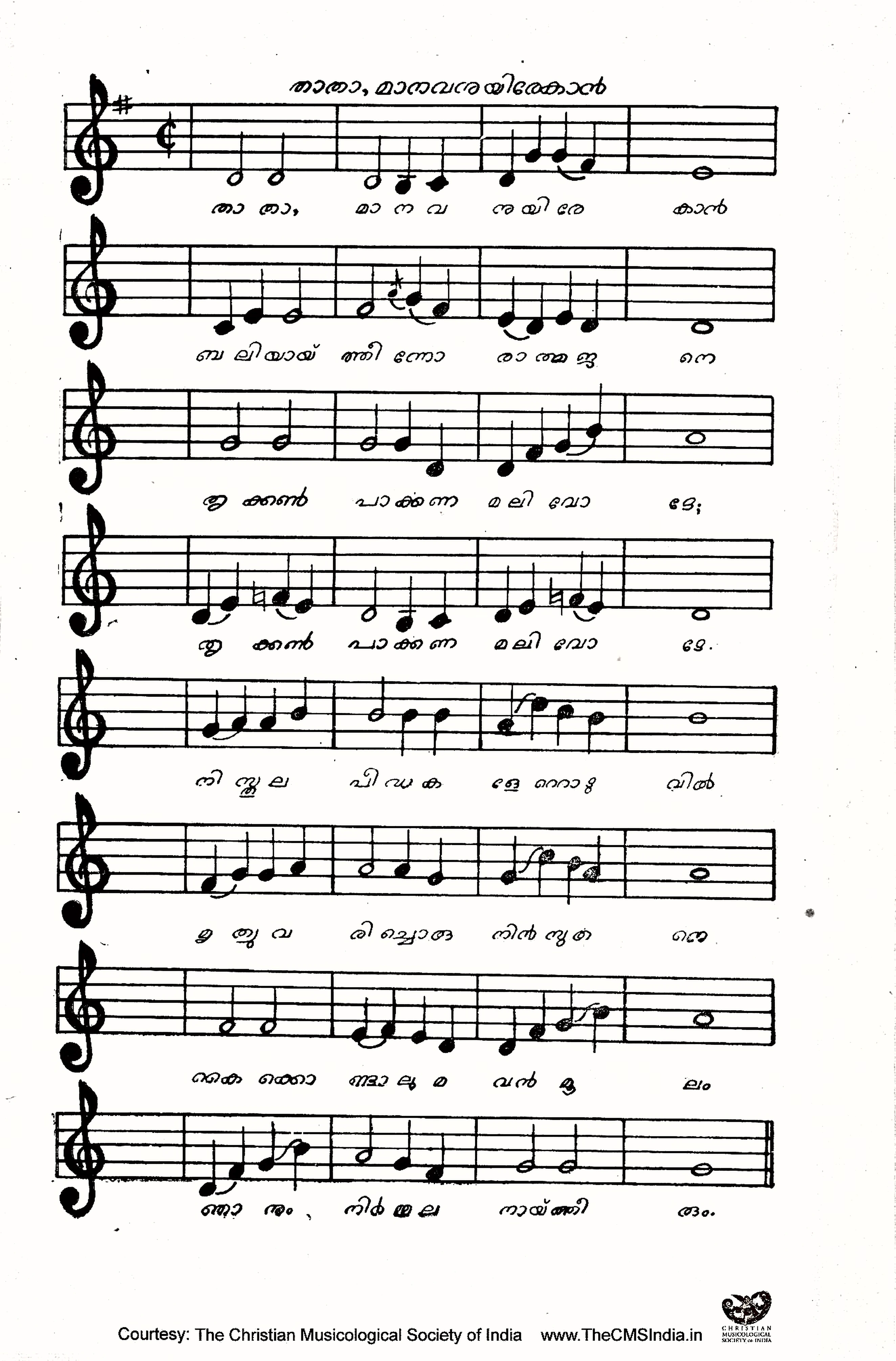
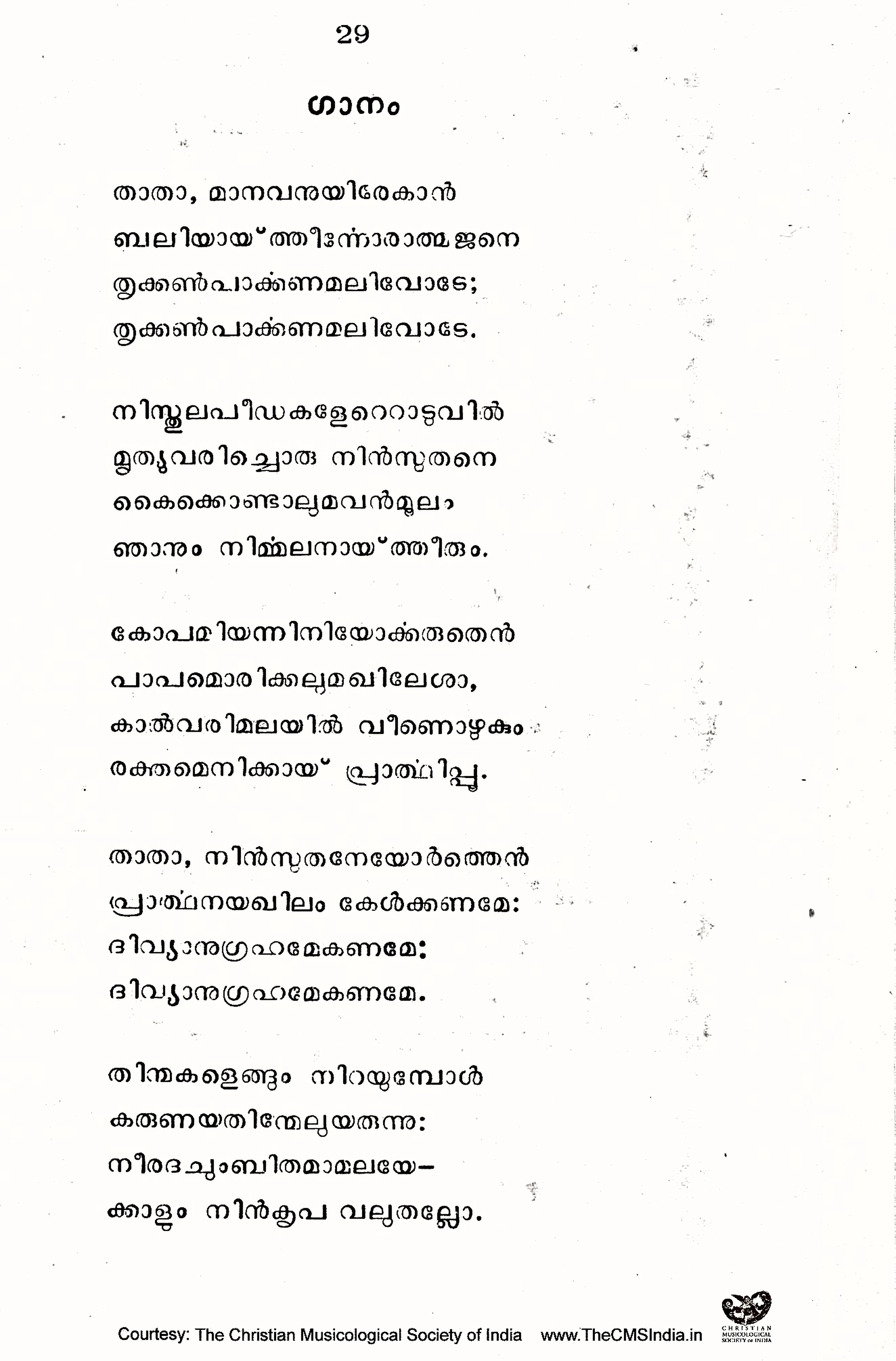
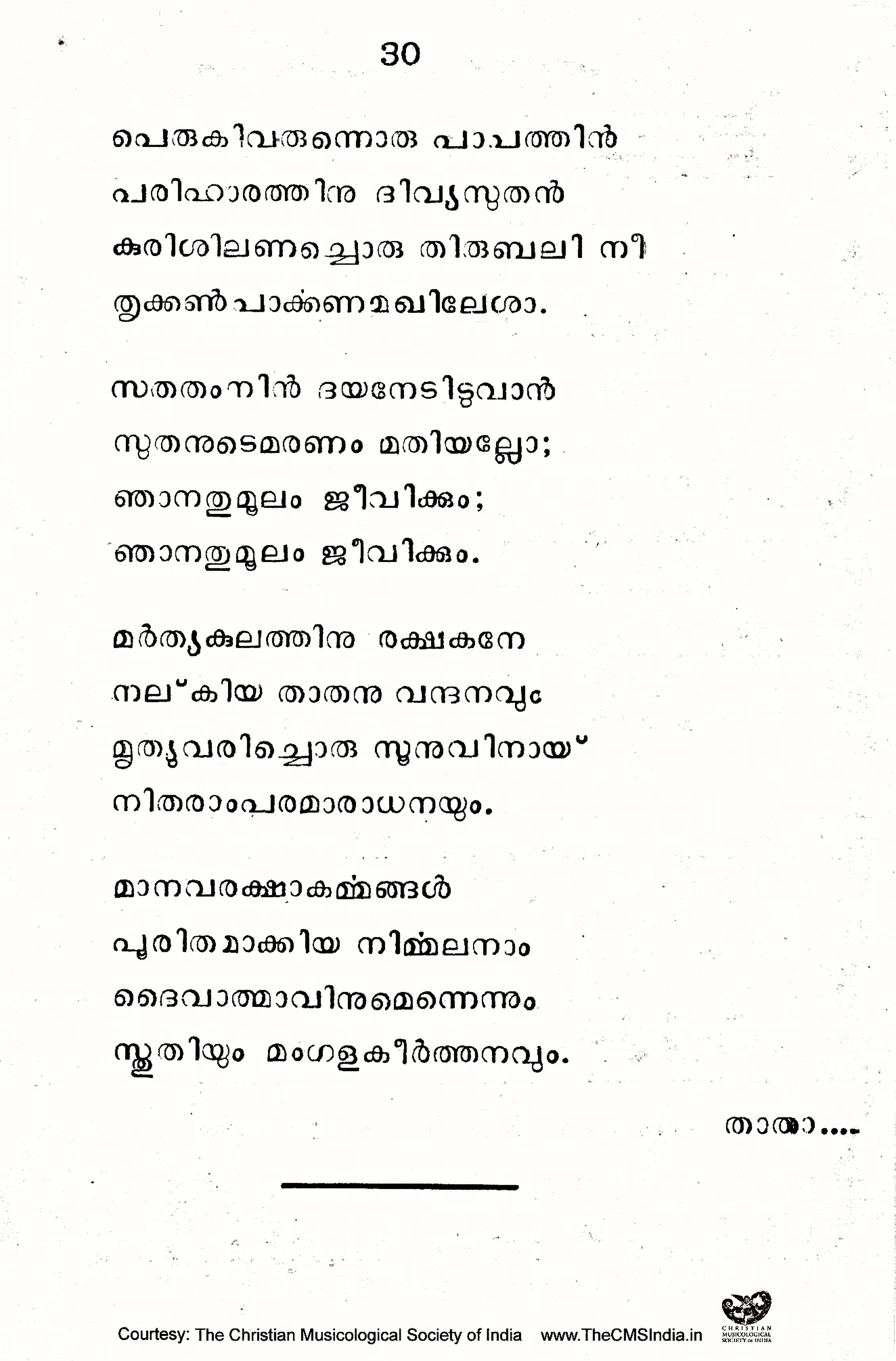
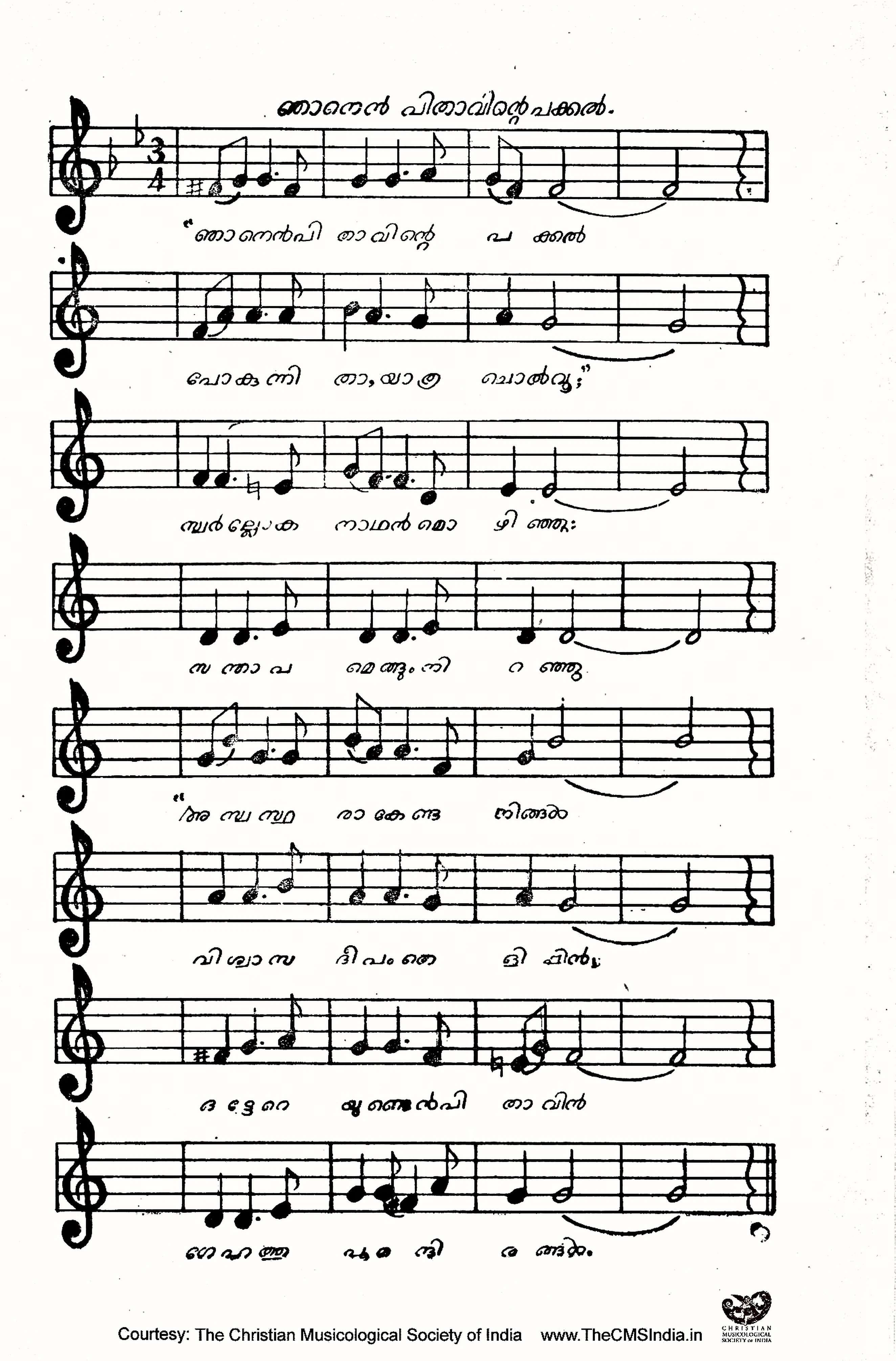
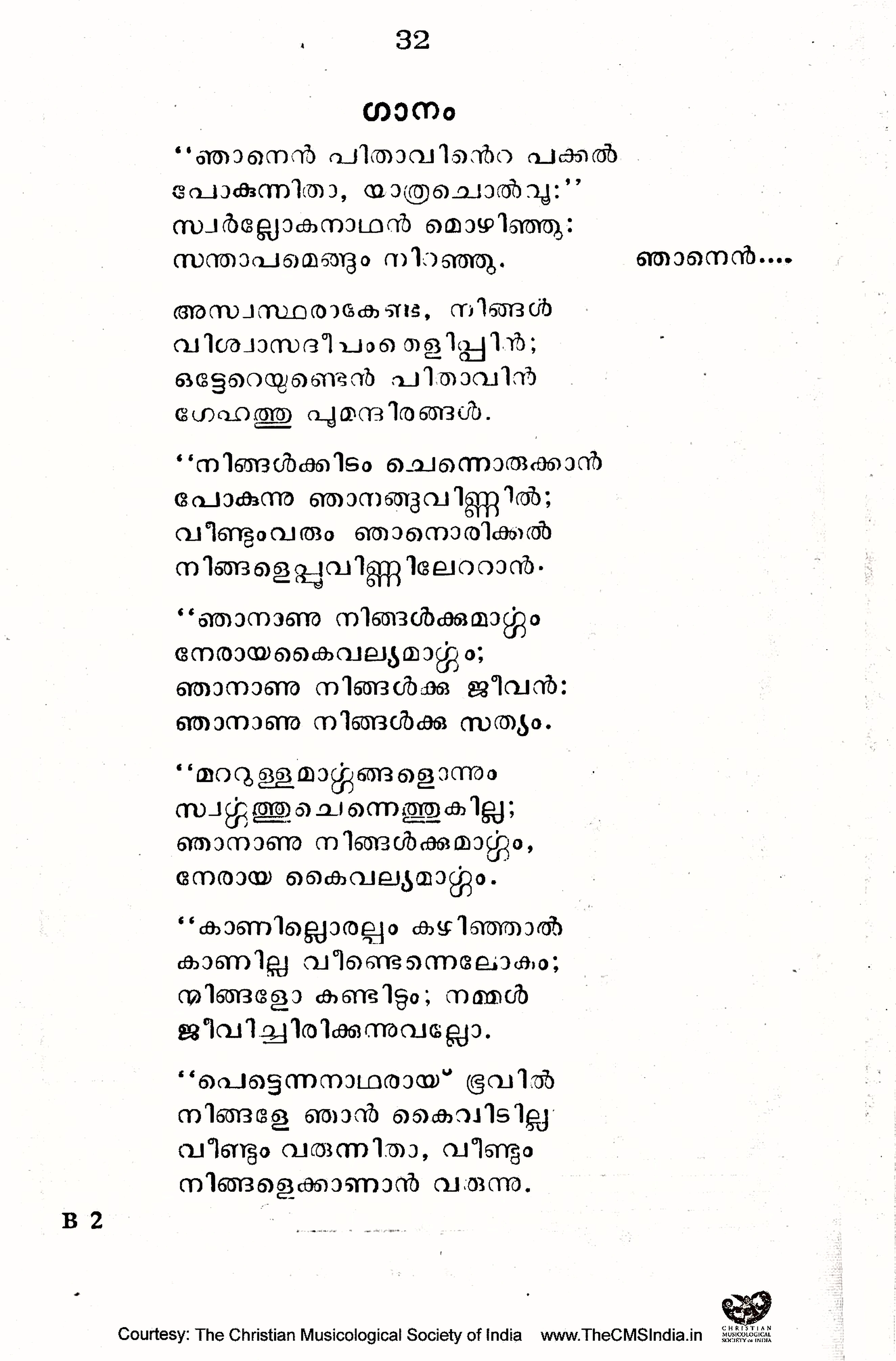
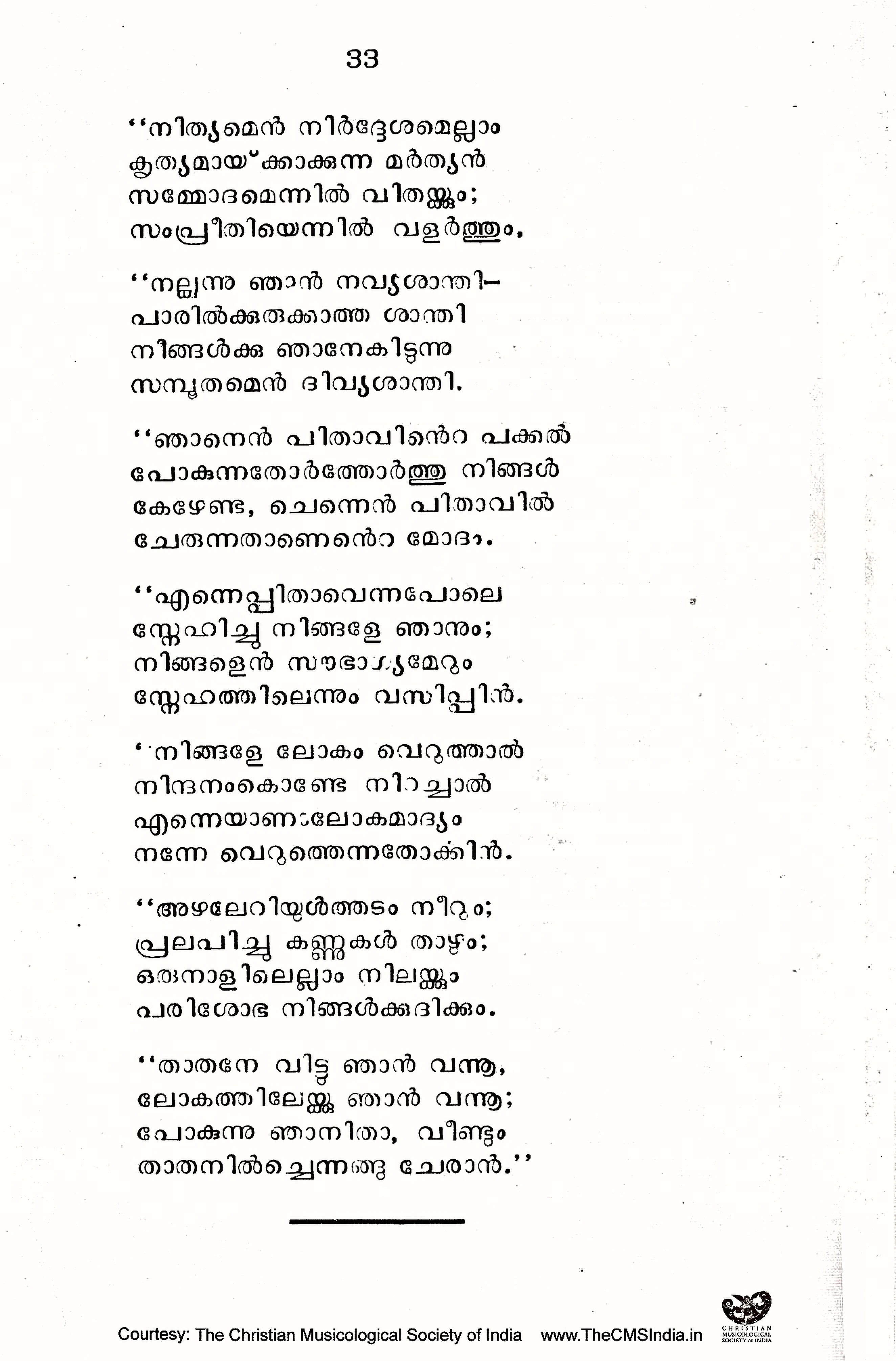
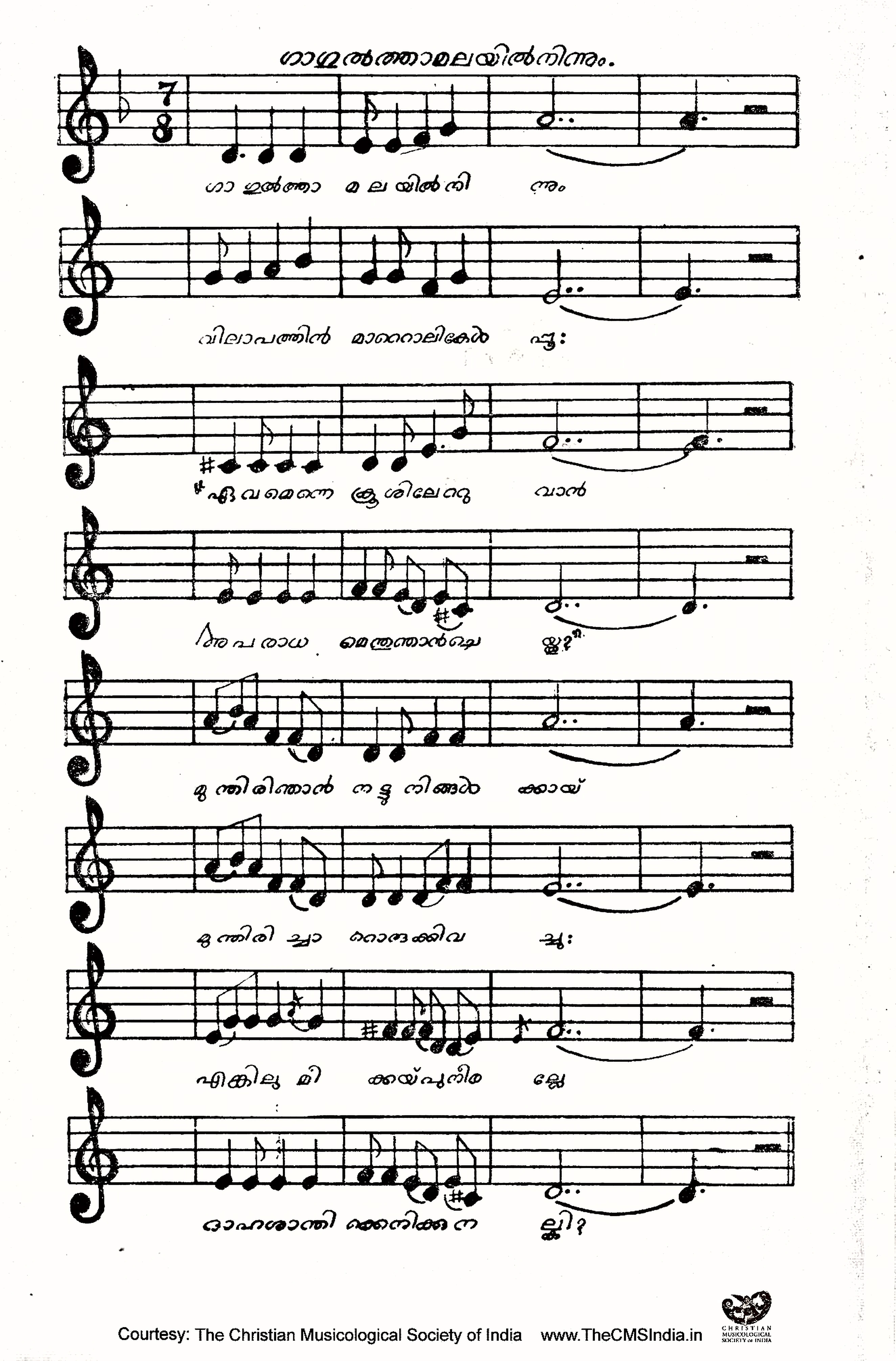
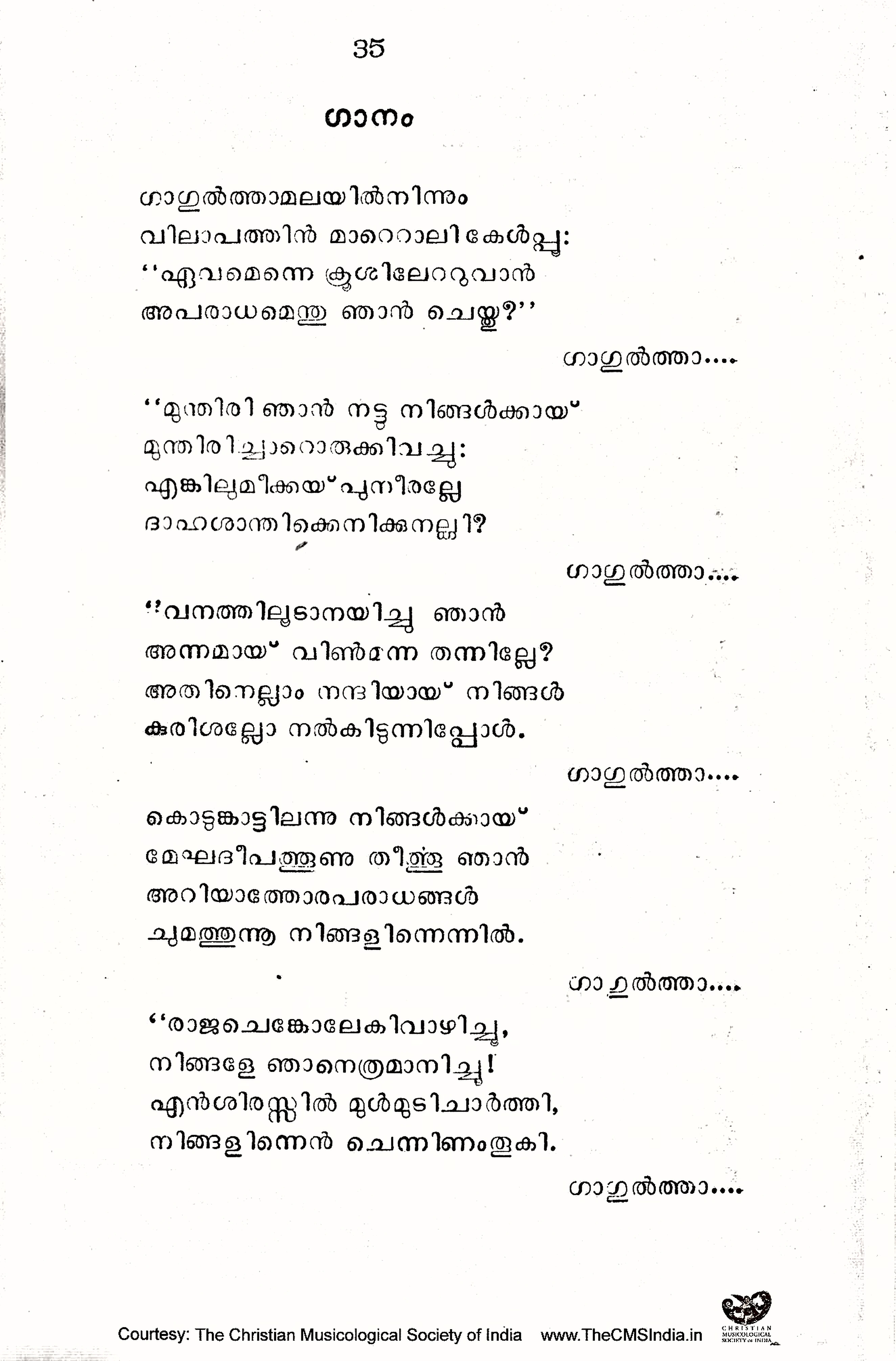
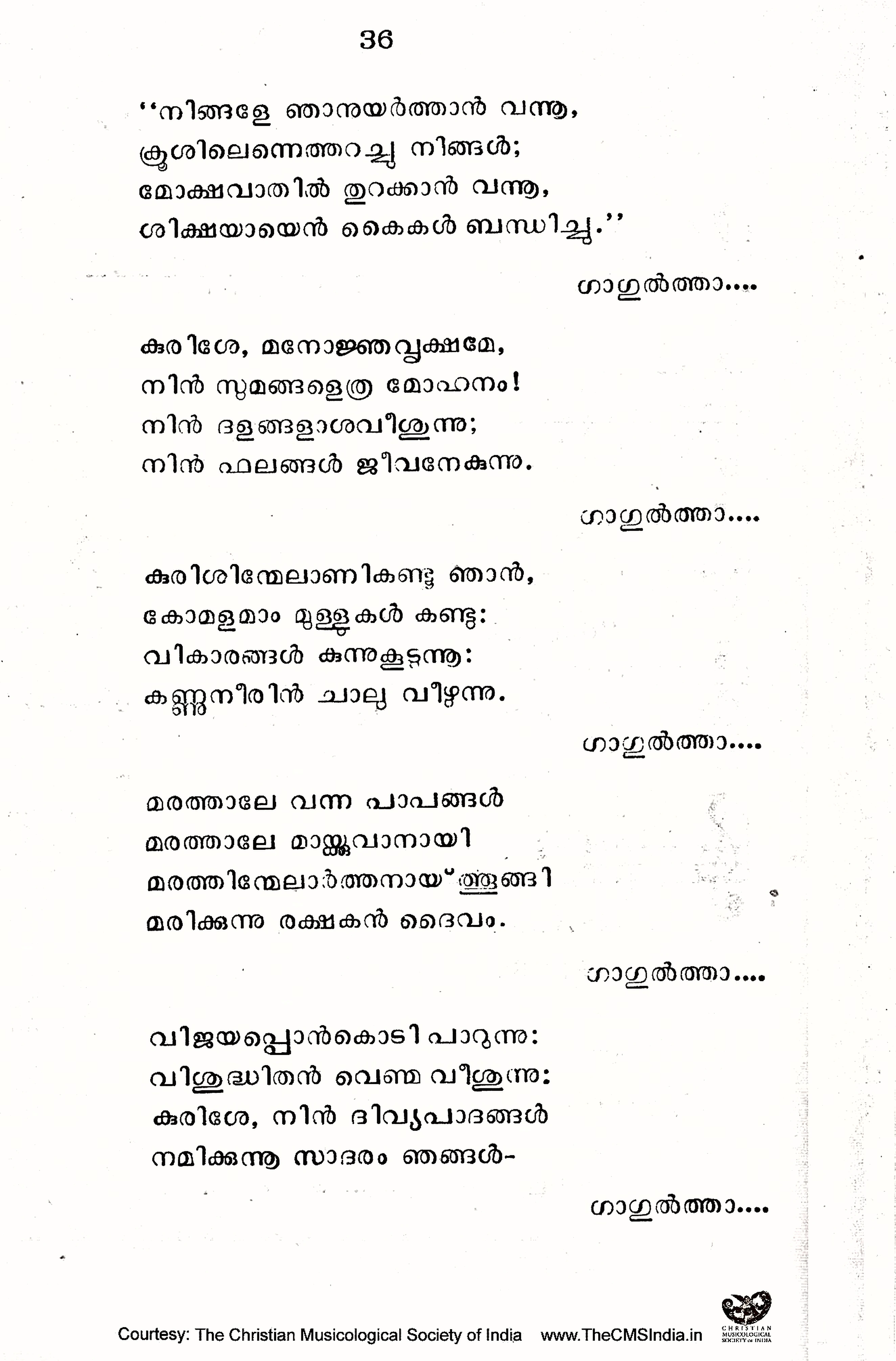
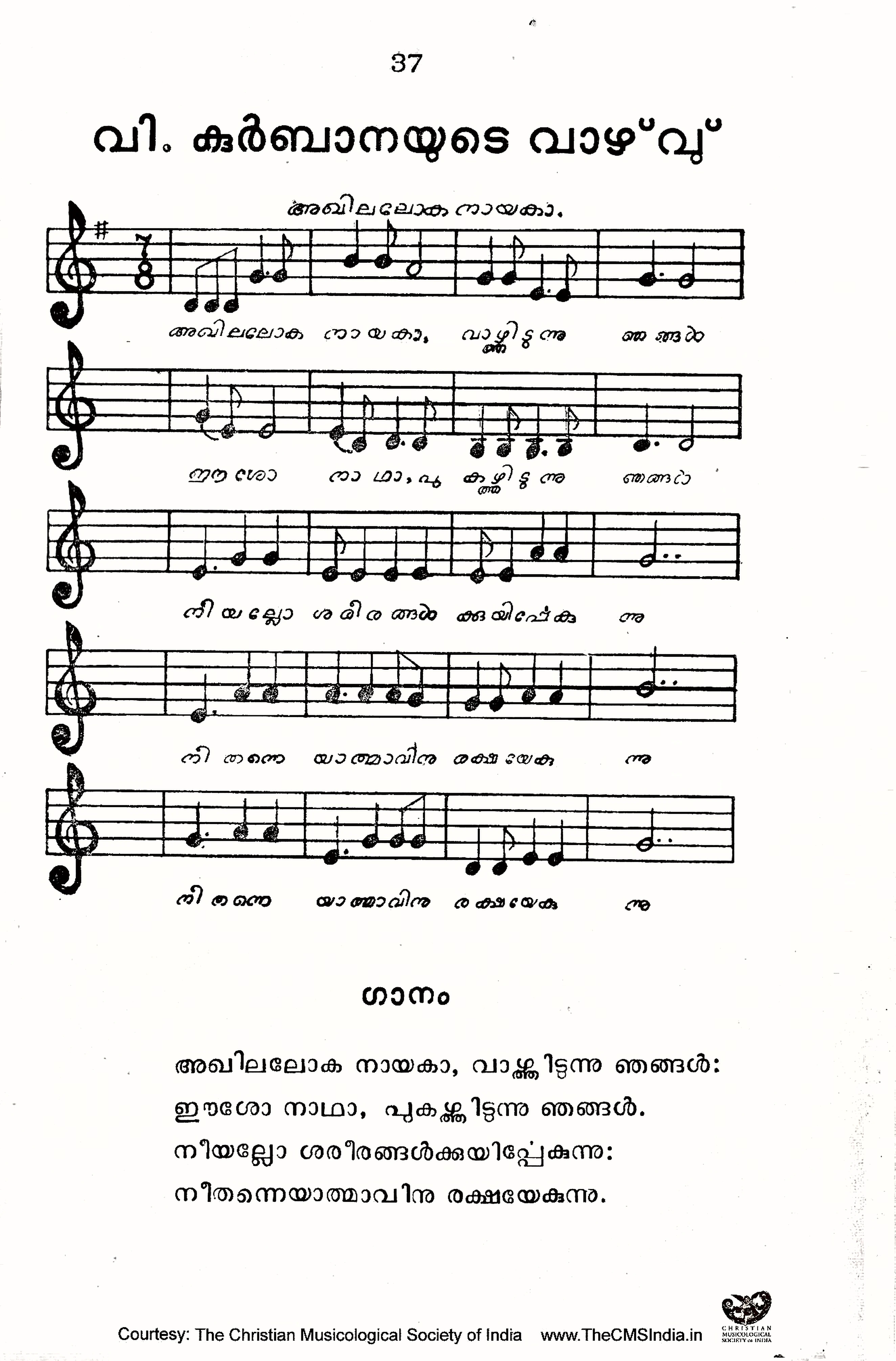
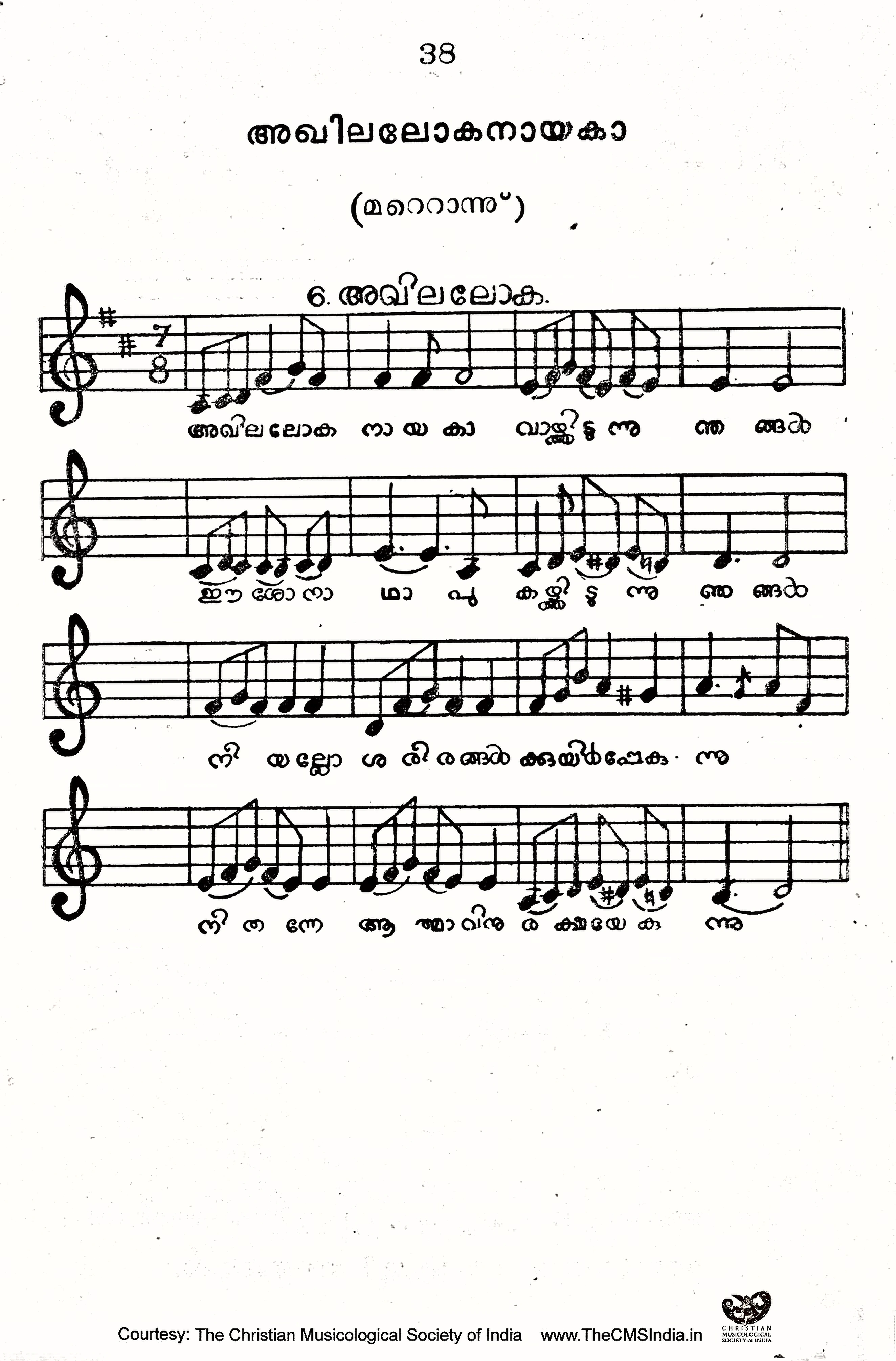
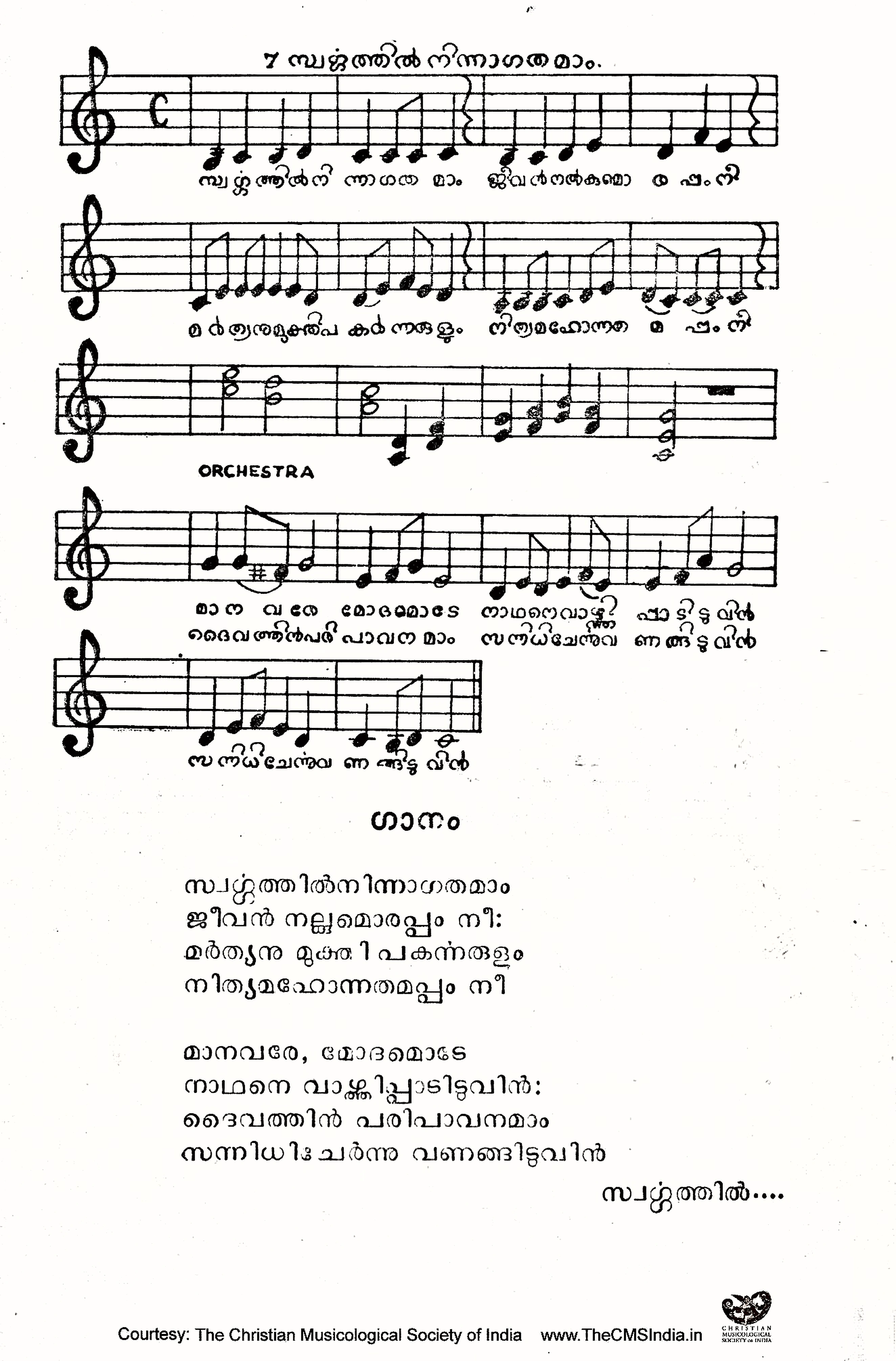
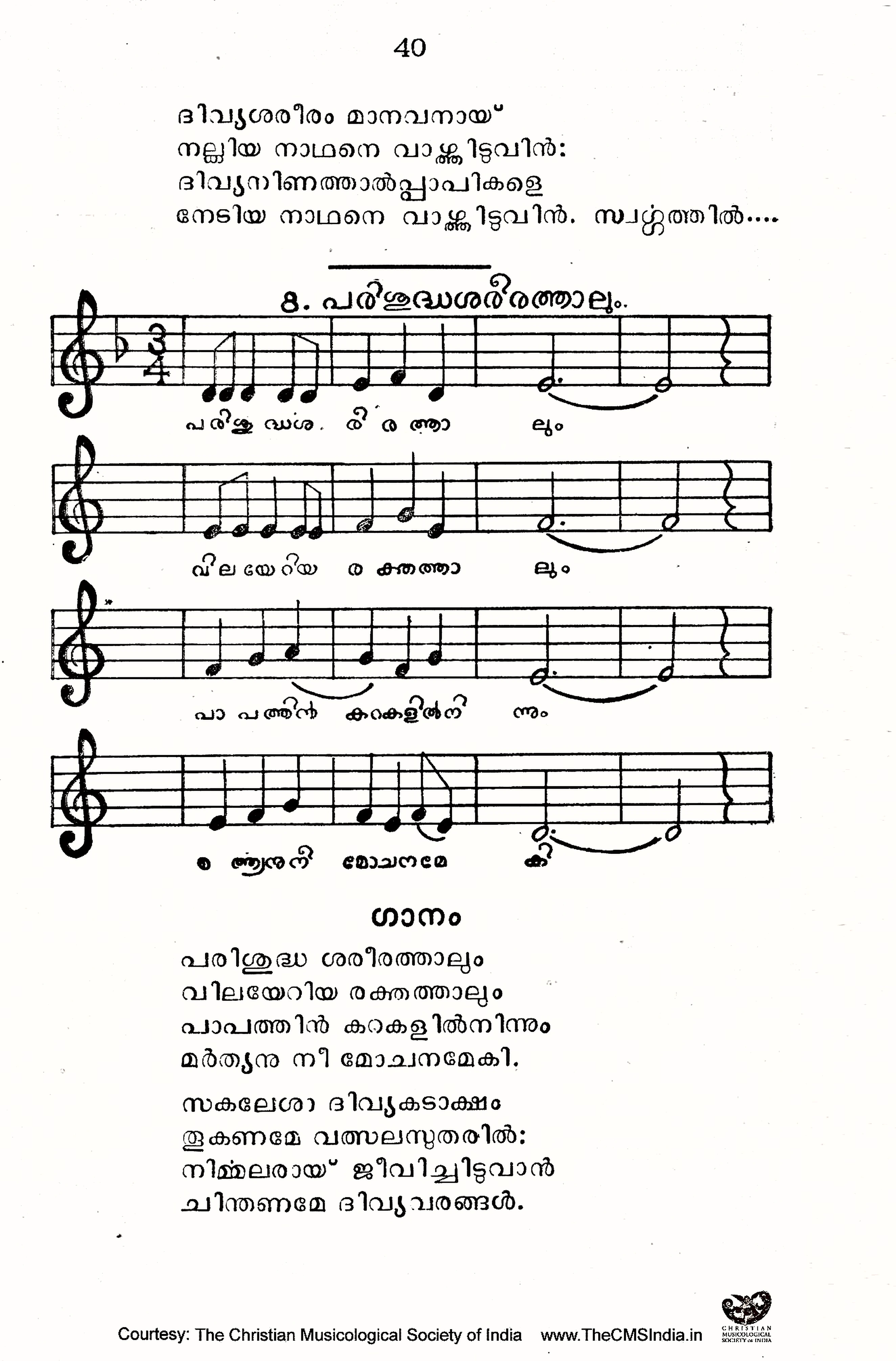
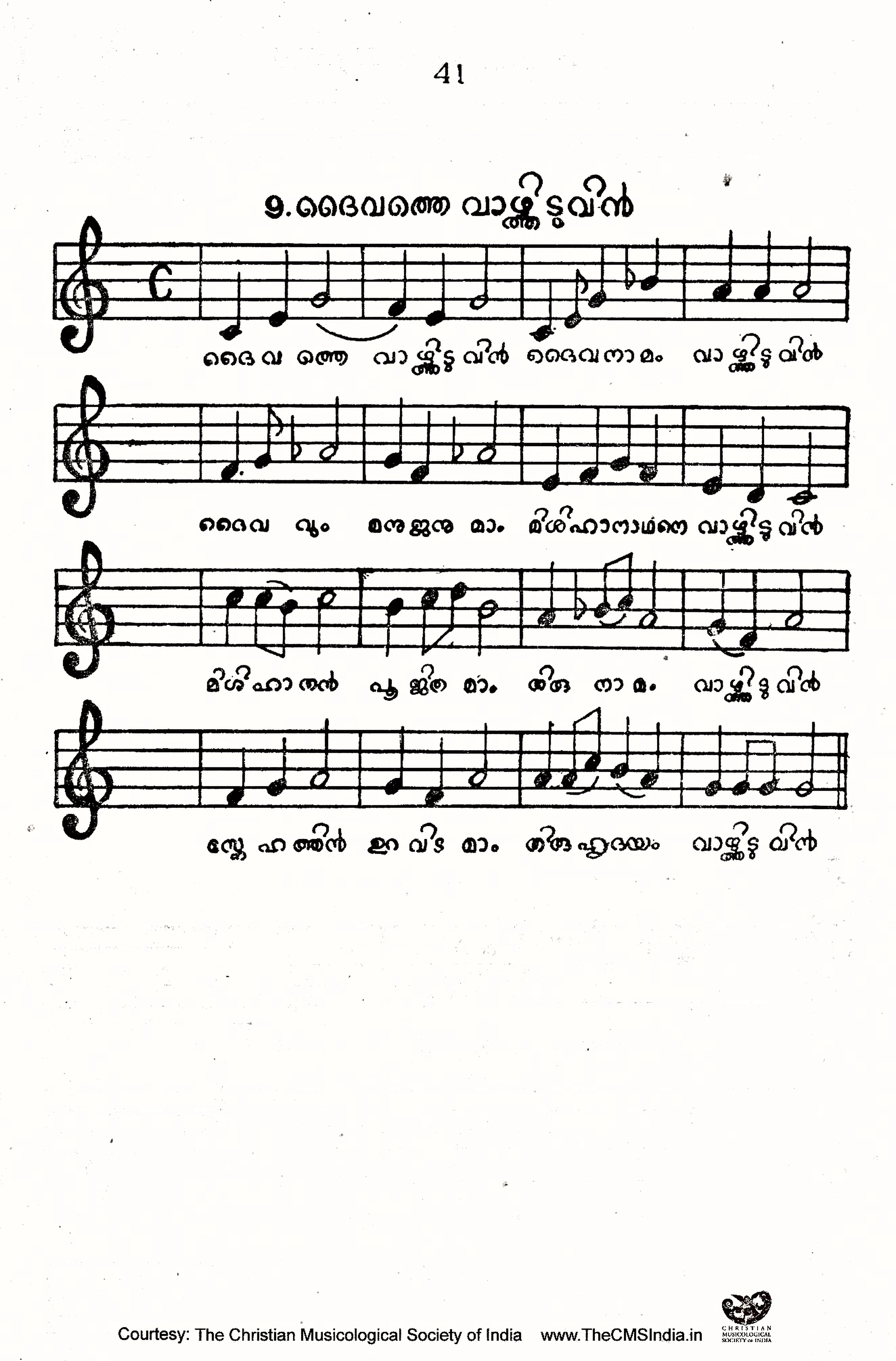
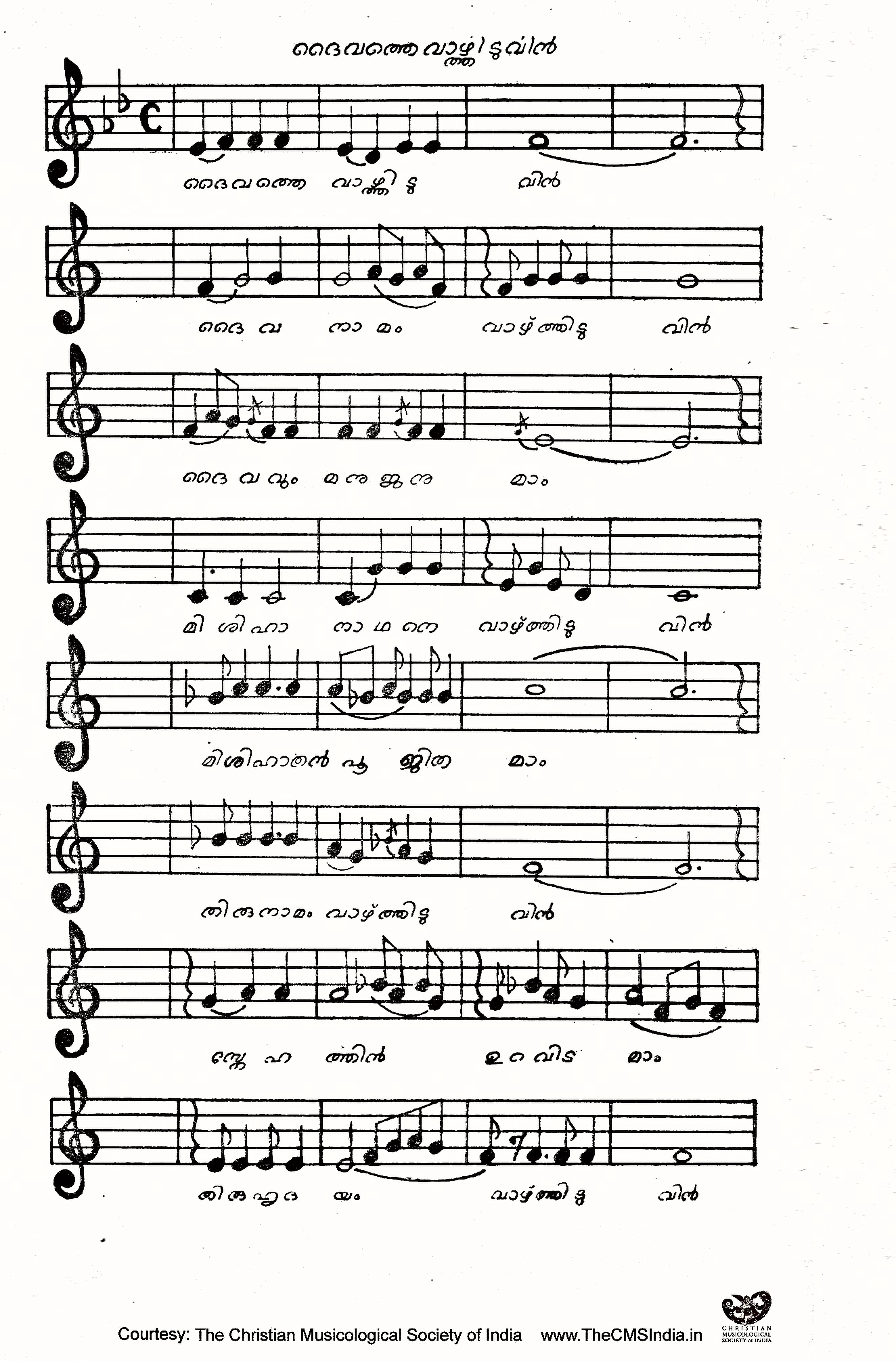
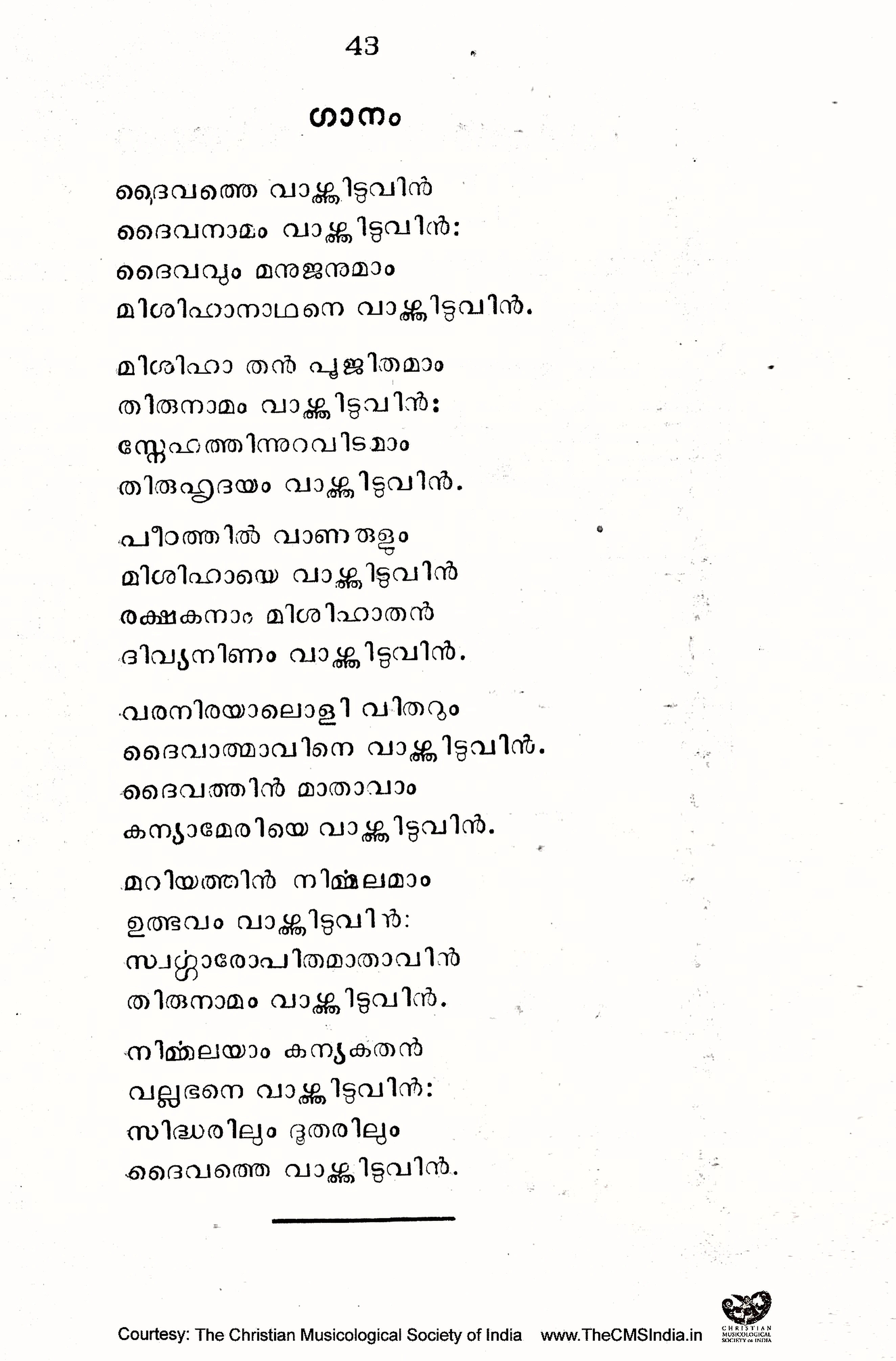
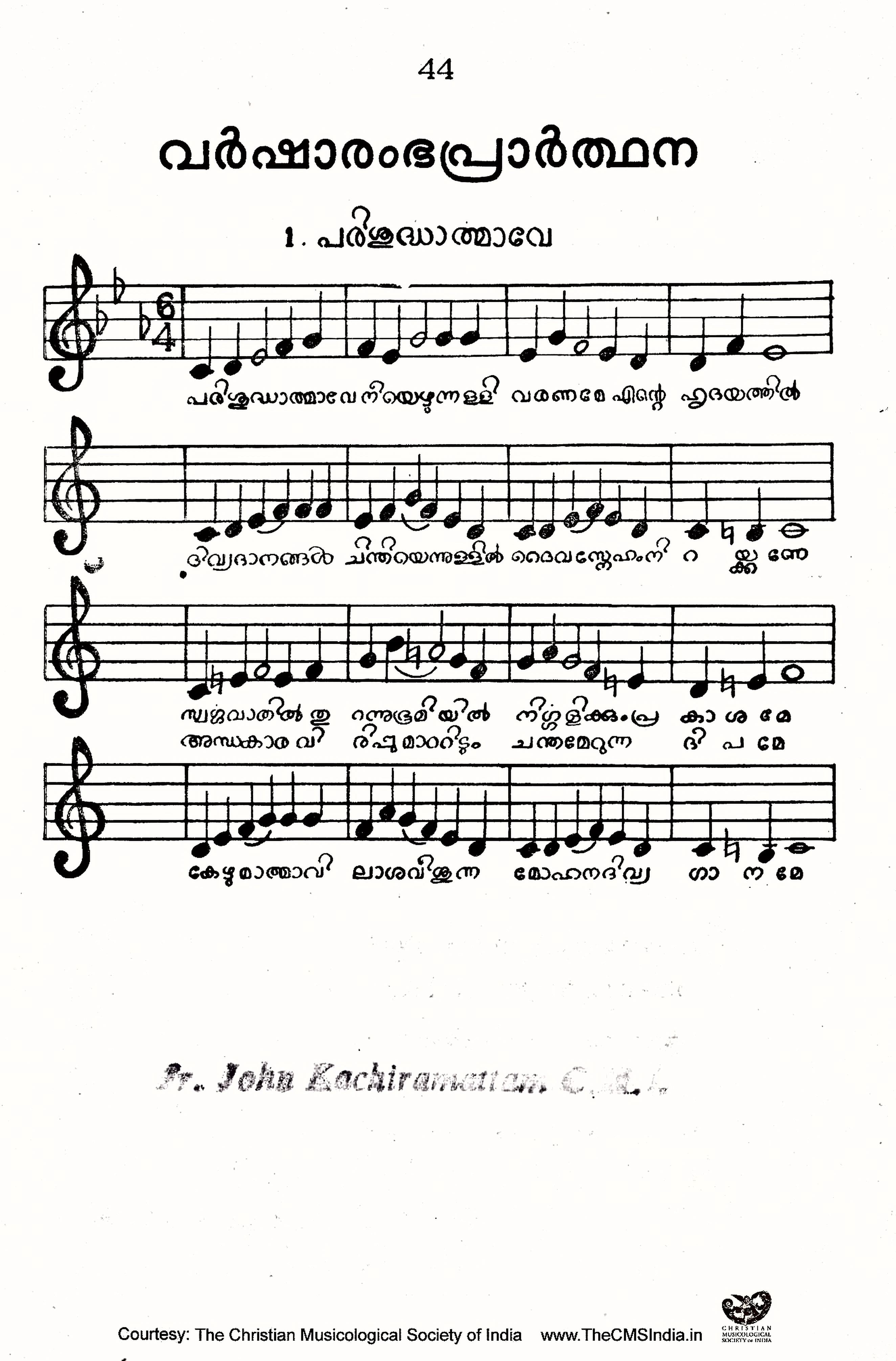
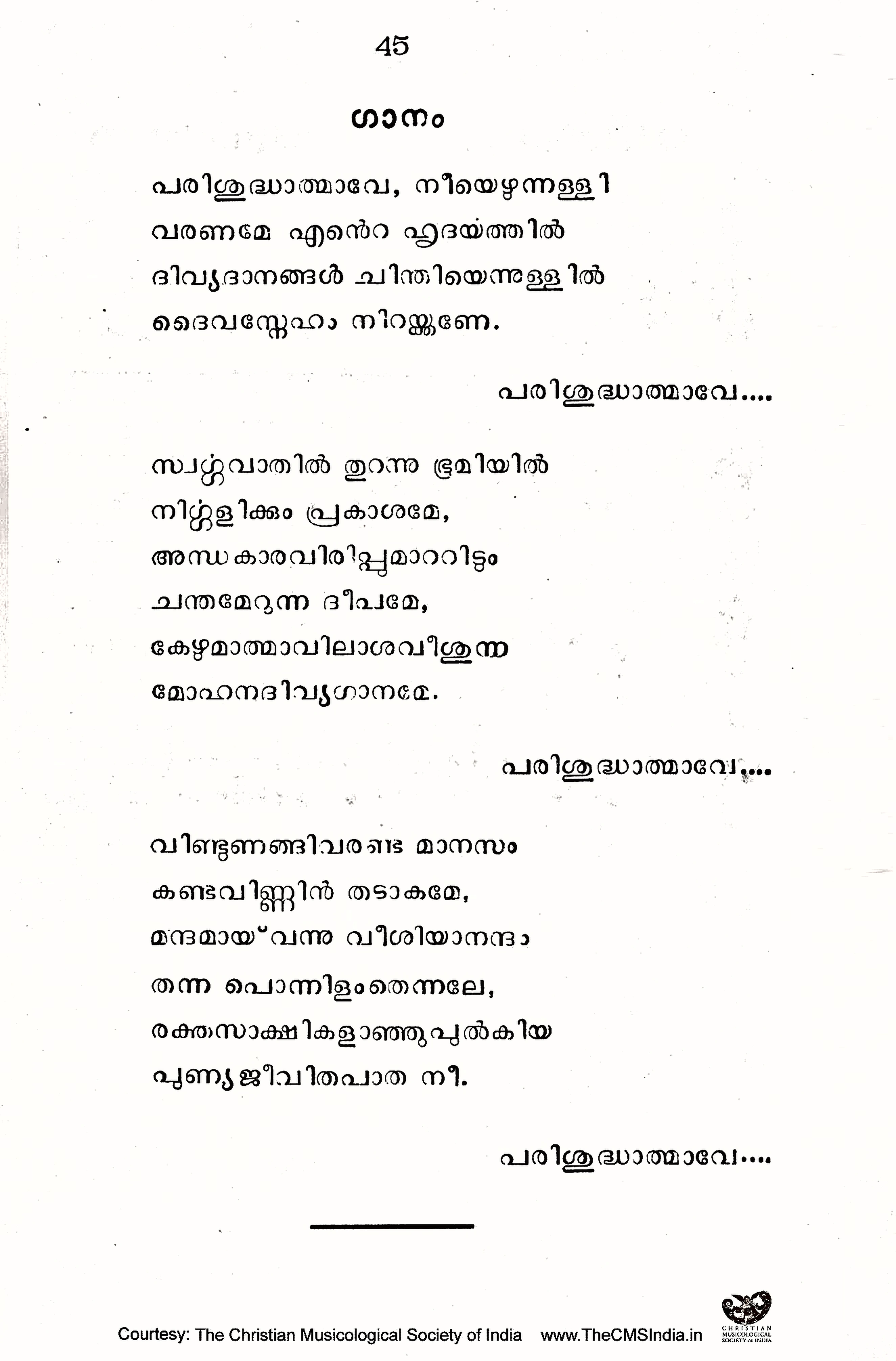
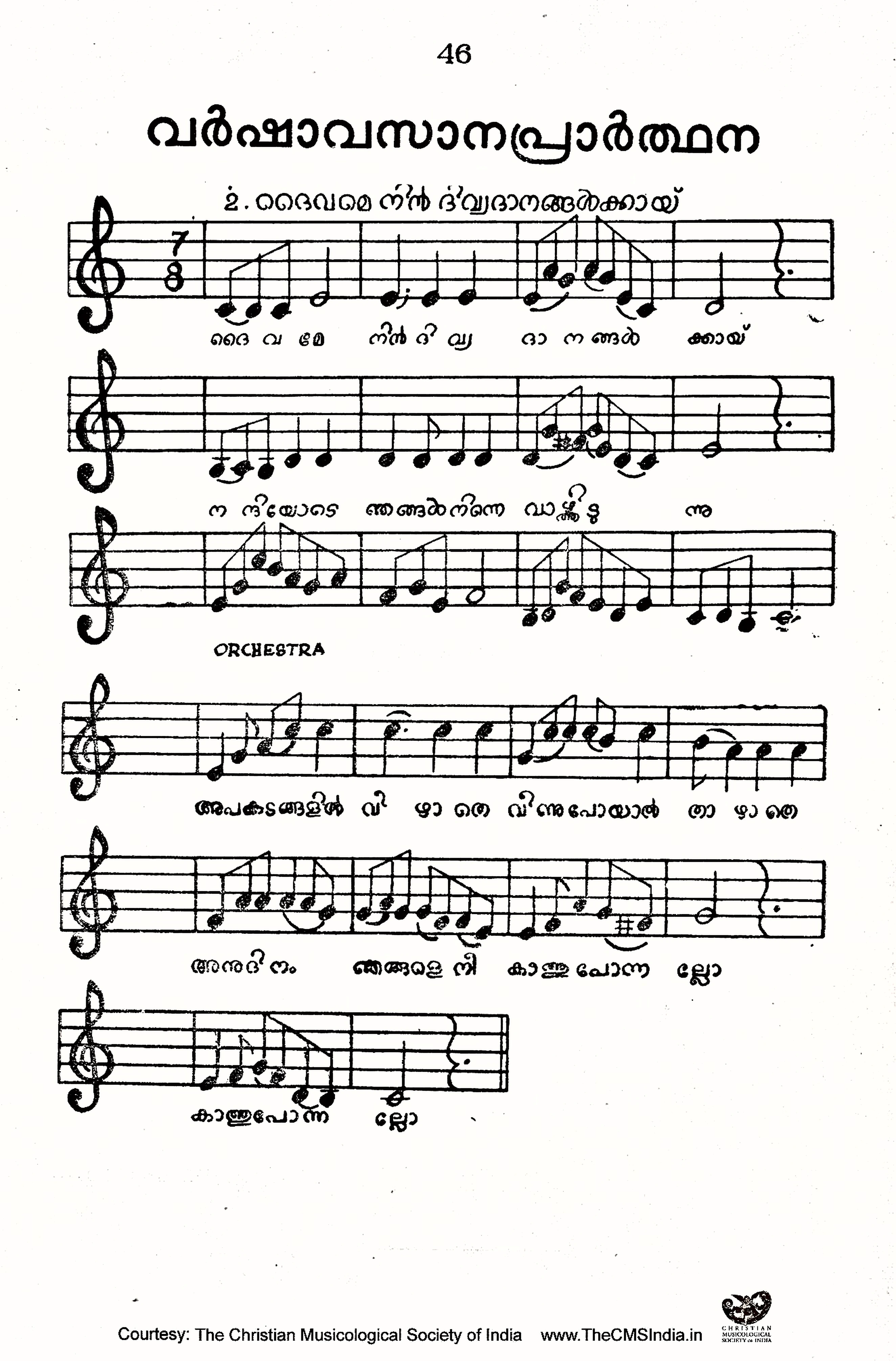
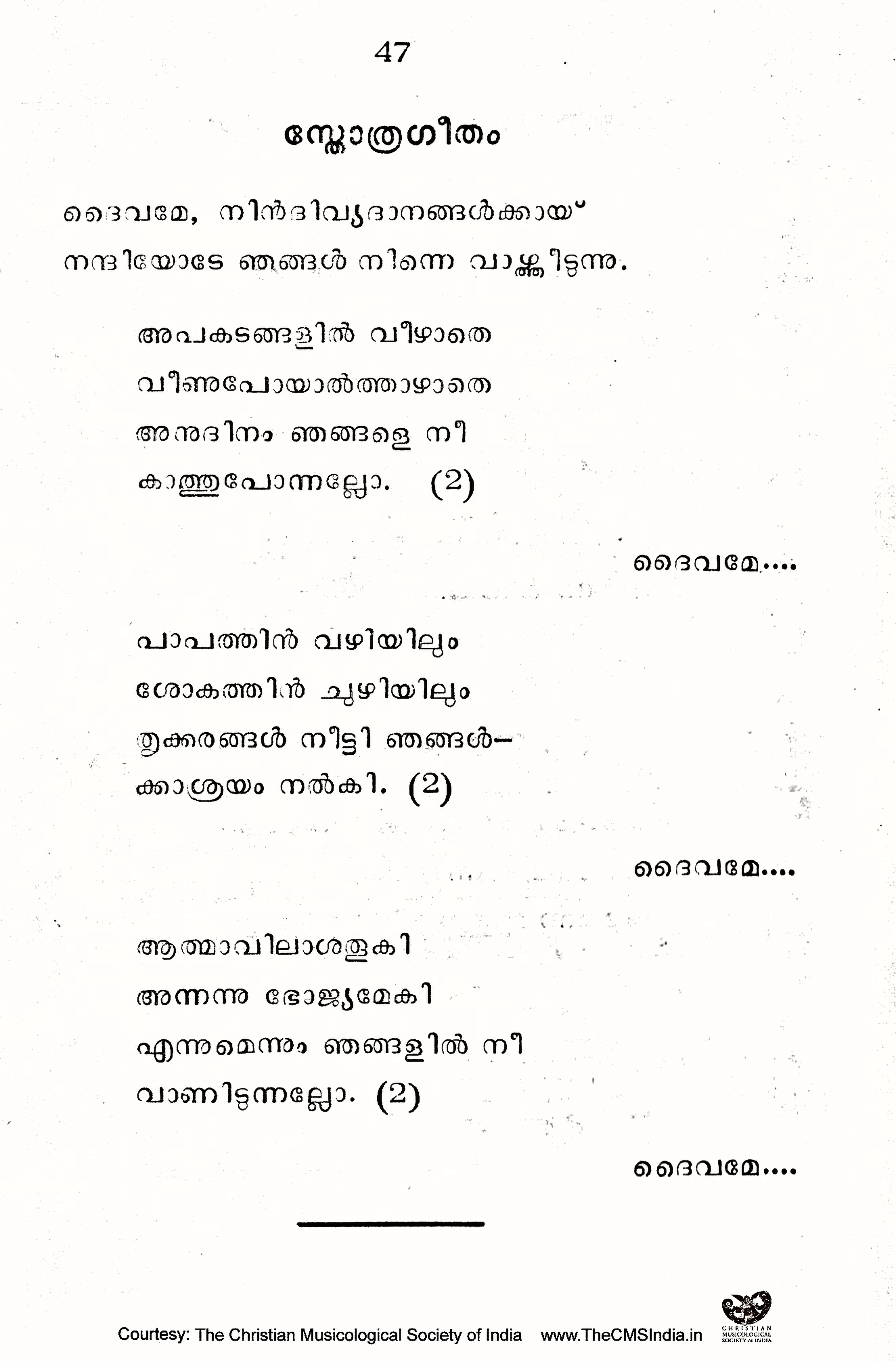
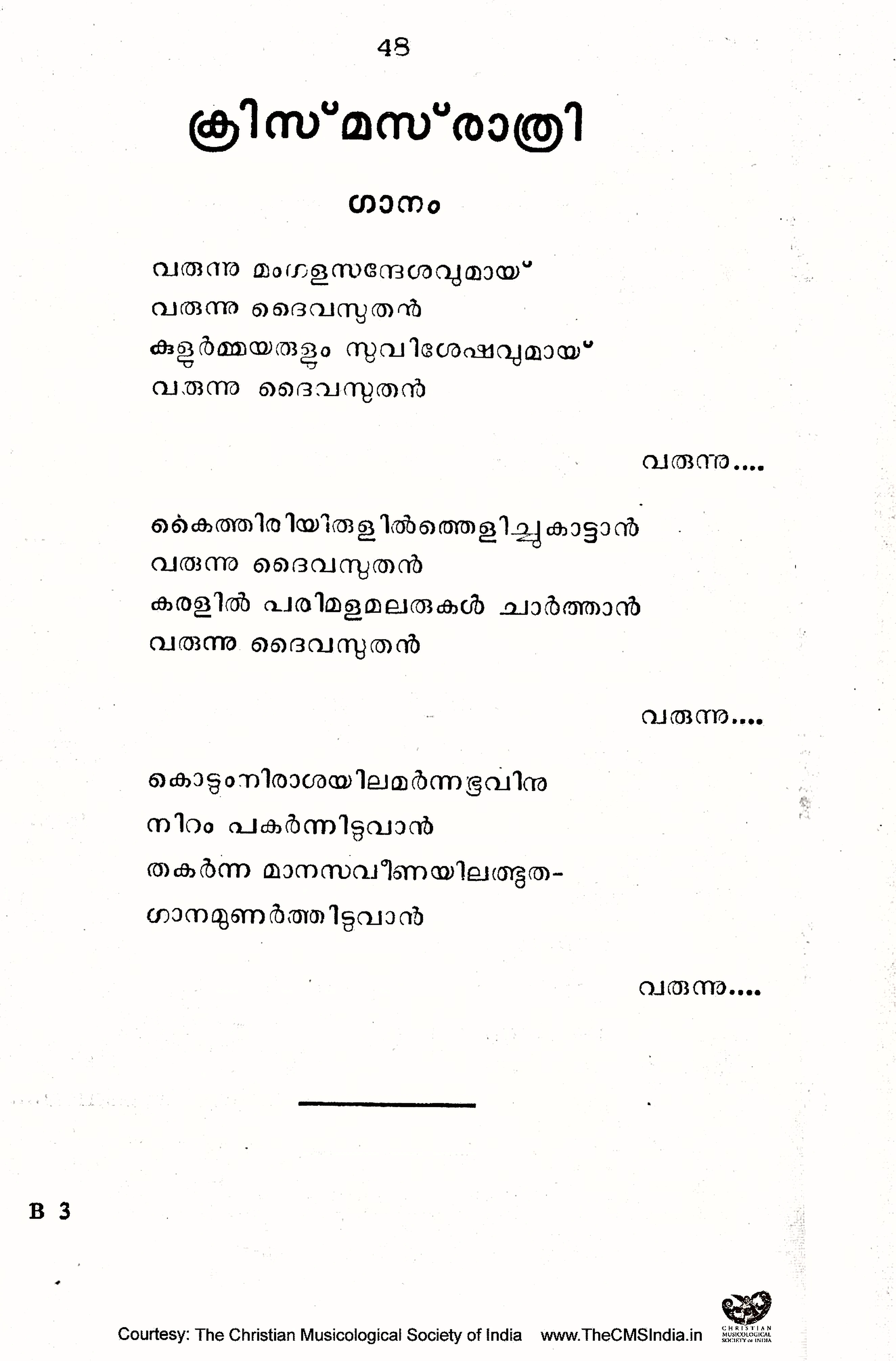
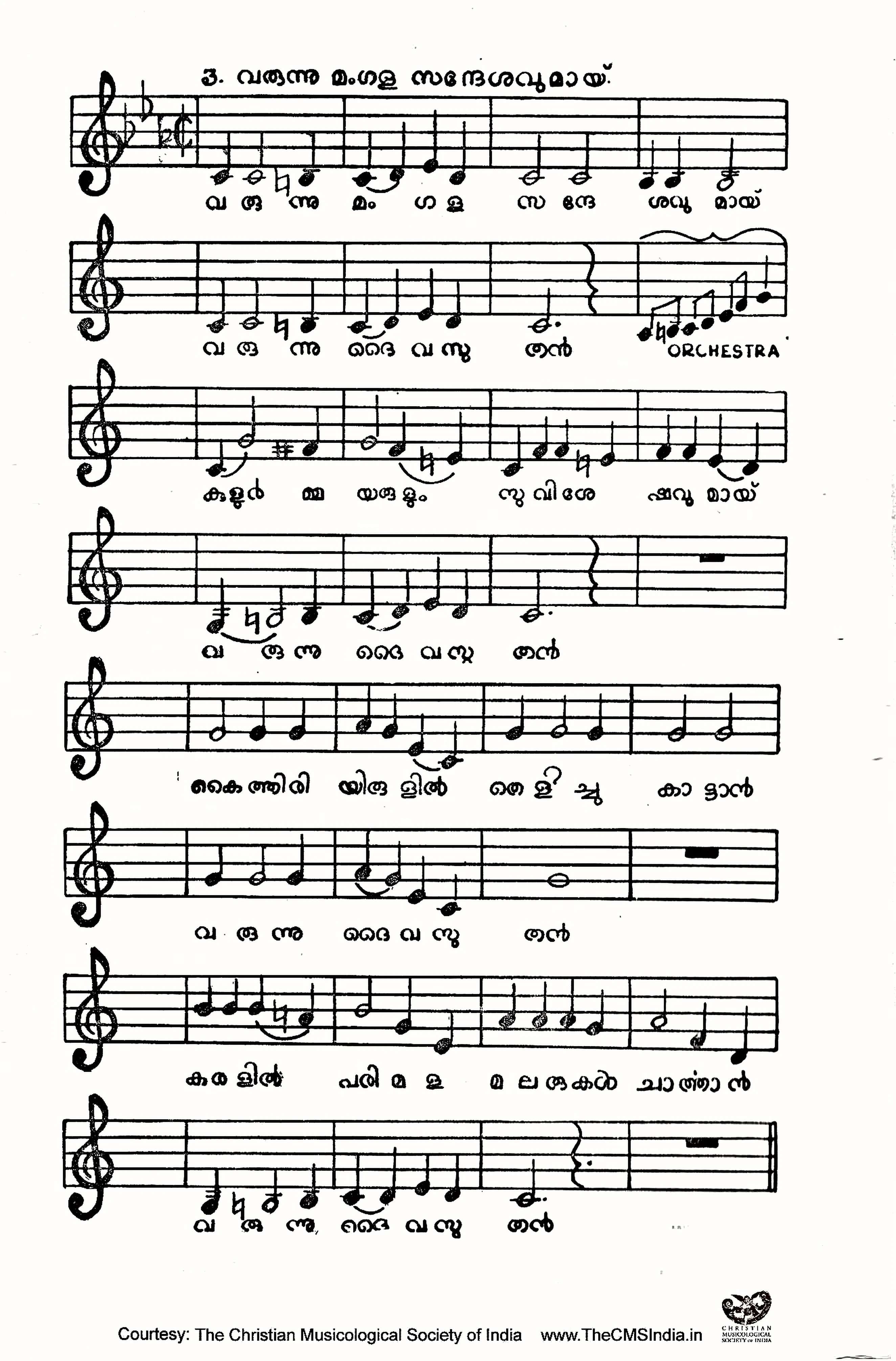
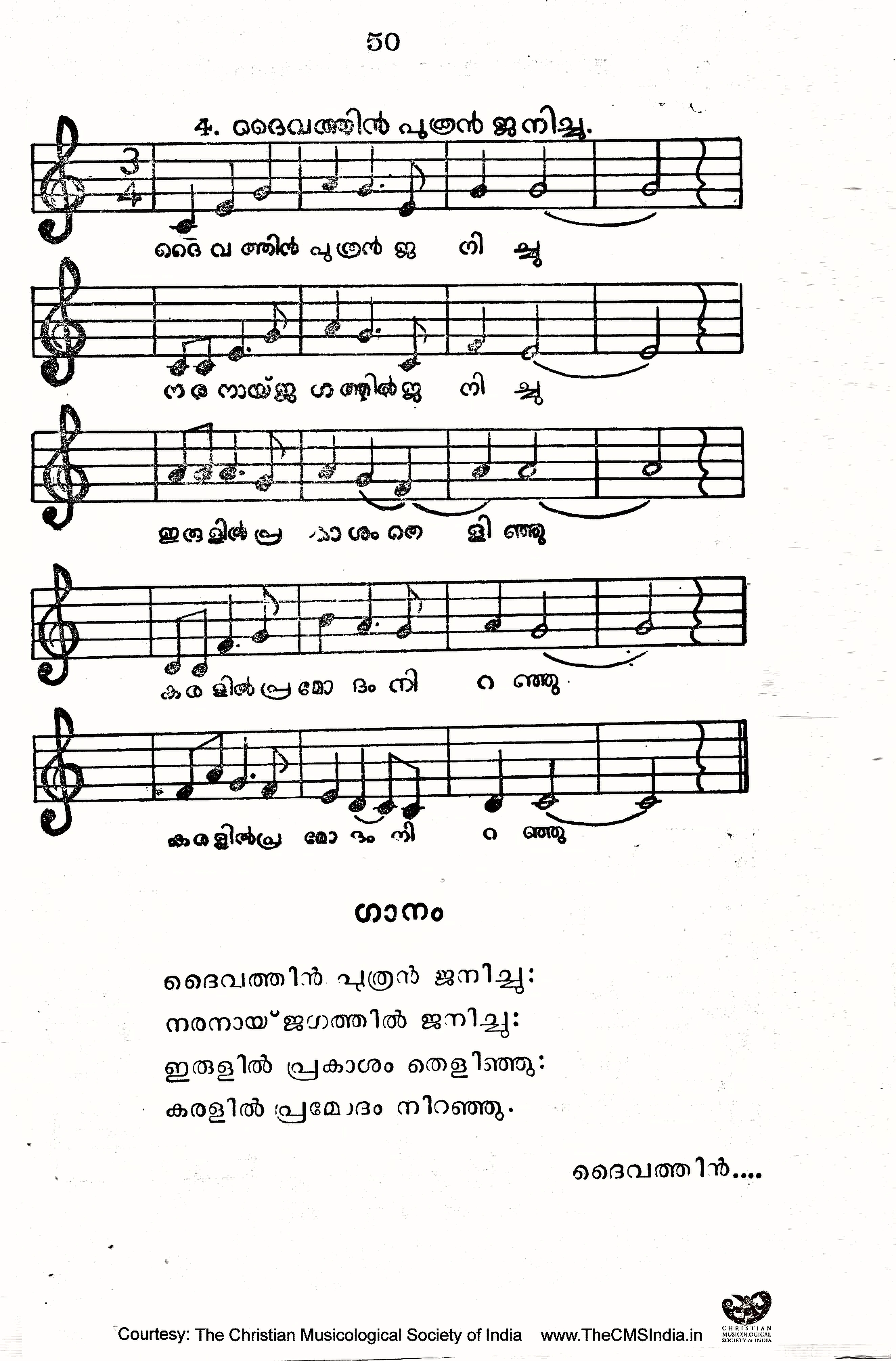
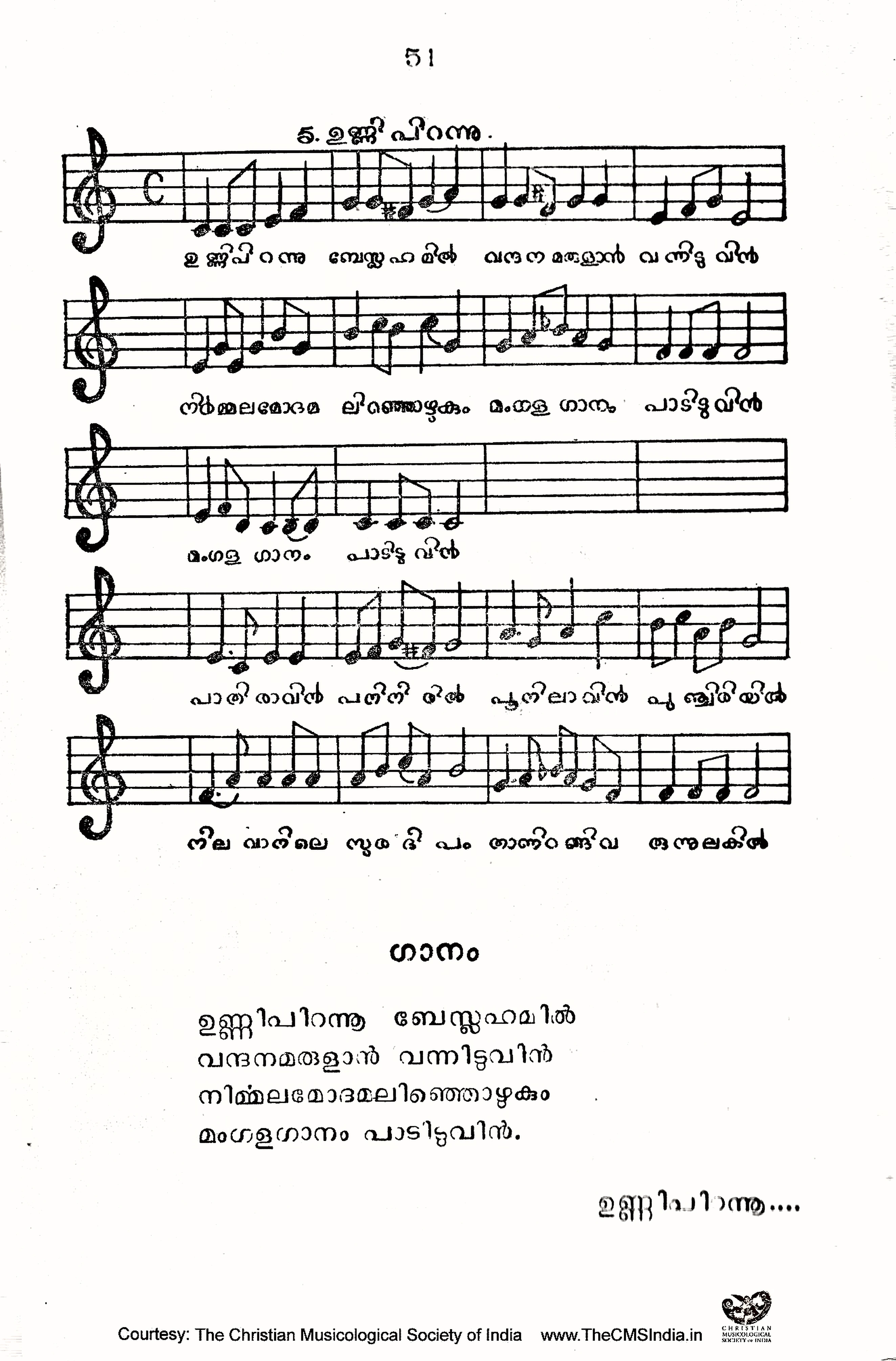
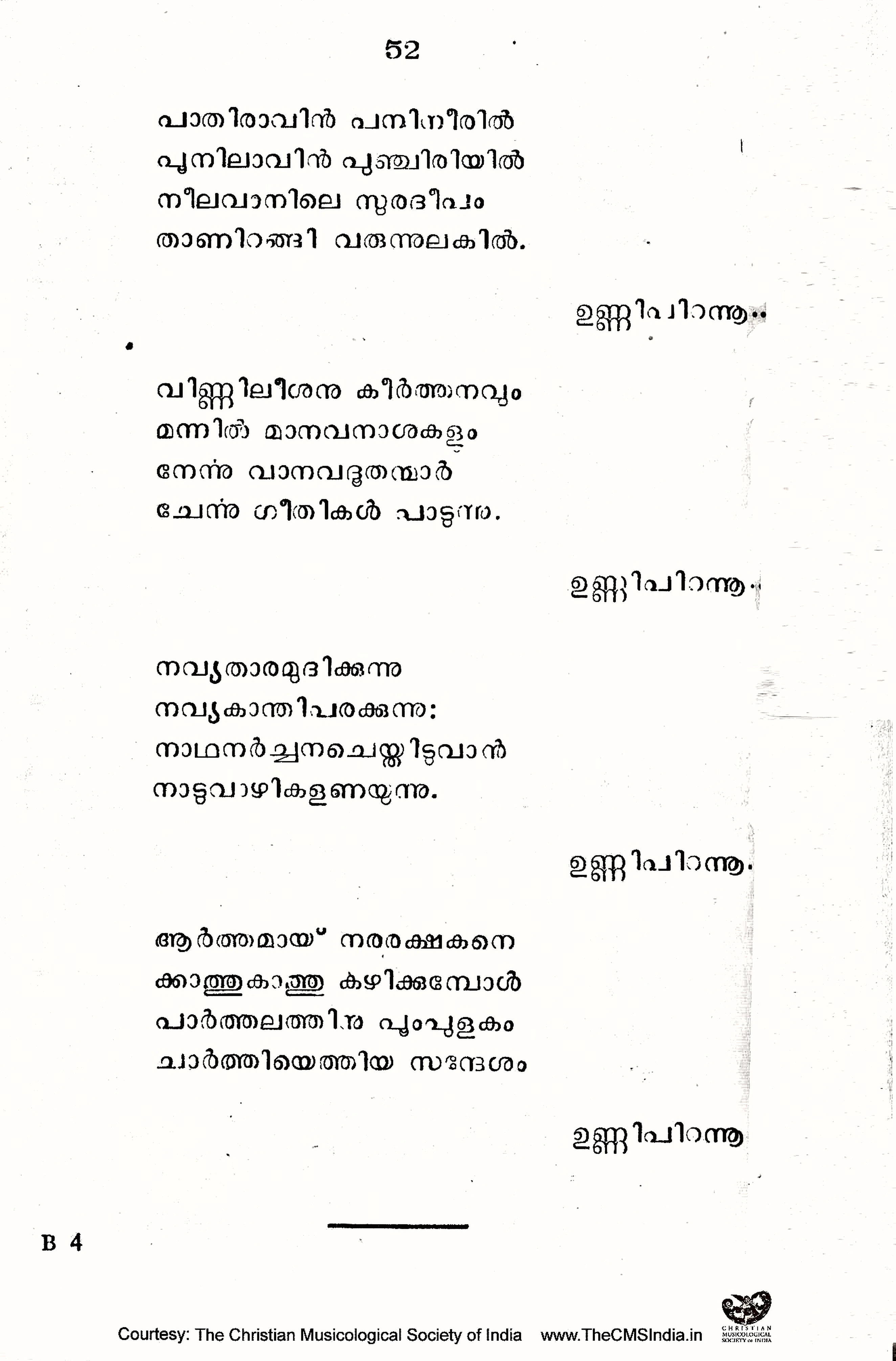
Gānādhyāpakan (Ernakulam, 1969), opened to "Gāgulthā malayil ninnum" in staff notation. The title page (page 2) carries the printed credit — രചന: ഫാ. ആബേൽ സി.എം.ഐ.; സംഗീതം: റാഫി ജോസ് — and pages 34–36 set the Good Friday hymn. Select a page to read it up close. Page scans courtesy of the Christian Musicological Society of India.Under the label of the Gramophone Company of India (HMV), several of these compositions were recorded in Madras (Chennai). The most enduring of these were:
- "Thālathil weḷḷameṭuthu" — a Maundy Thursday hymn sung by Jolly Abraham.
- "Gāgulthā malayil ninnum" — a Good Friday hymn from Mount Calvary, set in the natural minor scale.
He also composed other widely sung devotional melodies for the collaboration, including Mālākhamārude appam, Ōsāna pāduvin nāthane vāzhthuvin, Mālākhamāronnu pādi, Mahēswarā nin sudhinam kāṇān, Daivamē nin gēham ethra mōhanam, and Manushyā nee manṇākunnu.
That hymn outlived everything else. It is still sung, the memoir records, "during the Holy Week services in the Syro-Malabar communities around the world" — and K. J. Yesudas himself later recorded it. A version of the melody even reached Malayalam cinema, in the 1977 film Eeswarane Thedi, and as a bit song in the 1983 film Changaatham (directed by Bhadran, sung by K. J. Yesudas and S. Janaki). The melody has since traveled far past the community that made it: among the covers online is a rendition by Fr. Cyprian Consiglio, a Camaldolese monk and musician of New Camaldoli Hermitage in Big Sur, California.
The turn away to New Delhi, and the road to Bombay
The Christian Arts Club's story took a turn that left Josfi behind. When Yesudas was persuaded to join — and, asked to suggest a secular name, coined the one it still carries, Kalabhavan — the composing work passed to others, and Josfi, the memoir says plainly, "felt totally neglected and depressed."
It was then — around 1969 — that the Government of India's Song & Drama Division came to Ernakulam to recruit musicians, holding auditions at the St. Teresa's College auditorium. He asked Rex and his brother Eugene to accompany him on the violin as he sang; the jury selected him. "It was with tears in his eyes that he took leave of me that day," Rex writes. The audition took him to New Delhi, where, by Elsa's account, he spent those years with All India Radio and the Song & Drama Division. In 1974 he moved to Bombay to try his luck — composing for a few Marathi dramas, never quite breaking into the film industry. There, in 1982, Josfi married Elsa and they had a son, Yesudeep Mangalapilly. They also had a baby daughter, Angel, who died in infancy.
This collection is a son's effort to preserve and document that musical legacy.
Two accounts, lightly at odds: the memoir places the audition only "around this time" (dated c. 1969, after his sidelining at Kalabhavan, which Fr. Abel founded that year) and recalls a "ten-year contract" in the Division. Elsa dates the move to Bombay to 1974 and remembers the Delhi years as All India Radio. The timeline follows her dates.
The records, as Josfi
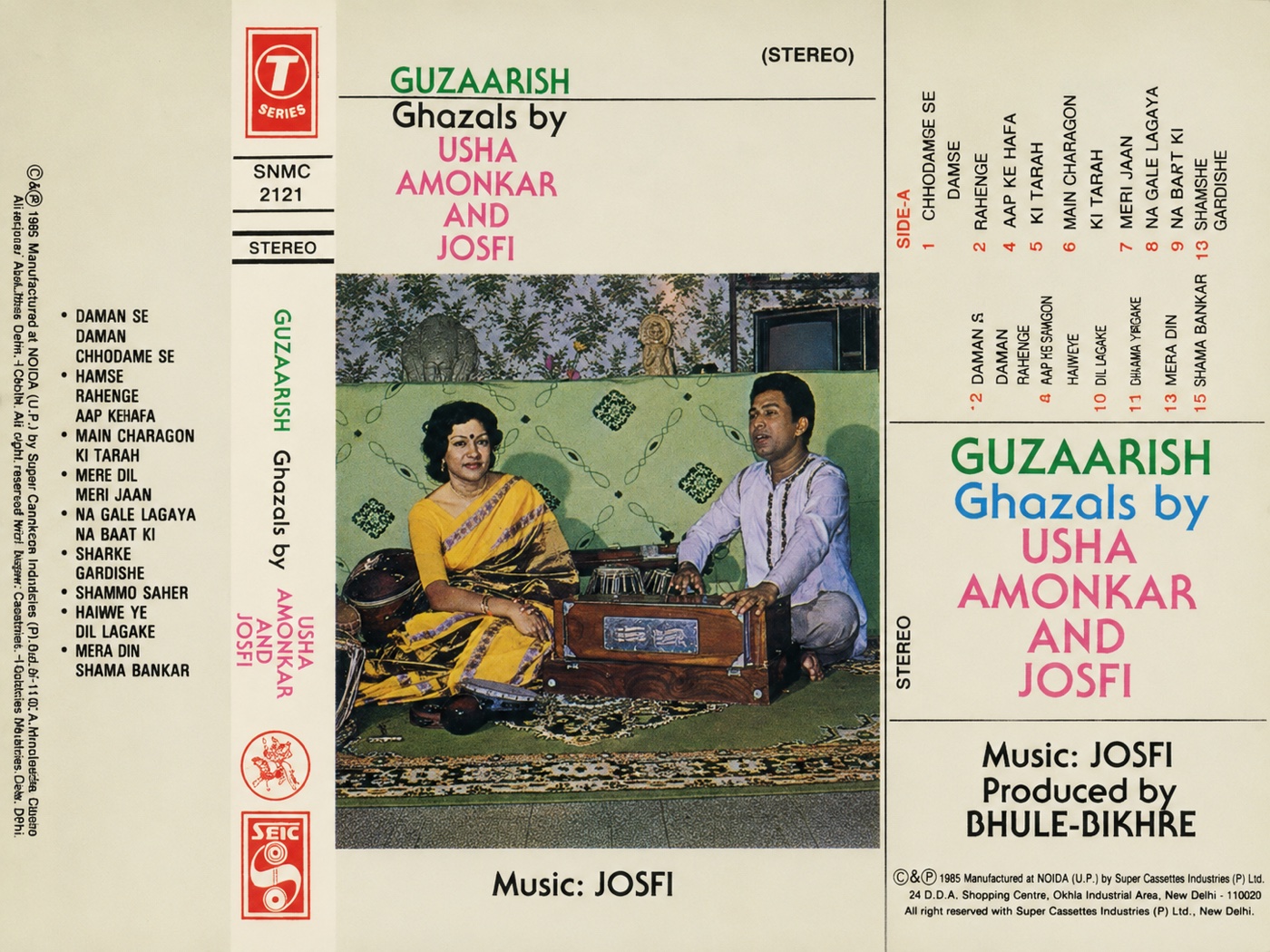
It was in Bombay, under the name Josfi, that he made the commercial records that survive him on disc. The releases I can verify, from the discs themselves or from streaming services today:
- Guzaarish (1986, T-Series / Super Cassettes) — an album of ghazals sung with Usha Amonkar; music by Josfi. Eight songs, including Mere Dil Meri Jaan, Hamne Ye Dil Lagake, and Na Gale Lagaya Na Baat Ki. This is the record whose cover remains a defining visual memory of his Bombay years.
- Bhajan Ratan (1988, Ishtar) — devotional bhajans, in duet with Raj Ratan.
- Jholi Bharde Maa (1994, T-Series) — Mata bhajans.
- Krishna O Krishna (released 2013, after his death) — an ISKCON sankirtan album (Jai Jagannath Charitable Trust), dedicated to Srila Prabhupada. His voice is heard on the track Unka Kuch Bhi.
- India India … To The World (1997, RAAG Audio Cassettes) — a Hindi pop album, billed as "A Sensational Hindi Pop Album"; music by Josfi, lyrics by RamNath Singh 'Rahi', with track singers Rashmi, Jagdeep, Pradeep, and Varsha. RAAG Audio's second release, produced by Rakesh Dhiver.
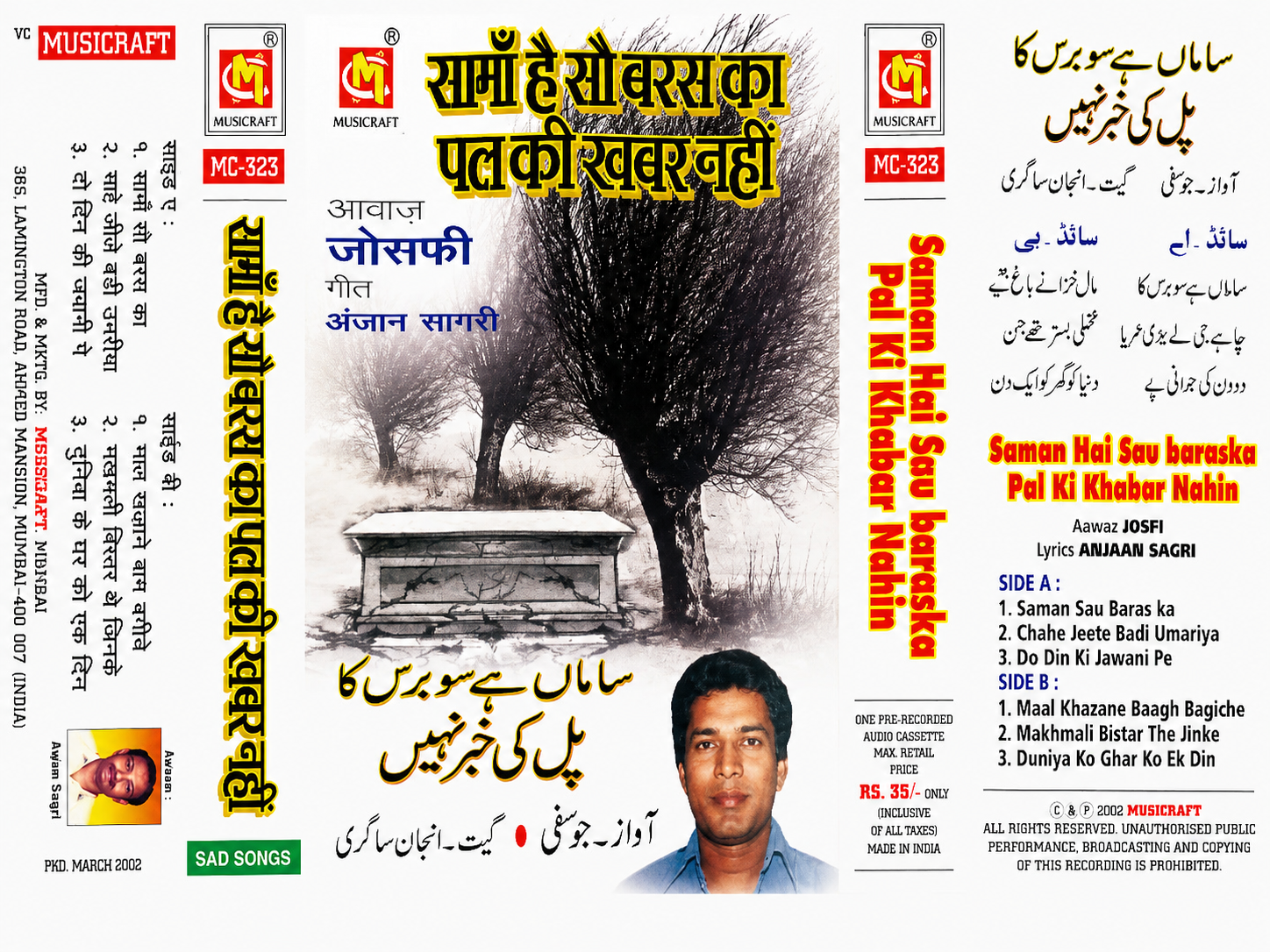
- Saman Hai Sau Baras Ka, Pal Ki Khabar Nahin (2002, Musicraft) — a collection of sad songs as Josfi, lyrics by Anjaan Sagri (catalogue MC-323). The label has since put the songs online; the title track, Samaan Sau Baras Ka, and others are listed below.
- Do Din Ki Jindagi Hai (2010, Musicraft) — ghazals and nazms as Josfi, lyrics by Anjan Sabri.
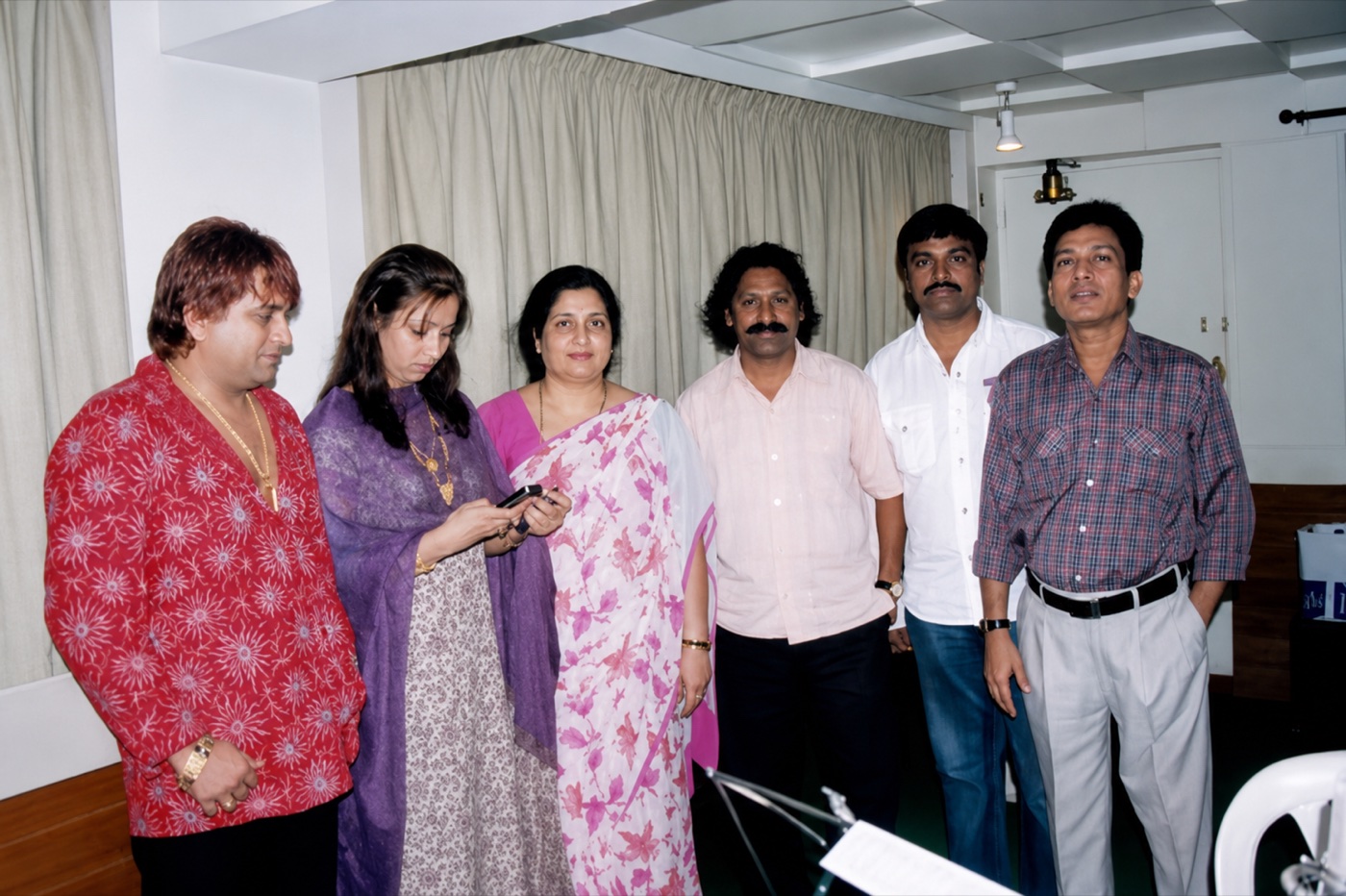
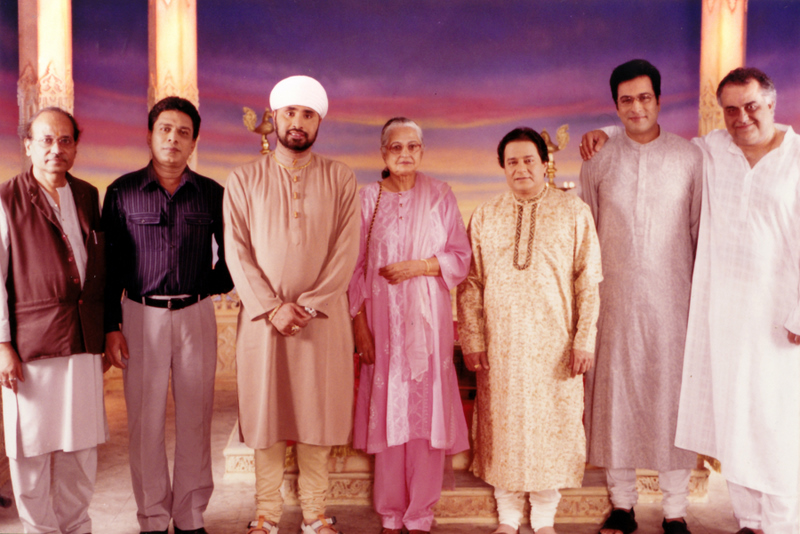
His son, Yesudeep, grew up in that world, occasionally accompanying him to recording studios and meeting collaborators like the playback singer Anuradha Paudwal and the bhajan singer Anup Jalota, the Bhajan Samrat.
"One day, computers will make music"
In 1998, as a teenager, Yesudeep told him half-seriously that one day computers would make music, urging him to buy one. Josfi laughed it off, not living to see how far musical technology would evolve. But the prediction kept its appointment. The track below — ക്രൂശിലെ ചോദ്യം (Krūśile Chōdyaṁ, "The Question on the Cross") — is a Malayalam song his son generated with Google's Gemini in 2026: music composed and performed entirely by the machines Josfi laughed about. It opens on the very line Josfi set to melody a lifetime earlier — "Gāgulthā malayil ninnum" — and returns to it at the close: the question asked from Calvary, answered with the instrument he never lived to hear. The lyrics highlight as they are sung; selecting a line seeks the track there.
- ഗാഗുൽത്താ മലയിൽ നിന്നും വിലാപത്തിൻ മാറൊലി കേൾപ്പൂ From the hill of Golgotha, hear the echo of lamentation.
- കാൽവരിക്കുന്നിൻ നെറുകയിൽ ഇന്നീ മരണത്തിൻ മാലേറെ കേഴുന്നൂ On the crest of Calvary, death's great sorrow keens today.
- നിണച്ചാലുകൾ ഒഴുകുന്ന മണ്ണിൽ ഒരു പിതാവിൻ നിശ്ശബ്ദ വിലാപം In soil where channels of blood run, a father's silent lament.
- പൂക്കളും പുൽക്കൊടികളും തലകുനിച്ചൂ The flowers and the blades of grass bowed low.
- കാലം പോലും കണ്ണിമയ്ക്കാതെ നിന്നൂ Even time stood without blinking.
- ഏവമെന്നെ ക്രൂശിലേറുവാൻ അപരാധം എന്തു ഞാൻ ചെയ്തു? What offense did I commit, to be raised upon this cross?
- മുൾമുടി ചൂടിയ നെഞ്ചകം പിടഞ്ഞൂ The thorn-crowned heart writhed.
- ലോകത്തിൻ ഭാരം ചുമലിൽ അമർന്നൂ The weight of the world pressed upon his shoulder.
- ഞാൻ നട്ട മുന്തിരിവള്ളിയിൽ നിന്നും From the vine I myself planted —
- കയ്പുനീരോ എനിക്കു ലഭിച്ചതു? was it bitterness that I was served?
- അപരാധം എന്തു ഞാൻ ചെയ്തു? What offense did I commit?
- ഓരോ തുള്ളി രക്തവും ഒരു ചോദ്യമായ് Every drop of blood becomes a question,
- മനുഷ്യൻ്റെ നിസ്സംഗതയിലേ തുളഞ്ഞുകയറീ piercing into man's indifference.
- സ്നേഹിച്ചതിന് ഇത്ര വലിയ വിലയോ? So steep a price, for having loved?
- ഗാഗുൽത്താ ഇന്നും നമ്മെ നോക്കി മന്ത്രിക്കുന്നൂ Golgotha gazes at us still, whispering:
- ഗാഗുൽത്താ മലയിൽ നിന്നും വിലാപത്തിൻ മാറൊലി കേൾപ്പൂ from the hill of Golgotha, hear the echo of lamentation.
Chronology: a life in music
Though the commercial records were made in Bombay as Josfi, his wider creative work spanned devotional compositions in Kerala, national stage productions, and Hindi ghazals:
- Born — 11 August 1945, eldest son of Mangalapilly Francis and Rosa, in Ernakulam.
- St. Albert's High School, Ernakulam — known as a footballer; his voice is coaxed out by a classmate, and the Oriental Music Club in Cochin christens him Rafi Jose.
- Christian Arts Club — Fr. Abel Periyappuram recruits him as a young composer; he plays the harmonium at the early recording sessions.
- Christian Arts Club — composed numerous Syro-Malabar liturgical and devotional songs (including Mālākhamārude appam, Ōsāna pāduvin nāthane vāzhthuvin, Mālākhamāronnu pādi, and Manushyā nee manṇākunnu) which remain standard in Syro-Malabar Holy Week services.
- Gānādhyāpakan — published the landmark collection of liturgical melodies (Mar Louis Memorial Press) with Fr. Abel, transcribing the first Malayalam liturgy in Western staff notation.
- HMV Recordings — composed the Maundy Thursday hymn "Thālathil weḷḷameṭuthu" (sung by Jolly Abraham) and the Good Friday hymn "Gāgulthā malayil ninnum", recorded by the Gramophone Company of India (HMV) in Madras.
- New Delhi — auditioned at St. Teresa's College, Ernakulam (Rex Isaacs and his brother Eugene accompanying him) for the Government of India's Song & Drama Division; by Elsa's account these were his All India Radio years. Dates approximate — see the note above.
- Moved to Bombay — to try his luck in the film industry, composing for a few Marathi dramas (per Elsa's account).
- Eeswarane Thedi — a version of the same melody reaches Malayalam cinema.
- Married Elsa — in Bombay.
- Changaatham — the Good Friday melody "Gaagultha Malayil Ninnum" featured as a bit song in this film directed by Bhadran, sung by K. J. Yesudas and S. Janaki.
- Guzaarish (T-Series / Super Cassettes) — a commercial album of ghazals sung in duet with Usha Amonkar; music composed by Josfi, who also played the harmonium.
- Bhajan Ratan (Ishtar) — devotional bhajans, in duet with Raj Ratan.
- Vikas Colourful Rhymes (Vikas Prakashan) — a cassette of nursery rhymes, with music composed/arranged by Josfi, featuring child singer Yesudeep. Amazon still lists the album with Josfi as the credited artist (archived) — long out of print, but the credit stands in the catalog.
- Jholi Bharde Maa (T-Series) — Mata bhajans.
- India India … To The World (RAAG Audio Cassettes) — a Hindi pop album; music by Josfi, lyrics by RamNath Singh 'Rahi'.
- Saman Hai Sau Baras Ka, Pal Ki Khabar Nahin (Musicraft) — sad songs as Josfi, lyrics by Anjaan Sagri.
- Do Din Ki Jindagi Hai (Musicraft) — ghazals and nazms as Josfi, lyrics by Anjan Sabri.
- Died — 26 February 2010, in his later years drawn away even from family.
- Krishna O Krishna (released) — an ISKCON sankirtan album dedicated to Srila Prabhupada; his voice on Unka Kuch Bhi, issued after his death.
- Authorship settled — a surviving copy of Gānādhyāpakan resurfaces, confirming his authorship of "Gāgulthā malayil ninnum" after a public dispute; the Christian Musicological Society of India publishes the scanned book.
Most are gathered under the artist Josfi on Apple Music. The Malayalam devotional work lives instead in databases like the Christian Musicological Society of India and the Malayalam music archive — under Rafi Jose. Both are stage names of one man — Jose Francis Mangalapilly — used at different times of his life; Rafi Jose and Josfi are not two people but one.
Demise: the final months
Josfi spent his last several months back in Kerala, apart from his family in Bombay. What follows is his son's record of those final months — drawn from family memory, hospital records, and the accounts of those who saw him — from his arrival in Kerala in November 2009 to his death in Mumbai on 26 February 2010. Some of what happened in that time remains unresolved, and is set down here as the family understands it.
While Josfi lay seriously ill, a power of attorney over his 97-cent Nedumbassery plot was executed and the land transferred by Joseph Gopurthingal. The family regards the signatures and fingerprints on those deeds as questionable — markedly unlike his usual hand — and records the matter here, unresolved, as it is understood. A machine learning signature verification model would likely red flag the signature.
- Arrives in Kerala — Josfi flies to Nedumbassery (Cochin) airport and is received by Austin Sanish.
- Ernakulam — Josfi moves to the Hotel Elite Tourist Home on Paramara Road, Ernakulam.
- Taken to Palakkad — Josfi checks out of the Hotel Elite Tourist Home and is taken to Palakkad by Joseph Gopurthingal; he is later diagnosed with tuberculosis at Palat Memorial Hospital.
- Admitted — Josfi is admitted to the Paalana Institute of Medical Sciences, Palakkad.
- A visit — Fr. Elvis Antony (Jiji) and family visit Josfi at Paalana, in the presence of Joseph Gopurthingal.
- Discharged — Josfi is discharged from the Paalana Institute of Medical Sciences, Palakkad.
- Re-admitted — Josfi is re-admitted to the Paalana Institute of Medical Sciences, Palakkad.
- A nephew's warning — Austin Sanish, Josfi's nephew, visits Paalana, confirms the condition is serious, and telephones Yesudeep in Mumbai: Josfi has tuberculosis and is gravely ill, and Yesudeep should reach Kerala "before they do something bad."
- Condition verified — at the request of Yesudeep's uncle Ashok Hattangdi, Johny Surao dispatches office staff to Palakkad to verify Josfi's condition.
- Yesudeep reaches Kerala — flying in to Coimbatore, Yesudeep goes straight to the Paalana Institute of Medical Sciences, Palakkad, by hired airport cab.
- Discharged — at Yesudeep's request, Josfi is discharged from the Paalana Institute of Medical Sciences, Palakkad.
- Flown to Mumbai — Dr. Jobi Paul issues a fit-to-fly certificate at Paalana noting only cirrhosis, and Yesudeep flies Josfi back to Mumbai from Coimbatore on a SpiceJet flight. Unable to walk, Josfi is wheeled through both the Coimbatore and Mumbai airports.
- Died — Josfi expired at 11:30 PM at Karuna Hospital, Mumbai, in the ICCU ward on a ventilator; the cause of death recorded as septicemia and cirrhosis. Among those present were Yesudeep, Elsa, and Shahid Khan Rehbar.
- Buried — Josfi was laid to rest at a cemetery in Orlem, Malad, Mumbai.
Josfi uttered his final words in the form of a scribble wishing for a cup of tea while his son was by his bedside.
This is among the most devastating moments of his son's life. The man enjoyed listening to music on his red Sharp playback stereo, laughing through every Govinda movie and the rare beer with his son as if he was he was his best friend.
One black tea.
He left for heaven, if there is one, with his son beside him, and with Elsa, his spouse, and Shahid Khan Rehbar, his friend, waiting outside the intensive care unit.
What's still missing
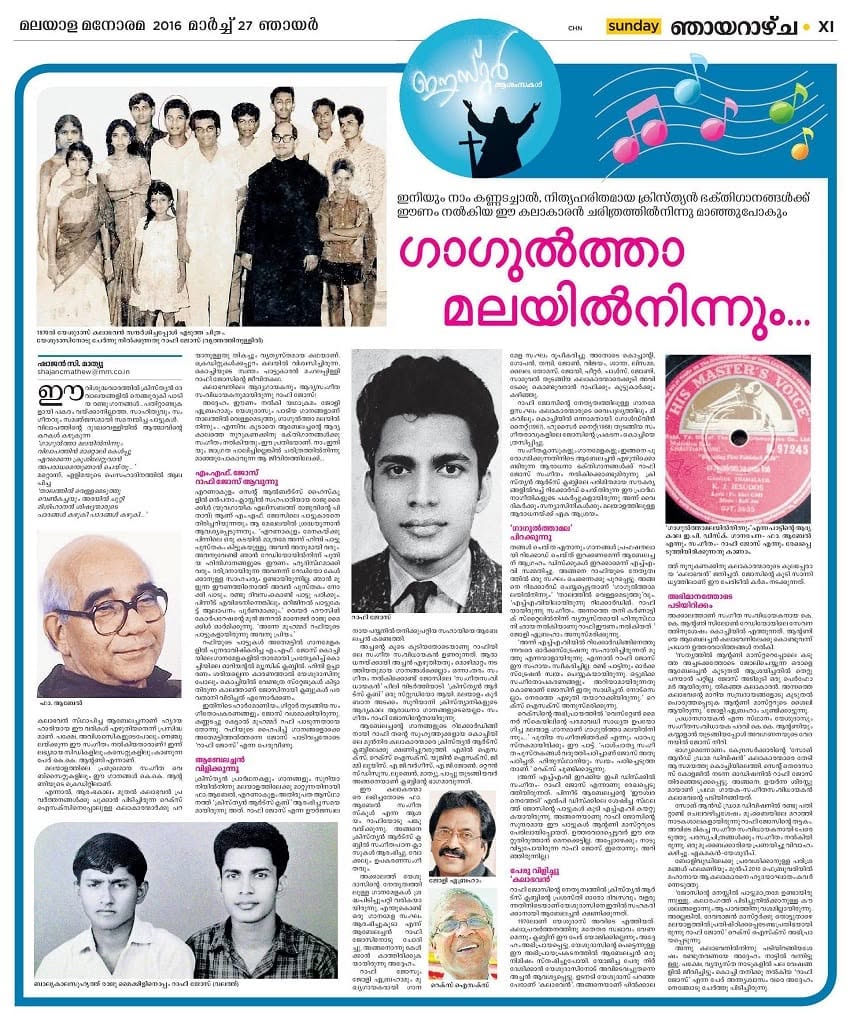
Part of why so little is cataloged is that Josfi was, for years, miscredited. A 2016 feature in Malayala Manorama ("ഗാഗുൽത്താ മലയിൽനിന്നും…", by Shajan C. Mathew, Sunday edition, 27 March 2016) called him "Kochi's own singer" and "Kalabhavan's first singer and first music director" — and recorded that later cassettes and CDs of those early devotional songs printed someone else's name as composer, though the old Kalabhavan musicians attest the melodies were his. The article has since been taken down from Manorama's site; the scan below, from the print edition, is the copy the family knows of — the same feature is also preserved in a post in the Bygone Cochin Days group (archived) — and the Rex Isaacs memoir records its publication and the dispute it sparked. Manorama itself still credits him: an April 2026 piece on the song going viral again states plainly, "യേശുദാസിന്റെ സ്വരമാധുരിയിൽ പിറന്ന സുന്ദരഗാനത്തിന് സംഗീതമൊരുക്കിയത് റാഫി ജോസാണ്" — the music was made by Rafi Jose. The full extent of his Song & Drama Division years, the Marathi dramas, and whatever he composed and never recorded remain uncatalogued. If you knew him, or have a recording, a photograph, or a story, his family would be grateful to hear from you.
Note
An uncredited arrangement: In Bombay, his family holds that he did arrangement work for B.R. Chopra's Mahabharat (Doordarshan, 1988) — the music credited to Raj Kamal — without a credit of his own. While undocumented and unproven, family recollections cite it as an example of a broader industry practice. Before the internet, an arranger's name lived or died by whoever controlled the screen titles, and the musicians who did the unseen work of turning a melody into a recording — the arrangers, the session players — were frequently left off the records.
Emil Isaacs (d. 2018) was a brother of Rex; he gave early lessons at Kalabhavan, founded The Elite Aces — remembered as Cochin's first Western band — and was for years lead guitarist to K. J. Yesudas. He later spent nearly four decades at Usha Uthup's Kolkata studio, Vibrations. (archived)
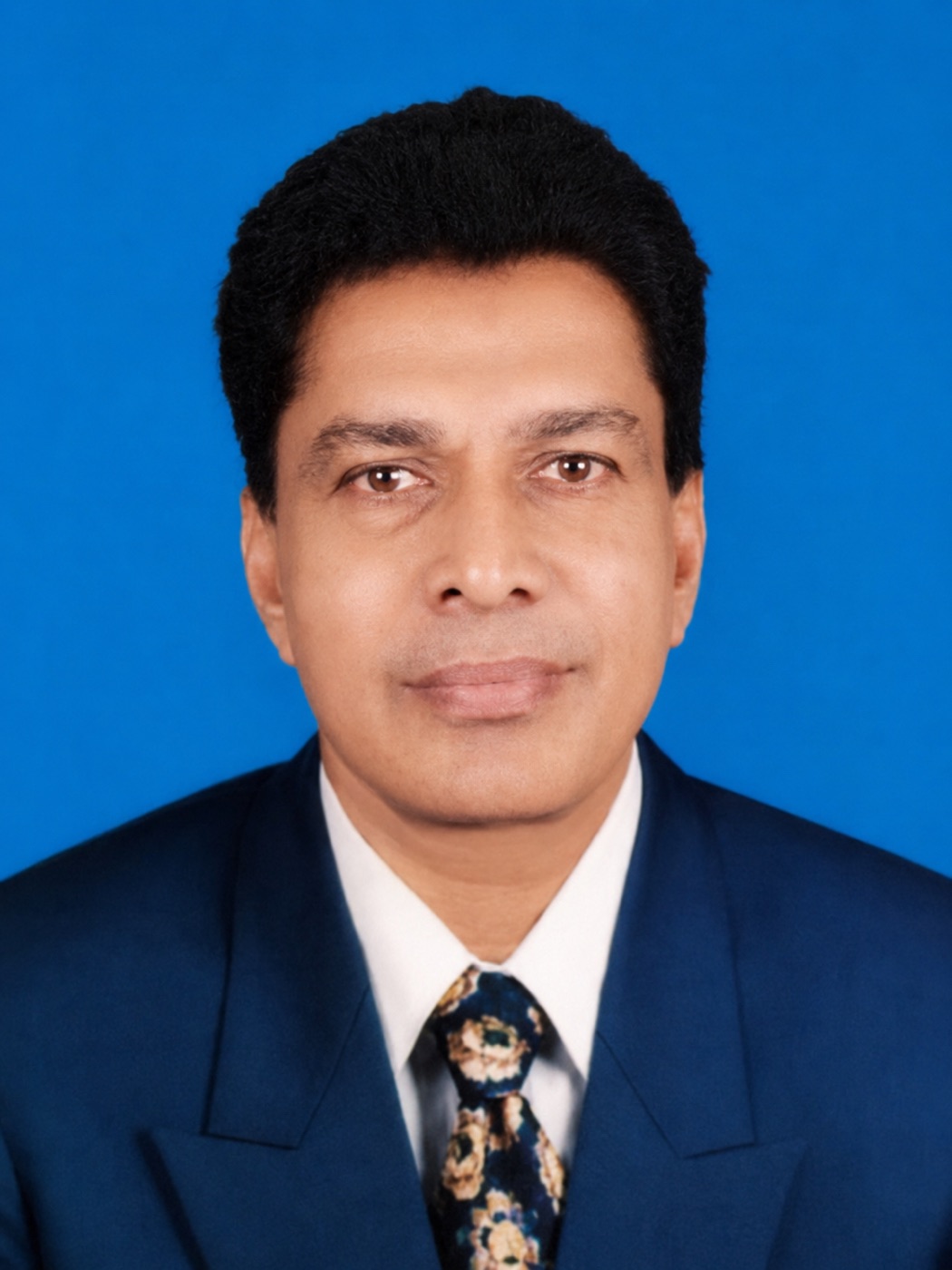
A man's first flowers are usually at his funeral
The memoir ends with a poignant detail. After his passing, a neighbor read Elsa an article about him still circulating in Kerala, and she remarked, in Rex's telling, "that she never knew that her husband was such a great man who is still remembered in Kerala." He had drifted, in his last years, away even from family. But a melody he set to a Good Friday verse is still sung, every year, by people who never met him.
"All said and done, Rafi Jose shall live through the soulful melodies that are sung during the Holy Week services."
One black tea it is. When we meet, the tea is on me. Rest in peace, my friend.
—Yesudeep.
Listen & learn more
- Josfi on Apple Music — Guzaarish (1986) and the later bhajan and ghazal records
- Josfi on Spotify — Guzaarish, Do Din Ki Jindagi Hai, and Jholi Bharde Maa
- Saman Hai Sau Baras Ka (Musicraft, 2002), the sad songs as Josfi — the label has the audio on its YouTube channel:
- Unka Kuch Bhi, from the ISKCON sankirtan album Krishna O Krishna — his voice, a recording recognized by his son years after the fact
- The Rafi Jose I Knew, a memoir by Rex Isaacs — the Christian Musicological Society of India
- "ഗാഗുൽത്താ മലയിൽനിന്നും…" (Malayala Manorama Sunday edition, by Shajan C. Mathew, 27 March 2016) — a Malayalam feature on മംഗലപ്പിള്ളി റാഫി ജോസ്; taken down from Manorama's site — a scan of the print page is reproduced above, and the feature is also preserved in a post in the Bygone Cochin Days group (archived)
- Babu Antony's viral Easter rendition (Malayala Manorama, April 2026) — Manorama crediting the song's music to Rafi Jose today (archived)
Gānādhyāpakan(PDF) — the 1969 collection of Fr. Abel's lyrics set to Rafi Jose's melodies with staff notation (archived)- Gāgulthā malayil ninnum, his Good Friday hymn — the K. J. Yesudas recording, a later studio recording, and a California cover by the Camaldolese monk Fr. Cyprian Consiglio — still sung in Syro-Malabar Holy Week services